

 admin
admin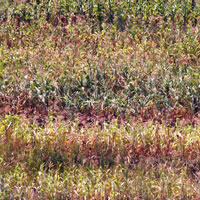
respite to some farmers, the dry spell that also hit other areas dashed hopes of reaping anything for many households.
Thousands of these households are already in dire need of food handouts even at this point when harvesting of the 2011 crop is yet to be completed in areas that had good rains.
Chipere Village of Hurungwe in Mashonaland West is one example where the villagers could not help but watch in agony as their once promising crops faltered under the blistering heat that characterised the better part of the first half of the summer season. And because of the poor harvests, many families in the village are going for days surviving on boiled dried vegetables without the staple food sadza.
One of the villagers, Petros Hoga, confessed that his family only got some relief when his uncle visited from an area where they had a good harvest and brought some maize meal.
“We had to use the maize meal sparingly and at intervals while we prayed some relief food would by chance arrive,” Petros said.
Hoga’s situation is not one of its kind. It is replicated in many parts of the country.
People do not have grain even for a single meal from last season or the money buy grain or maize meal.
In the past some used to do casual work to earn some money to fend for their families but with industry operating way below capacity, that has since ceased to be an option.
In Sanyati, to the south west of Hurungwe, Imelda Nyachuru of Nyimo area said her family had not even reaped a single ripe cob from their field.
“Everything was scorched before it could reach the knee-high stage.
“We re-planted after noticing signs of rains making a come-back but the rains only returned for two days and left for good. All the crops wilted once again,” she said sorrowfully.
Councilor for the area Mrs Idah Gorah also concurred saying there was urgent need for food handouts in the district.
She has 3 000 people in her ward and fears that if they do not get relief food anytime soon, there may be deaths due to starvation.
“I think we urgently need the food for work programme at this point in time so that people can work and get food for their families.
“They did not get anything from this past season. In fact, the food situation here has not been good for years as frequent droughts have left households unable to produce adequately,” she said.
Although staple cereals like maize, sorghum and millet are available on the market, the majority of rural households do not have the money to afford them.
Most rural households have in recent years tended to lean heavily on relief food; something analysts believe may be killing their own initiatives.
The logic behind their argument is that if the families were making an effort to produce for their own consumption and at times sell the surplus, then they would be in a position to have a fall-back position in times of stress.
Government has since ordered the Grain Marketing Board (GMB) to move grain to all grain deficit areas across the country.
Sadly, the move has not brought much relief to the distressed households, as they can not afford the US$16 for a bag of maize the GMB is asking for and neither can the GMB slash the price.
“The uptake of the grain is very slow. The people are finding the price unaffordable.
“We have managed to move a lot of grain to all the parts of the country but what is worrisome is this failure by the intended beneficiaries to secure the grain,” a frustrated GMB general manager, Albert Mandizha said.
The United Nations Office for the Co-ordination of Humanitarian Affairs (OCHA) confirmed that GMB depots have grain but stocks in the warehouses were not moving.
This report by OCHA also suggests that smaller grain packages than the 50kg bags currently available would be within the reach of the majority of families without much disposable funds.
“Smaller quantities would sell more easily.
“In addition, GMB is selling maize in the form of grain, which means beneficiaries have to make milling arrangements to have it converted into maize-meal for consumption.
“This further strains an already-dire liquidity situation,” OCHA information officer Matilda Moyo commented.
Combined estimates by the Zimbabwe Vulnerability Assessment Committee (ZIMVAC), World Food Programme (WFP), Food and Agricultural Organisation (FAO) and the Food and Crop Assessment Mission currently put the number of food insecure people at around 1,7 million. The southern parts of Zimbabwe were hardest hit by the dry spell that hit the country in the second half of the agricultural season so the majority of those who will need food aid are in that part of the country.
Regions like Masvingo, Manicaland South, Matabeleland North and South and Bulawayo are among the worst affected and need 35 000 tonnes of grain for survival.
The Second Round Crop and Livestock Assessment Report conducted by the Ministry of Agriculture, Mechanisation and Irrigation Development confirmed that 42 of the 60 rural districts mostly from the poor performance provinces, will be unable to meet the cereal requirements of their rural population for the 2011/12 consumption year.
From the second round assessment it is clear that the “traditionally” food insecure areas would harvest less than last year, while traditional surplus areas had done slightly better than last year owing to climatic conditions.
Zimbabwe needs at least 2,2 million tonnes of maize every year – this is enough to guarantee food security.
Government this year projected a total maize yield of 1 451 629 tonnes this season on two million hectares planted under the crop.
This indicates a nine percent increase from last year’s harvest.
Agriculture, Mechanisation and Irrigation Development Minister Joseph Made revealed that an additional 270 000 tonnes of maize were already in Grain Marketing Board silos as a carry over from last season.
“Last year’s figures stood at 1 327 572 tonnes planted on 1,8 million hectares.
“With the cumulative total of grains standing at 1,6 million tonnes including other small grains, coupled with 270 000 tonnes in GMB silos, the anticipated grain yields is projected to stand at 1 877 700 tonnes.
“This reflects a marginal surplus that will go a long way towards ensuring national food security,” Minister Made said.
The figures follow a crop and livestock assessment made by the Ministry and a report has since been tabled before Cabinet.
Minister Made however, said the country would continue to import grain because the figures did not determine whether the yield was adequate or not as that was still under discussion by stakeholders.
He said the private sector has in recent weeks imported over 30 000 tonnes of grain.
Similarly, Labour and Social Welfare Minister, Paurina Mpariwa also conceded that government was aware of the dire situation of most vulnerable households and would help those in need of assistance.
“We are going to do several projects to help the distressed families.
“Some of the families may have to join food for work programmes in which they work for 15 days before getting a coupon with which they can secure food from GMB,” Minister Mpariwa said.
She also revealed that the elderly, handicapped and orphans would receive monthly allowances of US$20 to help alleviate the problem.
In addition to government programmes for vulnerable members of the society, donor organisations and non-governmental organisations have initiated a number of programmes to assist vulnerable families that are labour-constrained with food and livelihoods.
These include Seasonal Targeted Assistance (STA), health and nutrition as well as social safety net programmes.
It is estimated that 50 000 households are headed by children while the elderly take over the running of most families after the deaths of their bread winners.
During the 2010/2011 lean season from January to March 2011, WFP assisted 38 districts throughout the country under the STA programme while PRIZE assisted another 8 districts.
In the final month of March 2011, a total of 1,3 million beneficiaries, both labour constrained and non-labour constrained, were reached jointly by WFP, PRIZE and other food pipelines.
WFP also continues to implement its year-round health and nutrition and social safety net programmes support to HIV and Aids patients and their households, home based care, and to orphans and vulnerable children.
These programmes are targeting approximately 335 000 people
“WFP this year is undertaking special efforts to help improve local agricultural markets by purchasing grains locally, where there are surpluses, in order to ship them into nearby areas of food insecurity for seasonal targeted assistance.
This should provide incentives to surplus producing farmers to keep up production and at the same time reduce logistics costs thus providing more funds to purchase cereals,” said Moyo.
[email protected]



 Online Reporter