Online Reporter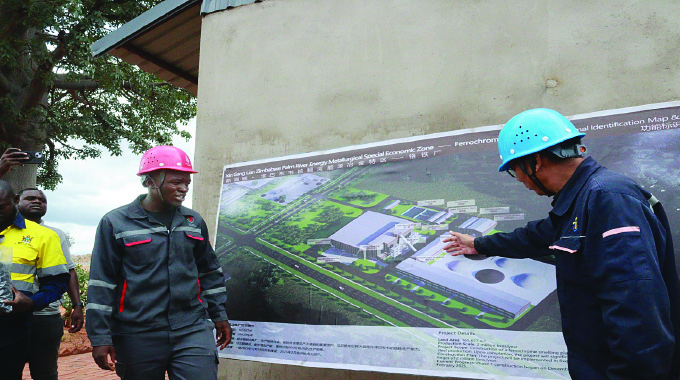
Thupeyo Muleya
A NEW era of rural transformation is underway in Beitbridge District, Matabeleland South Province driven by a major infrastructure development project where the Government, in collaboration with the Xintai Resources, a Chinese mining company, is developing a US$3,6 billion industrial park about 20 kilometres west of the border town.
The project, commonly known as the Palm River Energy, and Metallurgical Special Economic Zone, has started changing the face of rural landscapes as work on the first phase of the 12-year initiative has been completed.
The energy and steelworks initiative has already employed 400 locals in its first year, with the expectation that it will ultimately employ over 2 000 people once it becomes fully operational.
The establishment of the park as an integrated mining and energy hub follows discussions between the chairman of Palm River Energy, Mr Xong Xi Dong, and President Mnangagwa.
Upon completion, it will cover 5 100 hectares within a Special Economic Zone, and is expected to make substantial contributions to Zimbabwe’s mining and energy sectors.
The first phase of the project is being carried out through a joint venture between the Government, Xintai Resources, and Tuli Coal.
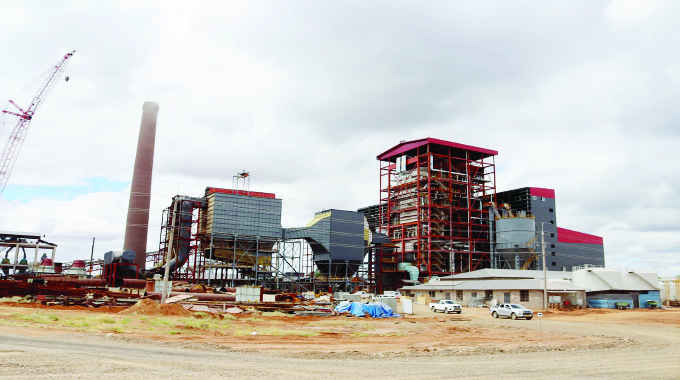
The park comprises a coking plant that will have an annual capacity of producing one million tonnes of coke, a ferro-chrome smelting plant, which will produce 100 000 tonnes of high-carbon ferro-chrome, and a 1 200MW coal-fired thermal power plant.
It is understood that as part of this massive undertaking, any surplus electricity will be transmitted to the national grid, while the ferro-chrome plant will facilitate the production of special and stainless steel and castings.
Coal supply to the project is being obtained from Tuli Coal Mine. There are plans to export coal products to international markets, a development set to yield significant foreign currency earnings.
The role of the mining sector in Zimbabwe’s economy cannot be overemphasised, considering it represents over 60 percent of the country’s export receipts and attracting more than 50 percent of foreign direct investment (FDI).
In addition, it also contributes 13 percent to the National Gross Domestic Product(GDP), creating more business opportunities downstream, and generating tax revenue for the Government.
The Palm River project aims to bridge the rural-urban divide through amplified investment in critical infrastructure, including roads, schools, clinics, bridges, and related downstream industries.
It also improves the availability of the much-needed essential services in a rural set-up. It will also help unlock new economic opportunities, creating jobs, and enhancing the quality of life for rural residents.
In March this year, President Mnangagwa led the groundbreaking ceremony at the industrial park, which was also witnessed by his two deputies, Dr Constantino Chiwenga and Kembo Mohadi, along with Government ministers, captains of industry, and mining experts.
The President said Zimbabwe was on the right path to industrialisation, with more strategic investors now gaining confidence on the Government’s national development trajectory supported by the robust re-engagement and engagement policy.
He said the country was attracting more investors in the infrastructure, mining and energy sector from new and old strategic partners.
President Mnangagwa added that the development of industries and the embracing of value addition was critical in driving the country’s economic growth.
“The progress we are seeing here is also a positive result of my Government’s engagement and re-engagement policy that has led to growing confidence in Zimbabwe as a favourable investment destination.
“More companies from our strategic friends and partners, the People’s Republic of China, and, indeed, from across the world, remain welcome to invest in our country,” said the President.
He added that the mining sector plays a crucial role in fostering economic development, and that it is a major creator of both direct and indirect employment opportunities, which significantly impact local communities.
Through investments by industry players, he said, mining operations can improve infrastructure, such as roads, schools, and healthcare facilities.
“In our economy, the sector not only contributes through exports revenue and taxes, but also supports ancillary businesses of related downstream industries and services, further driving economic activity,” said the President.
“In this regard, it is my expectation that the Palm River Energy Metallurgical Special Economic Zone project will play its part as a critical block for our nation’s industrialisation and modernisation.
“We look forward to this project helping to drive our national economy forward and unlocking unprecedented opportunities for employment, technological progress and social development, as we march towards the attainment of Vision 2030”.
President Mnangagwa also commended Zimbabwe Xintai Resources, under the investment entity Xinganglian (Shanxi) Holding Group Co. Ltd, for their bold decision to invest US$3,6 billion into the Beitbridge metallurgical and energy hub.
He said it was important to note that at the heart of the Special Economic Zone lies the integration of energy and metallurgy, which are two critical sectors with the potential to redefine the industrial landscape.
These integrated systems and processes highlight the drive towards issues of sustainable mining, low greenhouse gas emissions, low waste production and energy self-sufficiency through recycling of the resultant waste.
“I applaud the fact that the project targets the production of two million tonnes of chromium-based materials and one million tonnes of coke per year,” he said.
Rural and urban planning expert, Dr Percy Toriro, said the setting up of this large industrial operation is a socio-economic game changer. It does not only serve to reverse rural-urban migration, which has led to congestion in large urban areas, but uplifts rural living standards and equitably distributes the national economic development dividend.
Dr Toriro said due to the inevitable improved road and other service connections such a development brings; the surrounding communities also benefit.
He added that the scale of the investment may also impact the whole region, and could, in the near future, see even more advanced infrastructure, such as airports, being developed.
“No doubt, this investment will serve as a catalyst attracting other ancillary industries to the region,” he noted.
Beitbridge-based journalist, Patience Moyo, said roads to the site have already been improved, and that there were high hopes the Makakavhule Bridge, which links the town and the industrial park, will be upgraded, considering that it has always been a perennial headache to the community.
She said with the coming in of bigger industries in the area, there is a strong need to fix all the related amenities, which is a milestone for rural transformation.
“Also, with job creation for mainly women and youths, we are likely to record a reduction in crime. In fact, there is bound to be a reduction in labour migration from our district,” Moyo added.
Mr Zhou Xudong, the chairman of the Xinganglaian Metallurgy company, which is an implementing partner in the project, said they will introduce a scholarship worth US$500 000 in the next 10 years to fund the education of exceptional learners from Beitbridge to study in China.
They will also build a clinic and help improve the learning facilities at Makakavhule Primary School located within the industrial park’s catchment area.
Dr Clement Chipenda, a Research Fellow at the South African Research Chair in Social Policy, University of South Africa, said potential benefits for the Beitbridge community from the project included increased youth empowerment and social stabilisation.
“This means the project offers a transformative opportunity for young people in the district, who have faced the challenge of limited opportunities in the past decades,” he said.
“It is also potentially a critical intervention against criminal activities and drug and substance abuse, scourge confronting youths. It will redirect their energy into productive economic activities”.
Dr Chipenda said projections are that the project will create 10 000 jobs, hence directly addressing some of the root causes of illegal and exploitative migration, which has seen youths seeking opportunities outside their communities and in South Africa.
He added that the industrial park has the potential to transform the region’s natural resources, particularly coal and chrome, from raw materials to high-value products.
This, he said, will ensure that local communities directly benefit from their geological wealth and encourage the Government to be active and ensure communities derive benefits.
Dr Chipenda highlighted that the Palm River project was strategically located as an economic catalyst near the Beitbridge Border Post, which is the busiest port in Southern Africa.
“Beyond industrial development, the project promises comprehensive infrastructure improvements, including road networks, electricity generation, and supporting services that will significantly enhance the district’s economic potential,” he said.
He stressed that it will also create opportunities in mining, energy production, and metallurgical industries, potentially equipping local residents with “transferable, high-demand professional skills and capabilities”.
A flagship development, the Palm River project signals the region’s economic potential, luring investors and creating a multiplier effect for local businesses and services.
He emphasised that the investment was strategic to the attainment of Vision 2030 as it aimed to transform a historically marginalised rural area into a cutting-edge industrial zone.
The initiative comes a few months after the completion of the US$300 million Beitbridge Border Post transformation, another high impact project involving a private-public partnership with the Zimborders Consortium.

The Consortium’s general manager, Mr Nqobile Ncube, noted that the new venture would help in terms of transferring marketable skills to many Zimbabweans who would be employed when the park operates at optimal level.
The more people get involved in such a high impact project, he said, the more per capita opportunities accruing to the community, translating into national benefits.
“In short, the coming on board of another huge project, is a boost for other businesses that were struggling, and these will be awakened and rise,” said Mr Ncube.
“So, as a country, we need to relook at infrastructure, such as rail and roads, which will be used to move by-products to and from the industrial park, like chrome from the Midlands, to boost steel production at the Palm River industries”.
Furthermore, the energy-sufficient project will feed into the national grid, thus stirring solutions to energy development in the province and across the country.
The latest multi-billion-dollar project had been aligned with the Special Economic Zones, National Development Strategy 1, and Vision 2030, which are major economic drivers for Zimbabwe.
Such huge projects enhance already running ventures, boosting them where they could have been failing through downstream impact, considering the many by-products from this initiative, including coking coal, and bitumen, which is key in road construction.
“Value-addition is one of the major outcomes of this venture, which will help boost revenue streams from foreign imports or finished products,” said Mr Ncube. “This will benefit locals by either being a part of the enhancement chain, distribution chain, or retailing chain of all those products.”
He made reference to the downstream benefits accrued from the transformation of the border post, including expanded sewer, the animal plant and quarantine, the new fire station, 220 border agencies’ houses, and a 11,4-megalitre reservoir.
“We see this latest venture as a complement to the modernised border now that the Palm River project is coming up. Basically, it speaks to an opportunity to improve and create even more wonderful infrastructure, which is going to be conducive to the creation of economic opportunities”, added Mr Ncube.



 Colletta Dube