


 admin
admin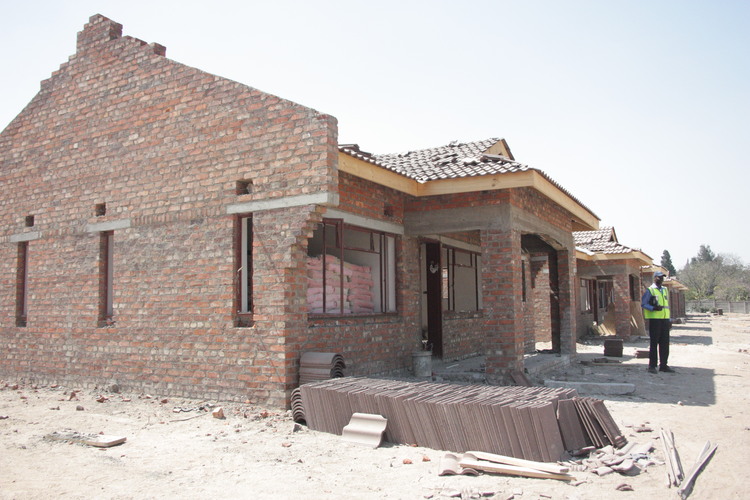
Debra Matabvu
US$60 million worth of bonds will be floated in coming weeks to fund construction of flats and land development under Government’s Home Ownership Scheme.
The Infrastructural Development Bank of Zimbabwe is leading the cash hunt, with CBZ Bank expected to start screening 1 300 applicants this week.
A bond is a debt instrument issued over one year to raise capital via borrowing. The money is repaid at nominal interest rates within a prescribed time frame.
Bonds are sold through banks and usually apply to medium to long-term projects.
Unlike the volatile stock market, the bond market is generally risk-free, offering guaranteed returns.
The bond issue — authorised by Government in 2014 — targets investors within and outside Zimbabwe.
US$50 million will be used to construct flats in Harare’s Dzivarasekwa and Tafara suburbs, and the remainder to service stands in Pomona (Harare) that will be sold to fund land development in high-density areas. Dzivarasekwa will get 640 flat units, Tafara 524 and Prospect 880.
IDBZ public relations executive Mrs Priscilla Mapuranga told The Sunday Mail: “Whilst the bonds will be issued locally, (CBZ Bank) is looking to create instruments that will also attract interest from foreign investors interested in the housing sector, as well as Zimbabweans in the Diaspora looking to invest in houses either for themselves or for their families in Zimbabwe.
“It is important to tap funds beyond the limitations of local capital markets, which are currently experiencing liquidity challenges and a general shortage of long term funding in an environment where investors have preference for short term investments.”
National Housing director Mr Lexton Kuwanda added, “The US$60 million will cover the two sites. US$50 million will be used to cover construction of Dzivarasekwa and Tafara flats, with the US$10 million going towards servicing stands in Pomona.
“We want to use the Pomona project as a cash cow. The stands there will be serviced and then sold to individuals, with the money generated being channelled towards developing land in high density areas. These stands will be sold at low prices.”
He also said: “Servicing in Pomona will likely take about five months and after that we sell the stands and begin servicing land in high density suburbs. We have identified areas like Kuwadzana that yield about 1 500 stands and Manyame, which will likely provide around 100 000 stands.
“These will be cheaper for low-income earners. Once we have the designs and bill of quantities and vetted applicants, the bonds will then be floated. We are extending the programme to all provinces and have instructed all provincial directors to identify suitable pieces of land for flat development.”
Harare-based economist Dr Kingston Khanyile said the scheme would restore order to the property market. “This is a noble initiative that will restore confidence and sanity to the housing sector, which had become infamous for land barons who were swindling desperate home-seekers.
“Government should now ensure repayment terms are not expensive so as to make the houses affordable. The process should also be transparent to reduce the housing backlog significantly.”
Low-income earners have been struggling to acquire stands and/or houses due to exorbitant prices charged by private land developers.
A good number of them also cannot afford mortgages as most packages demand huge down payments, with monthly repayments far outstripping incomes.
Housing delivery is one of Zim-Asset’s key objectives, with authorities targeting 318 000 houses by 2018.
The national housing backlog is estimated at 1,2 million, a situation that has its roots in the pre-Independence era when the colonial regime used insufficient housing supply to discourage blacks from permanently settling in urban areas.
There were restrictions to black home ownership except long leases, while hostels for singles were constructed. Housing allocation was largely influenced by race and capacity to pay rent.
At Independence in 1980, repeal of race-based urban governance policies and practices spurred rural-urban migration. Since then, Government, with private sector support, has been working to meet accommodation demand through housing schemes for low-income earners.
Housing policies: an overview
- Home ownership for the majority
- Establishing National Housing Fund and Housing and Guarantee Fund
- Facilitating civil society and private sector participation in low-cost housing
- Introduction of rent control regulations
- Initiation of rural housing programmes
- Working with waiting lists
- Informal settlement upgrades
- Direct provision of housing by Government



 Online Reporter
 leeroy