admin
admin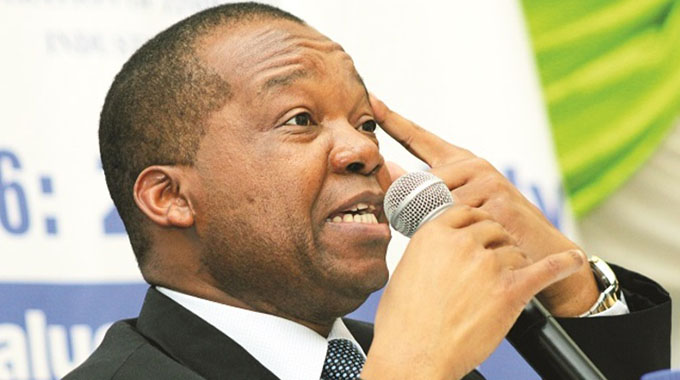
Tawanda Musarurwa Senior Business Reporter
About US$645 million has been traded on the interbank market since the platform was established in February this year, Reserve Bank of Zimbabwe (RBZ) governor Dr John Mangudya has said.
“As at the end of June 2019, foreign exchange to the tune of US$644 million had been traded within the interbank forex market,” said Dr Mangudya while addressing a breakfast meeting in Harare yesterday.
“We are quite happy about that.
“Most of the money is utilised by the manufacturing sector and fuel because of the nature of their requirements. Of late, we have also seen a reduction in the trades on the parallel market with more people selling their foreign currency on the interbank market.
“This is (also) a reflection that we do receive a sizeable chunk of foreign currency from the diaspora.”
Zimbabwe has, since October last year been undertaking a raft of currency reforms that has seen the country recently re-introducing Zimbabwe dollar.
Finance and Economic Development Minister Professor Mthuli Ncube said the decision to ban the multi-currency had been necessitated by a quickening informal “re-dollarisation” of the economy.
“Re-dollarisation required conversion of salaries to US dollars. Given the tight fiscal space and that we do not print US dollars, we would not be able to do that,” said Minister Ncube.
“That is one of the reasons why we thought we should move faster on the introduction of the Zimbabwean dollar, not that it was not on the cards but we had to move faster.”
He added that the broader reforms were now complete, but what was still required was some fine-tuning of the monetary and fiscal measures that have been put in place.
“In my view, in terms of macro-economic reforms, I think we are done now. In terms of fiscal, monetary reform, we will continue to fine-tune but we are done. I cannot think of any other major macro-economic reforms that are left,” said Minister Ncube.
The International Monetary Fund (IMF) last week commended the Government on its currency reforms, while the World Bank has since upgraded the country to a lower-middle income country from a low-income economy, showing the pace of reforms.
Dr Mangudya maintains that there is adequate foreign currency for Zimbabwe’s critical imports requirements, but the problem was individuals and corporates that were holding onto the hard currency for speculative purposes.
“We receive about US$100 million from the diaspora and about US$230 million from exports, in total around US$330 million. Our imports normally are between US$200 million and US$320 million, so if there was efficient utilisation of our foreign currency there would be a match.
“But unfortunately due to the state of the economy, people tend to hold foreign currency as a store of value.”



 Online Reporter