Online Reporter
Lovemore Chikova-Development Dialogue
Revelations that Zimbabwe is now a US$66 billion-plus economy captures a bigger story in the country’s economic journey.
Finance, Economic Development and Investment Promotion Minister, Professor Mthuli Ncube, recently said Zimbabwe’s economy had reached more than US$66 billion and was continuing to grow.
His statement deserves to be examined beyond the headline figure because gross domestic product (GDP) is not merely an economic statistic.
It is one of the principal measures used to understand the size and productive capacity of an economy.
More importantly, Zimbabwe’s economic story since 2017 provides an opportunity to examine the development trajectory of the Second Republic under President Mnangagwa.
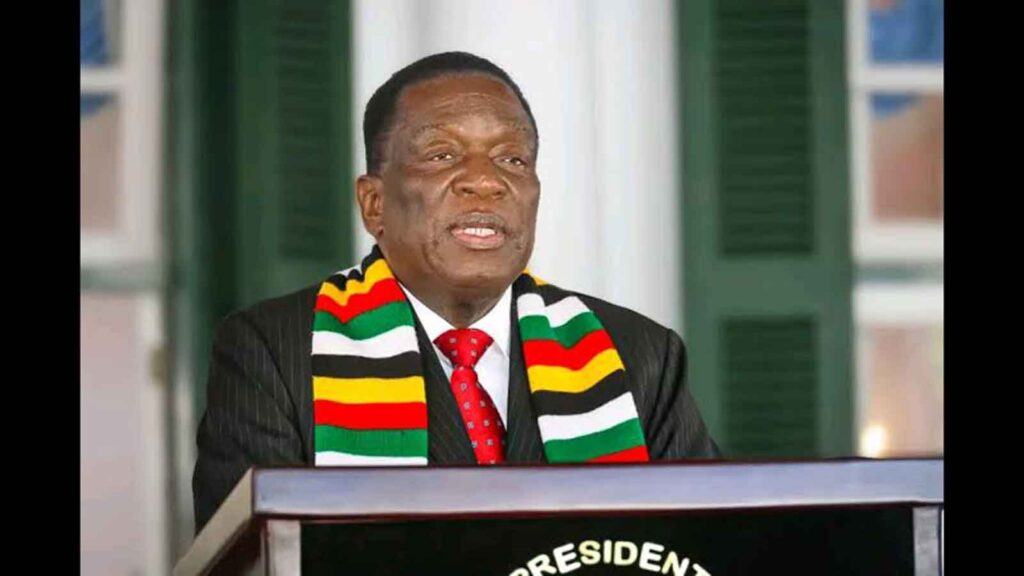
President Mnangagwa
The journey has certainly not been smooth.
Zimbabwe has experienced droughts, currency instability, inflationary pressures, electricity shortages, the Covid-19 pandemic, external debt constraints and weaknesses inherited from previous economic cycles.
Yet, against these headwinds, the economy has expanded, productive sectors have received renewed attention and the country has embarked on an infrastructure and investment programme that has altered the physical and economic landscape.
The direction is unmistakable: Zimbabwe is seeking to become a substantially larger and more productive economy.
That is the development story worth discussing.
What exactly is GDP?
For the ordinary citizen, GDP can sound like an abstract figure produced by economists sitting in offices with complicated spreadsheets.
Yet, it is actually quite simple in concept.
Gross Domestic Product is the total monetary value of final goods and services produced within a country’s borders during a specified period, usually one year.
When a farmer produces maize, a mining company extracts lithium or gold, a factory manufactures products, a construction company builds a road, a hotel accommodates tourists, a bank provides financial services, a telecommunications company provides connectivity or a transport company moves passengers and goods, these activities contribute to economic output.
When economists add up the value of such production across the economy, they arrive at GDP.
GDP, therefore, gives us an indication of the size of an economy.
A larger economy generally means a larger pool of economic activity from which businesses can invest, workers can earn incomes and Government can collect revenue to finance public services and development.
This is precisely the connection Prof Ncube made when he said that Zimbabwe’s expanding economy must be accompanied by a growing domestic revenue base.
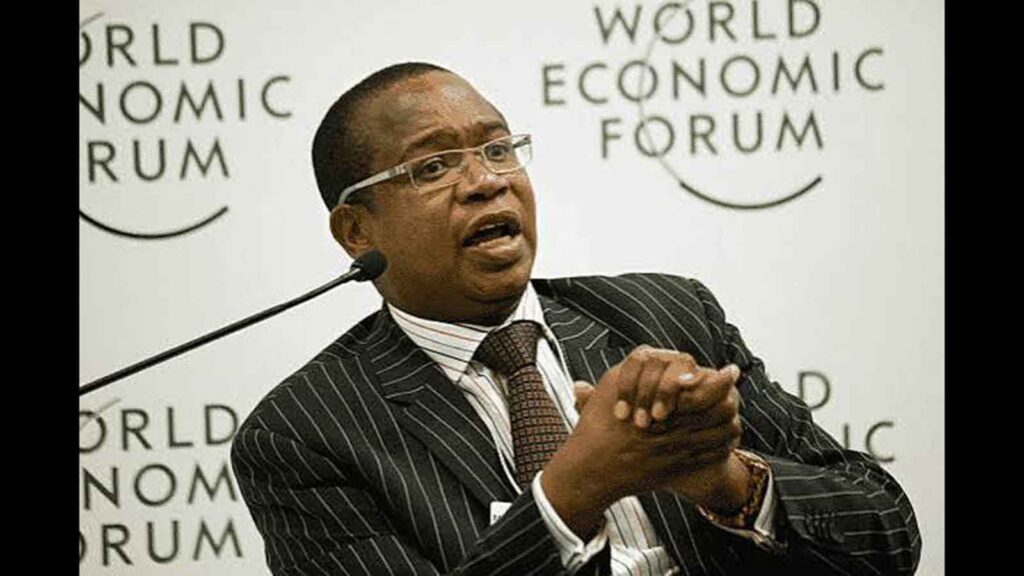
Finance, Economic Development and Investment Promotion Minister, Professor Mthuli Ncube
He has set a target of increasing Zimbabwe’s tax-to-GDP ratio to 22 percent by 2030, arguing that a stronger revenue base gives Government greater capacity to finance national priorities and development.
That is an important point.
The real development test is not merely whether GDP is growing, but whether the growth is converted into productive investment and better lives.
From stabilisation to transformation
One of the defining features of the Second Republic has been its success in moving the national conversation from crisis management towards development and transformation.
The Government’s policy framework has increasingly been organised around long-term objectives rather than annual survival.
National Development Strategy 1 and now National Development Strategy 2 have been positioned within the broader ambition of achieving Vision 2030.
This is important because development requires continuity.
A country cannot industrialise simply by announcing one factory, it needs roads, electricity, water, telecommunications, financial systems, skilled workers, markets and a predictable policy environment.
The Second Republic has consequently placed considerable emphasis on infrastructure.
Road rehabilitation and construction, dams, irrigation schemes, airports, power projects, digital infrastructure and public buildings have formed part of the development landscape of recent years.
The rehabilitation of major roads has reduced the physical distance between communities and markets. New and upgraded airports have strengthened connectivity.
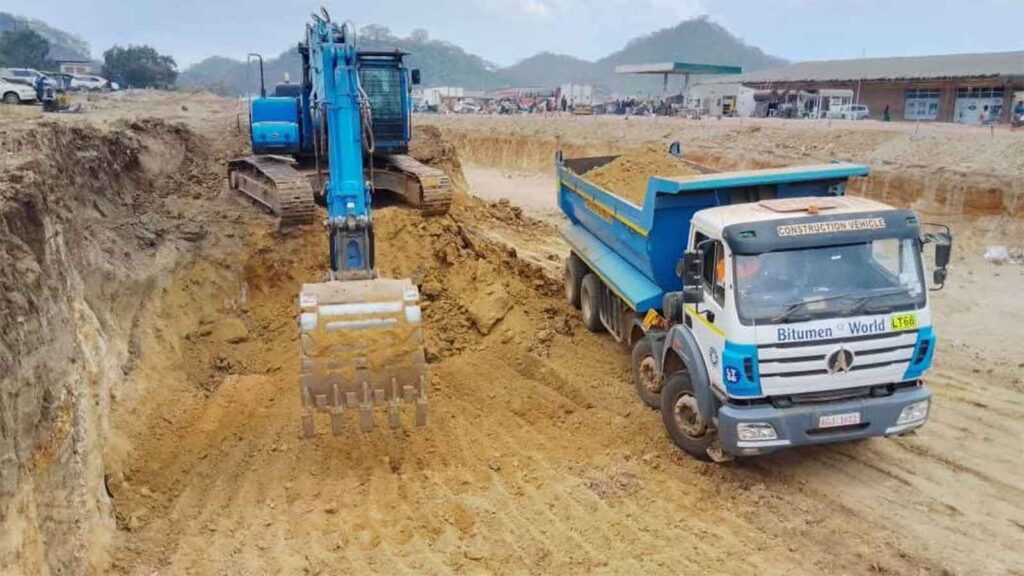
The construction of roads has been a major development initiative by the Second Republic.
Irrigation investment has reduced agriculture’s vulnerability to rainfall. Energy projects have addressed one of the most persistent constraints on industrial production.
These investments matter to GDP because infrastructure is not merely about concrete and asphalt.
A good road enables a farmer to reach a market, while reliable electricity enables a factory to operate, with a modern airport supporting tourism and investment.
Irrigation enables farmers to produce beyond the rainfall season and broadband connectivity allows businesses and citizens to participate in the digital economy.
This is where the development record of the Second Republic deserves recognition.
Agriculture: from food shortages to productive capacity
Agriculture provides another important measure of the development trajectory.
The Second Republic has responded with programmes aimed at improving irrigation, mechanisation, access to inputs and agricultural productivity.
The drought of 2024 demonstrated why this approach remains necessary – development cannot depend entirely on rainfall.
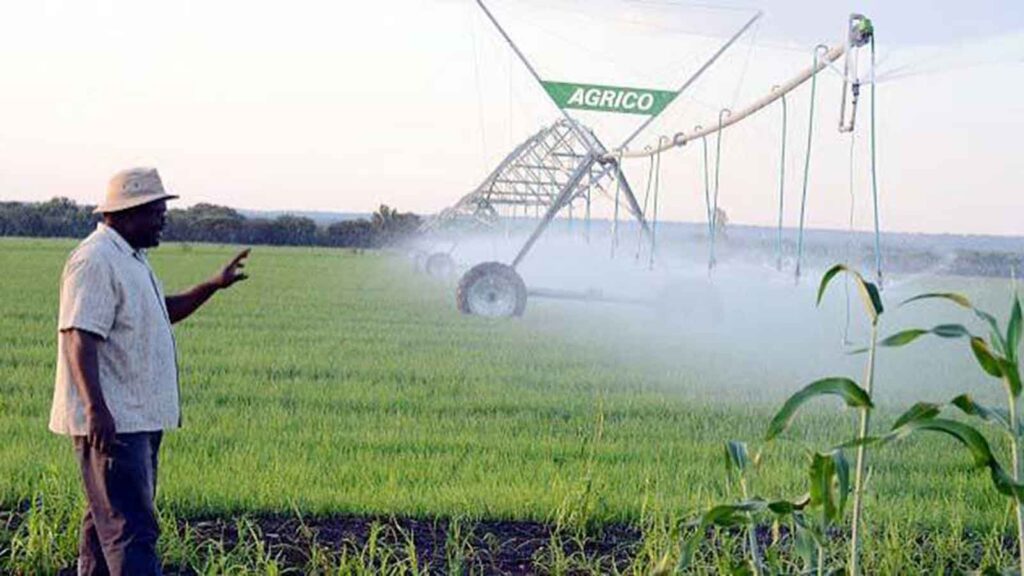
Agriculture has been boosted by the deliberate promotion of irrigation.
Investment in irrigation, dams and water infrastructure represents more than an agricultural policy, it is an economic stabilisation strategy.
When agriculture performs well, it supports manufacturing, transport, retail, financial services and exports.
When it fails, the effects spread across the economy.
President Mnangagwa’s renewed emphasis on food security and agricultural value chains is one of the more important features of Zimbabwe’s development trajectory.
Mining and the value-addition agenda
Mining has become another central pillar to the economic progress being witnessed under the Second Republic.
Zimbabwe possesses substantial deposits of gold, platinum, lithium, chrome, diamonds and many other minerals.
The Second Republic has sought to attract investment into the mining sector while increasingly emphasising beneficiation and value addition.
This is an important shift.
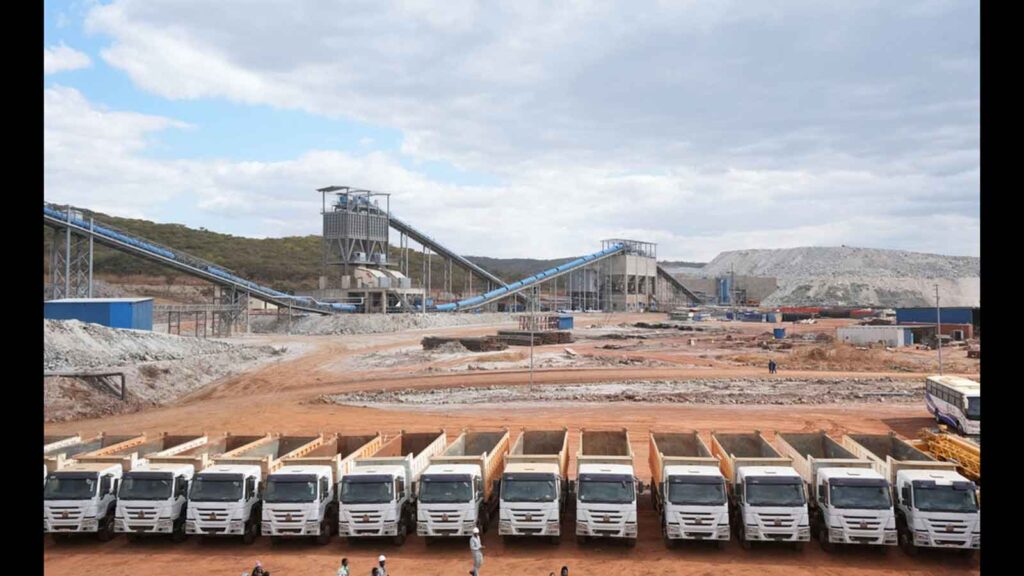
Mining has seen an increase in output following the coming in of the Second Republic.
For decades, African economies have faced the problem of exporting raw materials and importing finished products made from those same resources.
The development challenge is therefore not simply to extract minerals, it is to build processing, manufacturing and technological capabilities around them.
Zimbabwe’s lithium strategy illustrates this approach.
The Government has moved to discourage the export of unprocessed lithium ore while encouraging local processing.
The same philosophy has already been extended to other minerals like platinum.
The objective should be for Zimbabwe to capture more value from every tonne of mineral extracted from its soil.
This would expand GDP, create jobs, generate foreign currency and develop industrial skills.
Industrialisation is the next big test
The development journey cannot end with mining and agriculture.
Zimbabwe needs an industrial economy capable of manufacturing a greater proportion of what it consumes and exporting competitive products.
This is why recent Government support for manufacturing is significant.
In 2026, the Industrial Development Fund had approved financing for 15 companies, with beneficiaries operating in engineering and construction, agro-processing, pharmaceuticals, motor manufacturing and chemicals.
The programme is intended to promote job creation, import substitution, value addition and domestic value chains, and that is the correct development logic.
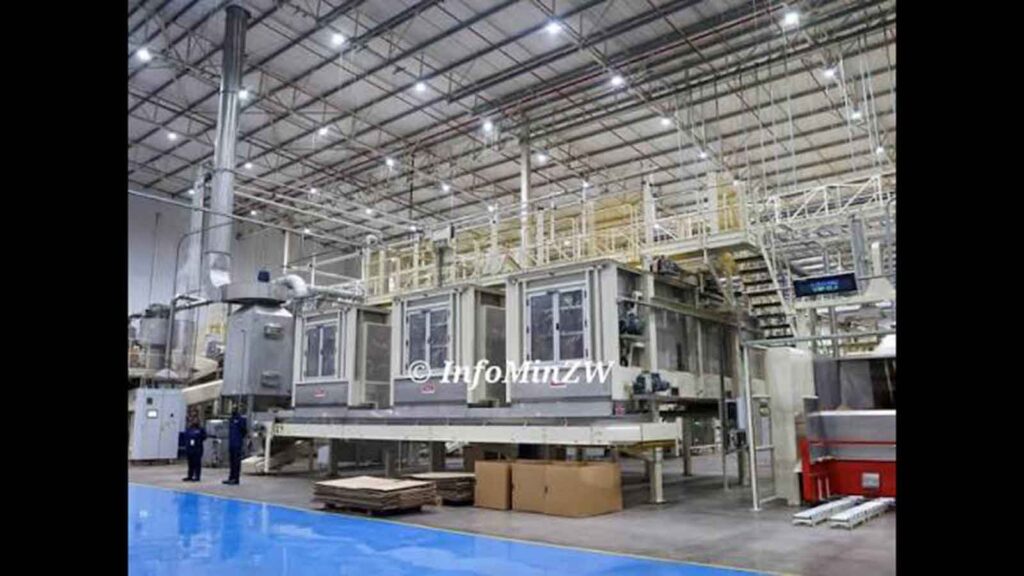
Industrialisation is taking root in Zimbabwe.
A modern economy must have strong linkages between sectors.
Fo example, cotton should feed textile production, agricultural produce should feed food-processing industries and minerals should feed manufacturing and processing.
Construction should stimulate local production of building materials, while pharmaceutical production reduces dependence on imported medicines.
Industrialisation is ultimately about turning Zimbabwe from a supplier of commodities into a producer of increasingly sophisticated goods and services.
Where Zimbabwe stands in SADC
Regional comparison gives the GDP debate another useful dimension.
SADC comprises 16 member states, including South Africa, Tanzania, Angola, Zambia, Botswana, Mozambique, Namibia and Zimbabwe.
Using the latest comparable World Bank 2025 figures, South Africa remains by far the largest SADC economy, with GDP of about US$427.2 billion.
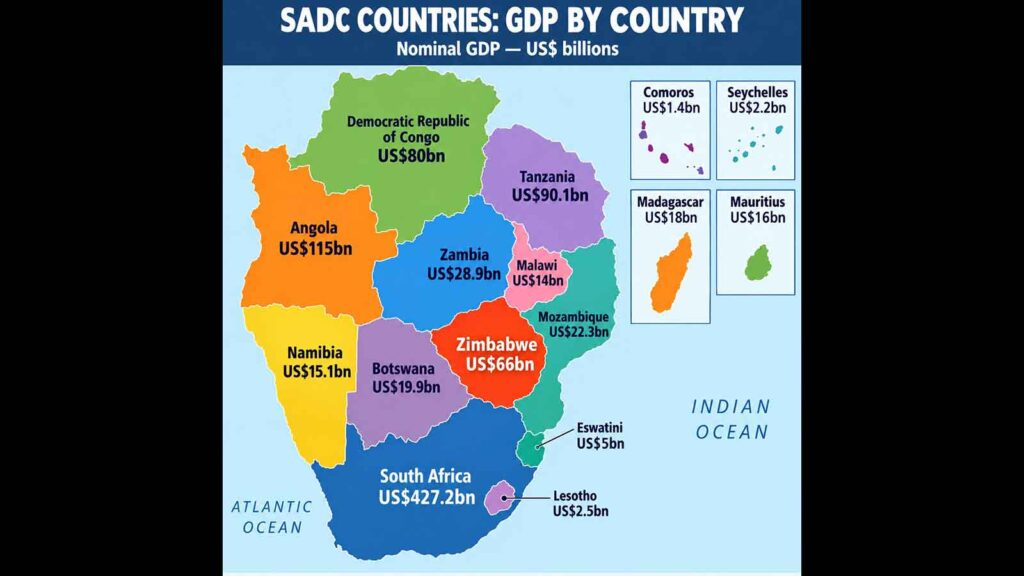
Zimbabwe’s GDP has surpassed that of many other fellow SADC peers.
Tanzania follows at about US$90.1 billion.
While Zimbabwe is now at US$66 billion plus, Zambia is about US$28.9 billion, Botswana about US$19.9 billion, Namibia about US$15.1 billion and Mozambique is about US$22.3 billion.
These figures place Zimbabwe among the larger economies in the SADC region, although it remains well behind South Africa and Tanzania in absolute economic size.
Zimbabwe, under the Second Republic, aspires to become one of the region’s leading production, manufacturing, logistics, tourism, mining and agricultural economies.
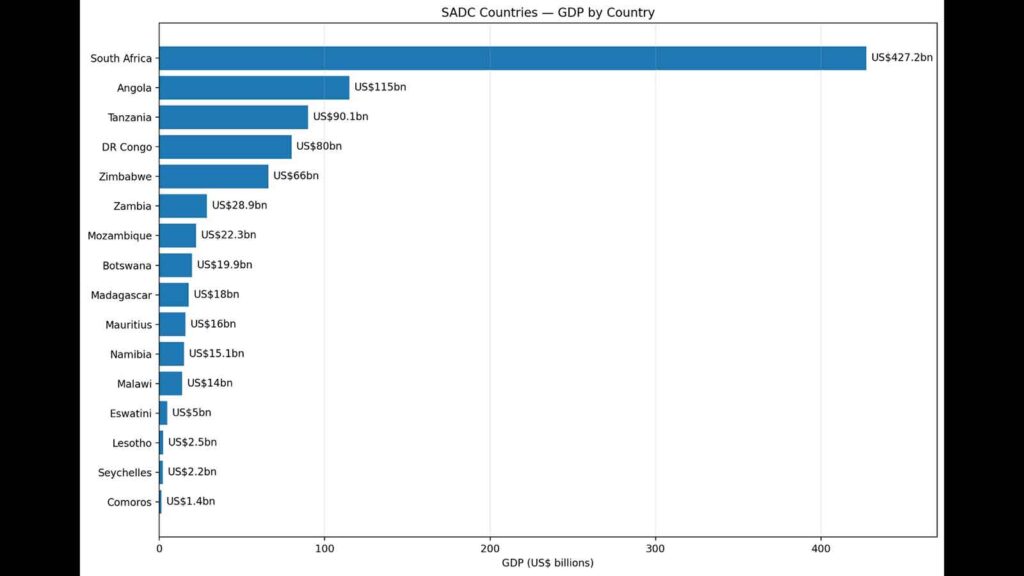
Zimbabwe’s position in SADC gives it an enormous opportunity, as it sits at the crossroads of major regional markets.
It borders Zambia, Mozambique, South Africa and Botswana and has established road and rail connections to the wider region.
The Second Republic has been prioritising the transformation of this geographical position into an economic advantage.
The ambition is to become a regional hub in various sectors and in logistics and distribution.
The objective should, therefore, be to stop thinking of Zimbabwe as a market of approximately 16 million people and start thinking of it as a production base serving a continental market.
That is where GDP growth can become transformative.
What the US$66 billion economy mean
The significance of a larger GDP ultimately comes down to what happens outside the statistics because a larger economy should create opportunities in various sectors.
It should mean more businesses, more investment, more jobs, greater demand for goods and services, stronger government revenues and more resources for infrastructure and social services.
It can also improve Zimbabwe’s bargaining position internationally because investors look at the size and trajectory of an economy when deciding where to put their money.
A growing economy with abundant minerals, agricultural capacity, tourism assets, skilled people and improving infrastructure becomes more attractive.
A larger domestic market can also encourage companies to establish operations inside the country rather than simply importing products.
The expansion of the economy also matters for Government revenue.
As Prof Ncube has correctly pointed out, a larger economy creates a larger potential tax base.
This is particularly important at a time when many developing countries face restricted access to affordable external financing.
Zimbabwe cannot build its future entirely through borrowing, it must increasingly mobilise domestic resources.
That means expanding production, widening the tax base, reducing leakages and improving compliance.
In that respect, GDP growth and domestic resource mobilisation are two sides of the same development coin.
The Second Republic’s development model
There are several areas where the Second Republic can legitimately claim progress.
First, it has prioritised infrastructure, which is the foundation upon which productive economic activity rests.
Second, it has pursued investment: Zimbabwe has increasingly presented itself as open for investment, particularly in mining, manufacturing, energy, tourism and agriculture.
Third, it has promoted value addition: The move from exporting raw minerals and agricultural commodities towards processing and beneficiation is essential for structural transformation.
Fourth, it has placed agriculture at the centre of food and economic security: Programmes involving irrigation, mechanisation and inputs have sought to increase national productive capacity.
Fifth, it has pursued industrialisation: The support being provided to selected manufacturers through the Industrial Development Fund is evidence of an attempt to rebuild domestic productive capacity.
Sixth, it has embraced long-term development planning: Vision 2030 gives Government, business and citizens a common destination around which policies can be organised.
A development story worth recognising
There is a tendency in political and economic debate to look only for what has gone wrong. That is necessary for accountability, but it can obscure genuine progress.
Zimbabwe today is not the same economy it was in 2017 when President Mnangagwa took over.
The country has expanded its infrastructure base, attracted investment into strategic sectors, increased agricultural productive capacity, developed its mining industry, pursued beneficiation, supported industrialisation and maintained positive economic growth despite formidable shocks.
The Second Republic deserves credit for establishing a development agenda that places infrastructure, investment, agriculture, mining, industrialisation and Vision 2030 at the centre of national policy.