Online Reporter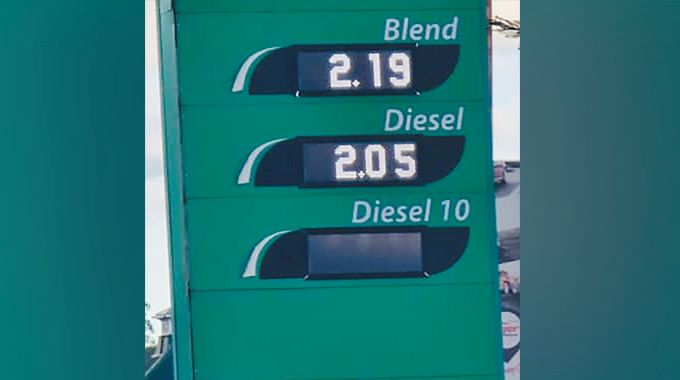
Marshall Ndlela, [email protected]
ESCALATING military confrontation involving the United States, Israel and Iran has triggered global economic tremors that are likely to be felt far beyond the Middle East.
For vulnerable economies, the consequences could be severe, particularly through rising oil prices, supply chain disruptions, inflationary pressures and broader geopolitical instability.
The strikes against Iran have heightened tensions in the Middle East — home to some of the world’s largest oil reserves — and raised fears of disruptions to critical energy transport routes such as the Strait of Hormuz, through which nearly a fifth of the world’s oil supply passes.
Even limited disruptions to this corridor have historically caused sharp spikes in global oil prices. For Zimbabwe, a country heavily dependent on imported fuel, such developments directly translate into higher economic costs across multiple sectors.
Oil prices and the cost of living in Zimbabwe
Zimbabwe imports virtually all its petroleum products. As a result, global oil price fluctuations are quickly transmitted into domestic fuel prices.
Fuel prices influence nearly every sector of the Zimbabwean economy. When oil prices rise globally, transportation costs increase, agricultural production becomes more expensive, manufacturing input costs rise, food prices escalate and inflation accelerates.
Transport operators, who already face high fuel costs, pass these increases on to consumers through higher fares. For urban households and informal sector workers who rely on daily commuting, this could significantly erode disposable income.
Agriculture — one of Zimbabwe’s key economic sectors — will also be affected. Diesel is essential for irrigation systems, tractors and transport of produce. Higher fuel costs therefore translate directly into higher food prices.
Zimbabwe has experienced repeated cycles of inflation and currency volatility over the past decade. Rising global energy prices risk adding another layer of pressure to an already fragile economic environment.
Higher fuel costs tend to ripple across the entire price structure of the economy. Businesses facing rising energy and transport expenses will likely increase prices of goods and services to remain viable.
For Zimbabwean households, this could mean higher prices for basic commodities, increased transport costs, reduced purchasing power and growing economic hardship for low-income households.
The impact may be particularly severe in the informal sector, which employs a large proportion of Zimbabwe’s workforce but lacks mechanisms to absorb sudden cost increases.
Businesses face rising operating costs
Zimbabwean businesses — already navigating currency volatility, high borrowing costs and inconsistent power supply — may face additional strain from global energy price shocks.
Manufacturing companies rely heavily on diesel generators due to unreliable electricity supply. As global oil prices rise, the cost of running backup power systems increases, pushing production costs higher.
Small and medium enterprises, which form the backbone of Zimbabwe’s urban economy, are particularly vulnerable. Rising operating costs could lead to reduced production, layoffs, or business closures.
For mining companies, which are major exporters and contributors to national revenue, higher fuel costs will increase operational expenses in transportation, equipment operation and processing.
The Middle East has become a critical global logistics and aviation hub connecting Asia, Europe and Africa. Airlines based in the region play a central role in global cargo and passenger transport.
Escalating military tensions may lead to airspace closures, flight rerouting, higher aviation insurance premiums and increased cargo transport costs.
Zimbabwe relies heavily on international aviation networks for imports, exports and tourism. Disruptions in Middle Eastern air transport routes could increase shipping times and costs, affecting trade and business operations
Implications for the BRICS economic bloc
Iran’s recent integration into the BRICS economic grouping signalled a broader shift towards new economic alliances among emerging economies.
The conflict involving Iran risks destabilising one of the strategic pillars of the bloc — energy co-operation among developing economies.
For countries such as South Africa and other African economies connected to BRICS networks, prolonged instability could disrupt potential trade and investment opportunities linked to energy partnerships.
Across Africa, many countries rely heavily on imported petroleum products. When global oil prices rise sharply, governments often face difficult choices between maintaining fuel subsidies or passing costs to consumers.
For economies already grappling with debt burdens, rising energy import bills can worsen fiscal pressures and weaken currencies.
Zimbabwe, which already faces foreign currency shortages and balance-of-payments constraints, could see additional pressure on its reserves as the cost of fuel imports rises.
Sports, investment and regional stability
The Middle East has recently emerged as a global centre for sports investment, hosting major boxing events, football tournaments and entertainment festivals designed to diversify regional economies beyond oil.
Large-scale events such as Riyadh’s international sports festivals have attracted global tourism and investment. However, prolonged conflict could divert financial resources towards military spending while discouraging international sporting events and entertainment investments.
Reduced activity in this sector could affect global tourism flows and international business partnerships linked to sports and entertainment industries.
Rising security risks and terrorism concerns
Geopolitical conflicts in the Middle East have historically created conditions that enable the growth of extremist networks and regional proxy conflicts.
Analysts warn that prolonged instability could lead to increased terrorist activity, cyber threats and disruptions to international trade routes.
Such developments would further weaken investor confidence and increase global economic uncertainty.
For Zimbabwe, the economic consequences of escalating conflict in the Middle East could compound existing structural challenges.
Rising global oil prices and supply chain disruptions may deepen pressures, increasing the cost of living for ordinary citizens while making it harder for businesses to remain competitive.
Ultimately, geopolitical conflicts occurring thousands of kilometres away can have profound local consequences. In an interconnected global economy, Zimbabwe remains vulnerable to external shocks — especially those involving energy markets.