daniel chigunwe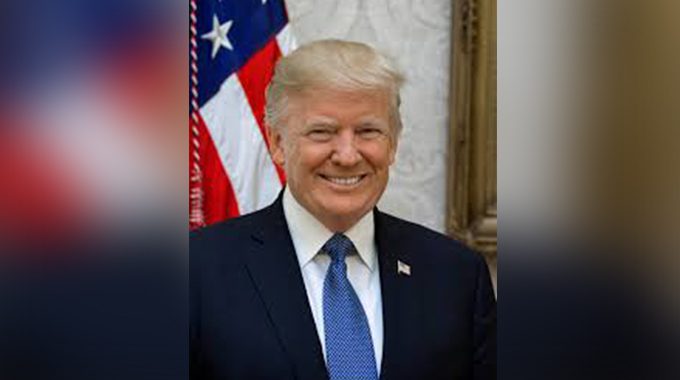
Zvamaida Murwira and Joseph Madzimure
United States President Donald Trump’s administration has conceded that the US Agency for International Development (USAID) has been used as a conduit for regime change activities in several countries around the world, a development that vindicates Zimbabwe’s widely held view of the organisation.
The Republican administration, which took office on January 20, has since moved swiftly to close USAID’s Washington DC offices and operations, arguing that it has been used to fuel coups, protests, fund opposition parties and political activists, in what observers have noted as a “Damascene moment” for the Trump administration.
US billionaire Mr Elon Musk, who was appointed by President Trump to lead the Department of Government Efficiency (DOGE), branded USAID a “criminal organisation” after security officials reportedly denied members of his cost-cutting task force access to crucial files.
He said USAID should “die” amid reports that two top security officials at the aid agency were put on leave for refusing his representatives access to classified materials.
In a January 20 executive order announcing a 90-day pause in most of US foreign aid, President Trump said the US “foreign aid industry and bureaucracy are not aligned with American interests and in many cases antithetical to American values.”
“They serve to destabilise world peace by promoting ideas in foreign countries that are directly inverse to harmonious and stable relations internal to and among countries,” it said.
US Secretary of State Marco Rubio said he is now the acting director of the US Agency for International Development, following the Trump administration’s sudden pause on federal foreign spending and layoffs at the 63-year-old agency.
The observations by the US administration dovetails with a widely held view by the Zimbabwean Government that USAID has since the turn of the millennium been used as an agent of regime change in Harare through creation of shadowy civil society organisations.
There have been several civic society organisations that occasionally surface as the country approaches national elections or ahead of an international conference such as the United Nations General Assembly to discredit the Government under the guise of human rights watch.
The Government has over the years consistently raised red flags over USAID activities as the international agency claims that it has provided more than US$3 billion in aid to Zimbabwe since independence in support of “democratic institutions and actors” in order to have free and fair elections.
In 2018, the United States admitted that the quasi-political civil society organisations it had been funding to push “democratic activities” in Zimbabwe squandered funds meant for the “project”.
The US said it had since suspended funding them and reported the matter to USAID Office of the Inspector General (OIG).
The OIG is an arm responsible for investigating the abuse of USAID programmes.
Organisations which were fingered by the US then for alleged abuse of funds include the Zimbabwe Human Rights Association (ZimRights), Election Resource Centre (ERC) and Counselling Services Unit (CSU) and all three deal with political and governance issues.
This was revealed by the then US Embassy acting public relations officer Mr John Taylor who admitted that there was misuse of funds.
It has also emerged that nefarious activities by USAID were well documented across the globe.
There are reports that USAID built a fake Cuban Twitter platform called ZunZuneo, designed to lure young users and slowly feed them anti-government content to spark protests and was funded in secret through shell companies.
The plan collapsed when exposed in 2014.
USAID was accused of funding regime change in Venezuela after it poured millions into opposition groups trying to overthrow the leaders of that country, President Hugo Chávez and Nicolás Maduro.
It trained activists, bankrolled anti-government media, and was linked to the failed 2002 coup against President Chávez.
In 2014, USAID and the National Endowment for Democracy poured money into opposition groups and media in Ukraine.
Other countries where it was accused of meddling in political affairs include Bolivia, Haiti and Afghanistan.
Founded in 1961, the agency manages billions of dollars in federal humanitarian assistance around the world.
But its work was thrown into upheaval in the last week, as the Trump administration halted nearly all its programmes and took down its website.



 Online Reporter