Chronicle Editor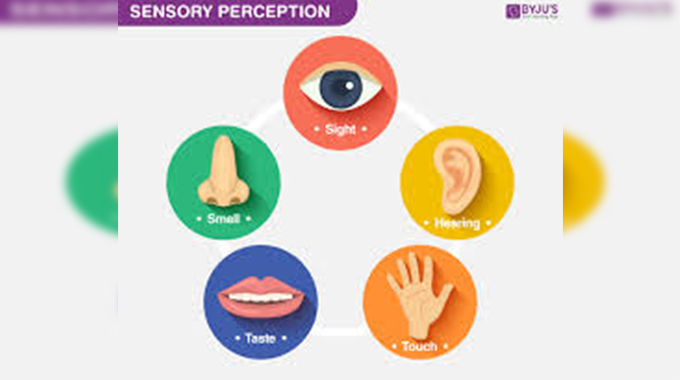
SCHOOL holidays are surely coming to an end. Learners have played to the maximum such that there will be no need to complain when called to work hard at school.
As they play, students should use all their senses to capture everything to use in their writing. This is relevant to all students who had to move around touring the country.
Natural, when moving around, you see a lot of things that help fire your imagination and produce well-written pieces of work.
Use what you see around you. Do not be hamstrung by running short of ideas when you write. I have in mind here learners who had the opportunity to visit the Zimbabwe International Trade Fair (ZITF).
It is indeed a business expo and more relevant to businesspeople, but students can tap into a lot of knowledge from some exhibits. Learners are also remembered through Scholastic.
The young at heart and concerned with school might get a lot of relevant information in their subjects. Talking of relevant subjects, I am not only referring to commercial subjects but the broader curriculum.
Having said that, back to serious learning. Make sure you learn from this page. Having talked about words commonly confused, we cannot leave the following, which are frequently confused. A bit, a bit is often used as an adverb with the same meaning as a little.
She is a bit old with grade zero pupils, isn’t she? Can you drive a bit slower? Wait a bit. Note that when “a bit” and “a little” are used with non-comparative adjectives; a bit tired, a bit expensive, a little (too) old.
The meaning is usually negative or critical. But not (a bit kind, a little interesting) – a bit of a – a bit of a can be used before some nouns in an informal style.
Born and borne- Be born – To talk about coming into the world at birth, we usually use the passive verb to be born. Hundreds of children are born every year.
To give somebody a place or date of birth, we use the simple past tense –was/were born. I was born in 1980. (not I was born in 1980). My parents were born in Malawi. The verb bear – There is also a verb bear (bore, borne).
This verb is often used in the expression (can’t bear (hate; can’t stand) – can’t bear his voice. In a very formal style, bear can be used with other meanings including carry and give birth to.
They bore their commander’s body away on a stretcher.
She has borne five children in six years. More normal; she has had five children. Borrow and lend – these always give people problems. –borrow something from somebody; lend something to somebody, lend somebody something, borrow is like take – Can I borrow you a pen? (not can I lend you a pen). You borrow something from somebody.
I borrowed a dollar from my brother. Not, “I borrowed my brother a dollar”. Broad and wide: Wide is used for the physical distance from one side of something to the other.
We live in a wide street. The car is too wide for the garage. Broad is used in this physical sense in a few common expressions like broad shoulders and the description of the landscape in a formal style.
Across the broad valley, the mountains rose blue and mysterious. But, broad is mostly used in abstract expressions: some example: broad agreement (= agreement or most important point). Do you remember abstract nouns like beauty?
Broad-minded (=tolerant) broad daylight (= full bright, daylight). But = “except” – We use “but” to mean except, after all, any, no (and everything, everybody, nothing, nobody, anywhere and so on). He eats nothing but hamburgers. I have finished all the jobs but one. Everybody is here but Patrick. She’s done nothing, but cry the whole day.
Note the expressions,“next but one, last but two”. Raina lives next door but one. (=two houses from me). I was last but two in the race last week. The expression expresses the idea of (if something had not existed/happened). I would have been in real trouble but for your help. But, for the storm, I would have been home before seven.
Pronouns after “but”: After “but” we usually use object pronouns (me, him, etc.) Subjects pronouns (I, he, etc. Nobody but her would do a thing like that). (More formal: Nobody but she . . .). (By and with tools) the difference – “By” and “with” can both be used to say how something does something, but there is an important difference.
We use “by” when we talk about an action – what we do to get a result. We use “with” when we talk about a tool or other object – what we use to get results. Compare: I killed a spider by hitting it. (Note the –ing form after by. I killed the spider with a shoe. (. . . not by a shoe).
For views link with [email protected] or sms to 0772113207



 Online Reporter