Online Reporter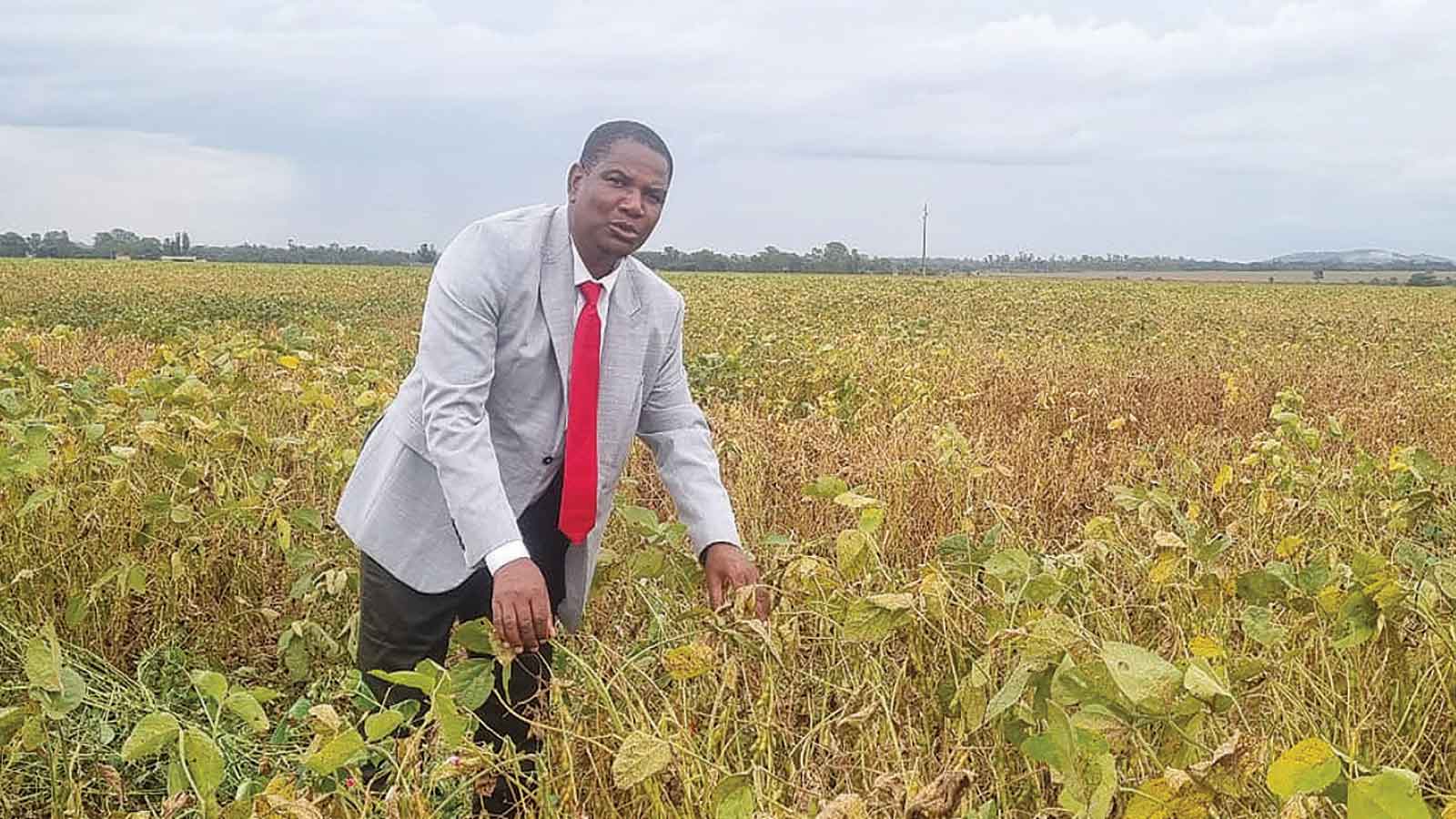
Elita Chikwati
Agriculture News Editor
THE University of Zimbabwe Agro-Industrial Park has transformed the traditional farm into a synchronised ecosystem, where crops are grown, processed, packaged and sold — bolstering local supply and supporting import substitution.
The shift, which is in line with the Government’s Heritage-Based Education 5.0 philosophy, the National Development Strategy 1 (NDS1) and Zimbabwe’s Vision 2030, contributes to import substitution, particularly in cooking oil and stock feeds, while also supporting job creation, value addition, and food and nutrition security.
The multi-enterprise park integrates crop production, livestock systems, agro-processing, research, training and market systems within a single coordinated framework.
Under crop production, the agro-industrial park is producing soya beans, maize, wheat, sweet potatoes, Irish potatoes and cabbages, among others, while the livestock systems include beef cattle, broilers and piggery.
The maize is processed into maize meal; bio-fortified sweet potatoes are used for manufacturing bread; and soya beans are used for making stock feeds and edible oil. The products are available in the university’s retail outlet, Vaka Nyika Supermarkets.
During the 2025/26 season, the institution planted 340 hectares of maize, 210 hectares of soya beans and 40 hectares of sugar beans. The institution expects more than 2 000 tonnes from its current rainfed maize crop.
UZAIP director, Dr Jacob Gusha, said the park had established key agro-industrial facilities.
“These include a stock feed manufacturing plant with an installed capacity of 120 tonnes per day; an edible oil extraction plant with a capacity of 30 tonnes of soya beans per day; and a bread and confectionery unit capable of producing up to 20 000 loaves per day.
“The poultry unit has an installed capacity of 103 500 broilers per 42-day production cycle. These operations are supported by retail and distribution systems that link production directly to the market,” he said.
UZAIP operates through collaboration with the University of Zimbabwe, Government institutions, private sector partners and smallholder farmers, who are integrated into value chains through grower schemes and supply arrangements.
Dr Gusha said the innovation hub served as the driving engine of the agro-industrial park, providing a platform for translating research outputs into practical, scalable and commercially viable solutions.
“The agro-industrial park is anchored within the University of Zimbabwe’s Research, Innovation and Industrialisation ecosystem, which is a brainchild of the Vice-Chancellor, Professor Dr Paul Mapfumo.
“The core objective of the park is to demonstrate how agriculture can be transformed into a modern, industrialised and commercially viable sector through value addition, innovation and market integration.
“At the same time, it serves as a practical training ground, producing graduates who are industry-ready and capable of driving agribusiness development.”
Dr Gusha said the integration of value chains, especially linking soybean production to cooking oil and stock feed manufacturing, had strengthened internal efficiency and reduced reliance on external inputs.
“The park has also become a platform for innovation, including the development of nutritionally enhanced food products and improved feed formulations.
“Importantly, UZAIP is demonstrating strong commercial potential, with a clear pathway towards becoming a financially sustainable agro-industrial enterprise with significant revenue growth in the coming years,” he said.
The agro-industrial park has provided students with hands-on, experiential learning within a real agro-industrial environment, equipping them with practical skills in production, processing and agribusiness management.
“This significantly improves their employability and entrepreneurial capacity.
“For communities, the park promotes inclusive development by integrating smallholder farmers into structured value chains. Through grower schemes and technical support, farmers gain access to reliable markets and improved production systems.”
Dr Gusha said that despite the progress made by UZAIP, there were challenges, including limited access to working capital, which affects the consistent procurement of key raw materials such as soya beans and maize, resulting in underutilisation of processing capacity and ultimately hampering the general production process.
Challenges also include infrastructure gaps, particularly in irrigation, storage and logistics, which limit operational efficiency.
In the next five years, UZAIP aims to become a leading agro-industrial innovation hub in Africa, driven by research-based production, value addition and market integration.
“Key developments will include scaling up production to match processing capacity, expanding irrigation and greenhouse systems, and strengthening livestock productivity through improved genetics and feeding systems.
“Major infrastructure developments are planned, including storage facilities, hatcheries, abattoirs, cold chain systems, and expanded processing capacity,” he said.
The park will also scale up out-grower schemes to integrate thousands of smallholder farmers into structured value chains, particularly in soybean production for edible oil processing.
“There will be increased adoption of digital agriculture and smart technologies to improve efficiency, traceability and decision-making,” Dr Gusha said.
UZAIP demonstrates that universities can play a central role in driving industrialisation by not only producing graduates, but also products, technologies and enterprises.