Online Reporter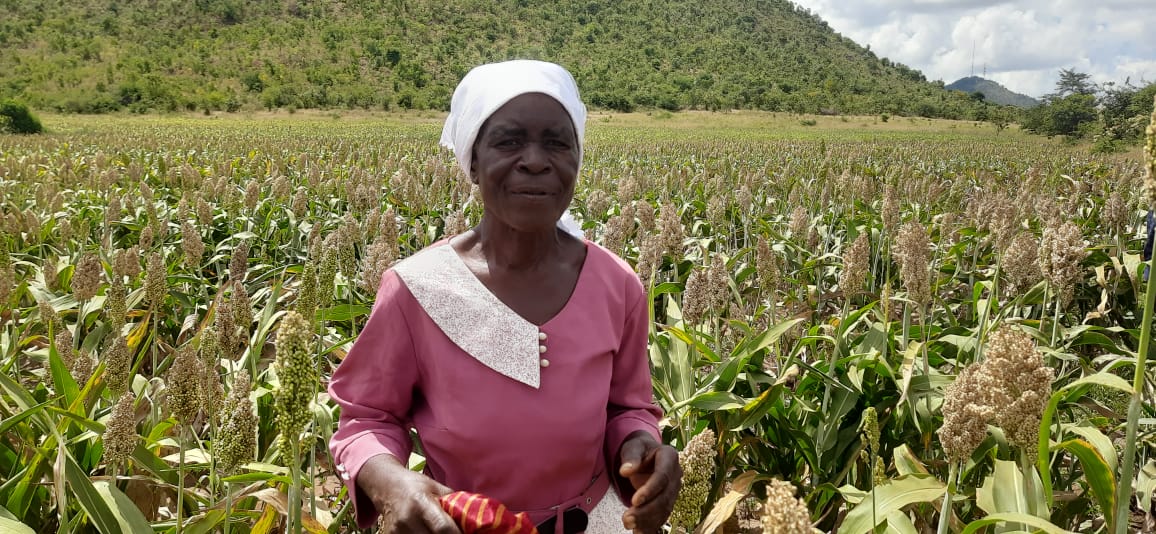
Elita Chikwati
Agriculture News Editor
THE University of Zimbabwe has developed and registered three new traditional grain seed varieties through a collaborative effort with another Government-owned entity, Vaka Nyika Seeds Private Limited, as part of national efforts to fight climate-related food insecurity.
VN Seeds Pvt Ltd is a start-up company under the institution’s Future Grains for Africa Programme and is in sync with the 8.0 mission under the Ministry of Lands, Agriculture and Water Resources to support rural industrialisation, increased food, nutrition and income security at both household and national levels.
The UZ research group bred sorghum (VNS501), finger millet (VNF401) and drought-tolerant maize (VN501). The maize variety is a medium-maturity variety boasting a yield potential of 10 tonnes per hectare and is suitable for all regions.
The variety is tolerant to grey leaf spot, turcicum leaf blight and has a good ear aspect and husk cover. The sorghum is an early-maturing variety that has a yield potential of 3t/ha.
It is drought-tolerant and high in zinc and iron. The variety is tolerant  to major diseases. This finger millet variety is high in zinc and iron, possesses better malting qualities and matures early.
The university is contracting farmers in Muzarabani, Mutoko and Mt Darwin as outgrowers to produce sorghum seed. Some of the beneficiaries of the project said the initiative had helped them, as the crop was tolerant to drought and had a ready market.
Muzarabani farmer, Mr Nomore Chizeya, said they planted sorghum under the UZ programme and were expecting high yields.
“We planted maize, but it was affected by the dry spell, while the sorghum performed well. Vaka Nyika 401 performed well. The traditional grains can reduce food insecurity in our community. I am expecting 45 tonnes from the 16 hectares I planted,” he said.
Farmers, however, expressed concern over armoured crickets, birds and a lack of farming equipment, especially for harvesting.
Mt Darwin farmer, Mrs Eva Nzara of Tsakare Village, said the introduction of sorghum by the UZ was a relief to her as the crop was not labour-intensive.
“I used to grow tobacco, but the crop is labour-intensive. Its production involves a lot of processes – reaping, curing and mobilising firewood,” she said.
“Tobacco production has increased deforestation in this area. By growing sorghum, we will have nutritious food and also save our forests.
“With this sorghum crop, I only planted and applied fertilisers and herbicides and had enough time to attend to other duties, including tending to my irrigation plot. Through the UZ project, I am also guaranteed a market.”
Agritex acting director Mr Ellias Kudyanyemba said the project had enabled many farmers to realise the correct crops for their agro-ecological region.
“The rains are no longer predictable; it has not been easy for farmers to adjust to the new rainfall patterns. We encourage farmers to grow traditional crops, which are tolerant to drought,” he said.
“Farmers do not have to worry about markets, as they can always sell traditional grains to the Grain Marketing Board (GMB) at the same producer price as maize. Those who do not want to eat traditional grains can always swap for maize at the GMB depots.”
Mr Kudyanyemba urged the UZ to ensure value addition of the crops was done in the farming areas to create employment and boost rural industrialisation.
University of Zimbabwe Vice Chancellor, Professor Paul Mapfumo, said the projects being implemented by the institution were in line with Vision 2030.
“We are working closely with communities to find ways of mitigating climate change and boosting household and national food security. We get feedback from farmers, so we can come with innovations that are suitable for their needs,” he said.
“Growing sorghum is another way of reducing food insecurity in communities. We should develop our communities through innovation hubs and industrial hubs.
“The sorghum programme under the Future Grains for Africa programme is also promoting value addition, so farmers can get high returns.”