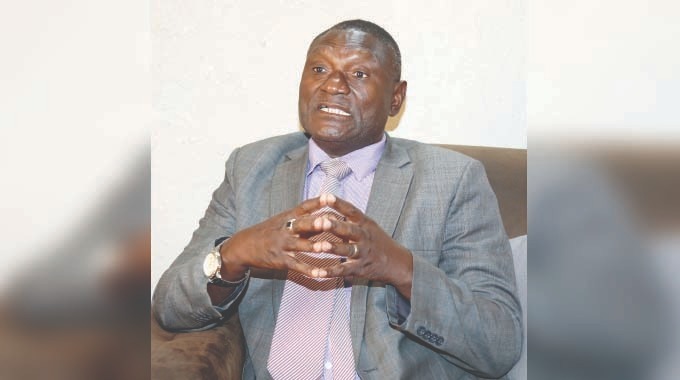
Online Reporter
Fidelis Munyoro
Chief Court Reporter
THE Constitutional Court has dismissed the University of Zimbabwe’s petition for direct access in a matter where the institution sought to invalidate a Supreme Court ruling that confirmed an award of damages to its former bursar, Vengai Mugabe, resulting from unlawful termination of his employment.
Furthermore, the court has rendered the proceedings in both the Supreme Court and the Labour Court as invalid, citing significant procedural irregularities.
This ruling has highlighted concerns regarding the judicial mechanisms and labour practices within Zimbabwe.
The case revolved around Mugabe’s contested departure from his position as bursar, an office he held under a fixed-term contract beginning in July 2017.
Mugabe had been awarded damages of US$323 036,69 by a labour officer in 2019, confirmed by the Labour Court, after he was found to have been unfairly dismissed.
However, the UZ challenged these decisions, arguing that they contravened statutory and constitutional principles, including its rights to equal protection under the law and to private property.
Justice Anne-Mary Gowora, writing for the Constitutional Court bench, ruled that the UZ’s application was inadmissible.
“The application for leave to directly access the court cannot succeed. There can be no violation of rights alleged against a judgment that is the result of an irregularity,” Justice Gowora stated.
The court found that the Labour Court’s confirmation of the labour officer’s ruling was procedurally defective, rendering subsequent judgments by both the Labour Court and the Supreme Court nullities.
It held that the labour officer, Jealous Zhakata, had failed to follow mandatory statutory procedures, including filing the required affidavit and appearing before the Labour Court to move for confirmation of his draft ruling.
“The whole approach from the labour officer to the court and counsel appearing before it was replete with irregularities,” Justice Gowora noted.
The Constitutional Court invoked its review powers under Section 19 of the Constitutional Court Act to set aside the rulings of both the Labour Court and Supreme Court.
Despite this, it declined to grant the UZ’s request to have the matter remitted to the Supreme Court for fresh determination.
Justice Gowora emphasised that there were no valid proceedings before the Supreme Court to warrant such relief.
“Equally, and most importantly, there can be no outstanding issues for determination by the Supreme Court in the absence of a valid decision from the Labour Court,” the judgment read.
The crux of the dispute lay in a memorandum Mugabe wrote to the university’s Vice-Chancellor in 2018, in which he expressed frustrations over professional disagreements and suggested an “immediate exit” as a possible solution.
The university interpreted this as a resignation and barred Mugabe from his duties. Mugabe maintained that the memo was misinterpreted and filed a complaint of unfair dismissal with the Ministry of Labour.
A labour officer ruled in Mugabe’s favour, awarding him damages equivalent to the unexpired term of his contract, as well as ancillary benefits including a motor vehicle, fuel, and electronic equipment.
The UZ argued that awarding the vehicle outright violated the employment contract, which stipulated that such a transfer could only occur if the vehicle met specific conditions, including having clocked 60 000 kilometres.
The institution also contested the payment of damages in United States dollars, citing laws that required such liabilities to be converted to Zimbabwean currency as of February 2019.
The Supreme Court, in the contested judgment, dismissed the university’s appeal and upheld the labour officer’s findings.
However, the Constitutional Court found that the Supreme Court had relied on a flawed Labour Court judgment and therefore could not have properly exercised its appellate jurisdiction.
The Constitutional Court’s decision underscores the importance of procedural compliance in labour disputes.
“The jurisdiction of this court is strictly limited to constitutional issues involving the interpretation, protection, or enforcement of the Constitution,” Justice Gowora said.
She emphasised that the court cannot entertain applications that seek to revisit purely procedural or substantive matters in the absence of a constitutional basis.
The ruling leaves unresolved questions about Mugabe’s award, as the court did not address the substantive merits of his claims.
It also raises broader concerns about the administration of labour justice in the country, particularly the role of labour officers and the procedural safeguards surrounding their decisions.
In its judgment, the court cited prior rulings that stressed the need for labour officers to adhere strictly to statutory requirements, warning that failures in this regard could undermine the legitimacy of subsequent proceedings.
While the UZ’s constitutional challenge failed, the case has reignited debate over labour rights, property rights, and the enforcement of contractual obligations in Zimbabwe’s public institutions.
For Mugabe, the ruling brings no immediate resolution to his protracted legal battle, but it affirms the principle that procedural irregularities cannot be ignored, even when substantive issues appear compelling. The court made no order as to costs.