Chronicle Editor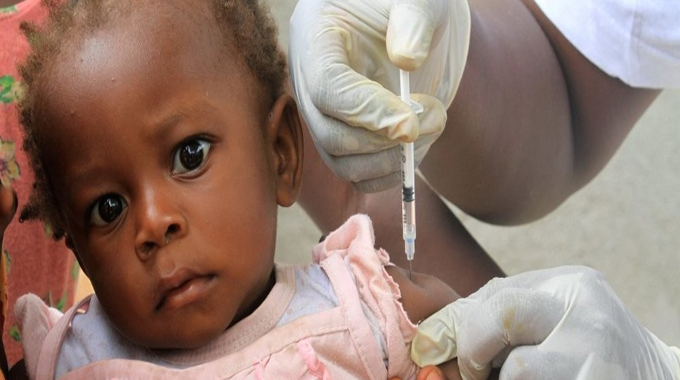
Andile Tshuma, Health Reporter
Parents are responsible for their child’s health and well-being, including protecting them from vaccine-preventable diseases.
Running under the theme “Vaccines work, do your part”, the African Vaccination Week unites the continent to strengthen immunisation services and systems to protect people from vaccine-preventable diseases.
Some people are hesitant to get their children vaccinated although the health ministry requires every child to undergo immunisation.
Section 42 of the Public Health Bill of 2017 provides for compulsory immunisation of children and incapacitated persons where there are compelling reasons of public health specifically regarding minors and legally incapacitated individuals. The bill states that the health minister shall by notice in the Government Gazette declare the date on which compulsory immunisation shall take place.
The Ministry of Health and Child Care urges care givers to ensure that all children receive routine vaccinations.
As Zimbabwe marked the Africa Vaccination week, Epidemiology and Disease Control director in the Ministry of Health and Child Care, Dr Portia Manangazira on Monday said her ministry has intensified efforts in measles vaccination coverage as the country joined the rest of Africa in commemorating the Africa Vaccination Week.
She called for communities to support vaccination programmes and to adhere to immunisation schedules to protect their children from diseases.
Annually Zimbabwe participates in the Africa Vaccination Week during the third week of April.
The World Health Organisation says that vaccine-preventable diseases claim the lives of more than half-a-million children younger than five years every year in Africa — representing 56 percent of the global deaths related to vaccine-preventable diseases.
Most parents know that vaccines are tested before they can be given to the general public. But they are probably less aware of the extensive monitoring, testing, information-sharing and decision-making that goes on behind the scenes.
Vaccines, like medicines, must go through a series of steps before they are approved for use. Before any vaccine is approved for use in Zimbabwe, it must be shown to be safe and effective in preventing the disease that it targets.
Infant and childhood vaccines prevent diseases that can be serious and even deadly. Some examples are measles which can cause brain swelling, which can lead to brain damage or death, mumps which cause permanent deafness, meningitis which can also lead to permanent deafness or brain damage, and that can cause permanent paralysis. Any child can be exposed to these infections. While avoiding contact with sick people is useful, infections like measles can also spread through the air. Your child may come in contact with people carrying germs, even if they don’t seem sick. There are no treatments or cures for diseases like measles, mumps and polio. The only proven way to protect your child is with vaccines.
Delaying or refusing some or all vaccines for your child puts his health and life at risk. It also risks the health of other people. Those most at risk include people with weakened immune systems due to other diseases or medications they are taking. People with chronic medical conditions like lung, heart, liver, kidney disease or diabetes, newborn babies, who are too young to be vaccinated against most diseases, the elderly, who may be at higher risk of complications from diseases are also at risk.
There is a growing number of people who choose not to vaccinate their children for various reasons, mostly based on religious beliefs and unconfirmed conspiracy theories.
Communities depend on high immunisation rates to keep vaccine-preventable diseases from spreading. When more people are immunised, there is less risk for everyone. The more parents that choose to not vaccinate their children, the greater the risk that infection will spread in the community.
If you have chosen not to vaccinate your child, and a vaccine-preventable disease is active in your community, it is important to consider getting your child vaccinated as soon as possible. Talk to your child’s doctor or to someone at a public health clinic. Your child may be asked to stay away from school, child care or other organised activities. You will be advised when it is safe for your child to return.
Learn about the disease and how it spreads, although it may be impossible to avoid exposure. Each disease is different. The time between when your child may have been exposed and when he may get sick will vary. Talk to your child’s doctor to find out when your child is no longer at risk of coming down with the disease.
If you know that your child has been exposed to a vaccine-preventable disease, learn what symptoms to look for and get urgent medical care if these develop.
If your child has a chronic health condition, extra vaccines may be needed to protect him from infections that healthy children tolerate well. If the chronic condition causes a problem with his immune system, some vaccines may need to be put off to a later time, and a few vaccines may not be given at all. Speak to your physician.
According to a UNICEF report in 2016, the infant mortality rate and under five mortality rate is 50 deaths per 1 000 live births and 69 deaths per 1 000 live births respectively in Zimbabwe (ZDHS 2015). The country continues to experience a disease burden of preventable diseases such as HIV and Aids, tuberculosis, malaria, diarrheal diseases, and other vaccine-preventable diseases. Vaccine-preventable diseases contribute to the total child deaths amounting to approximately 38 766 deaths per year. Such deaths from vaccine preventable diseases are inexcusable and tragic. Vaccine hesitancy and refusal continue to pose challenges to reaching immunisation targets in the country, and potentially affect the country’s ability to drastically reduce infant and child mortality.
The study was carried out by the Ministry of Health and Child Care and UNICEF Zimbabwe to explore reasons for vaccine hesitancy and refusals and identify barriers to uptake of vaccination sociocultural and religious groups in Masvingo and Manicaland Provinces.
The study found out that the key drivers of vaccine hesitancy and refusal and acceptance include socio-cultural and religious, political, and institutional factors, and these influence use and non-use of vaccination services and more broadly general health services. The results highlighted the influence of Apostolic religion, supply-side factors, traditional leadership and police in the uptake of vaccination services in the study sites in Zimbabwe.
While it is always important to research and make informed choices on medicines, especially those that must be administered to children, it is important to have some faith in health experts such as the Ministry of Health and Child Care as they will have the best interests of public health. Make the right choice concerning the health of your child.



 Online Reporter