Chronicle Editor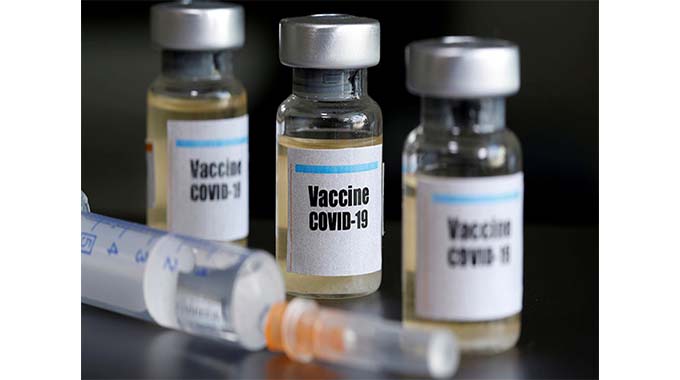
Health, Dr Tatenda Simango
I hope I find you well and in good spirits. The extension of the lockdown seems to be giving us fair results with less deaths and a welcome decrease in the number of new Covid-19 cases.
Prevention behavioural change now needs to be taken seriously by every individual for us to achieve tangible progress in the fight against this pandemic so we can win it collectively.
Mask up, practice physical distancing, wash hands and avoid gathering in big groups.
The race to develop the ultimate vaccine with a good safety profile and efficacy at preventing Covid-19 in the shortest space of time is on. It’s almost a parallel to the space travel conquest. Over six vaccines have been developed and reached stage three in the trial phases. Phase three vaccine trials are designed to assess individual-level efficacy and safety.
The Russians took the world by surprise when they released news of their Covid-19 vaccine Sputnik V as the world’s first registered vaccine. The Sputnik V vaccine’s efficacy is confirmed at over 90 percent. The vaccine’s efficacy against severe cases of coronavirus is 100 percent.
The vaccine uses a genetic code as part of the structure of the Covid-19 virus (“crown”). The vaccine is then inserted into a familiar adenovirus vector for delivery into a human cell creating the world’s first Covid-19 vaccine. It’s given in two doses a month apart.
In order to ensure lasting immunity, Russian scientists came up with a breakthrough idea to use two different types of adenovirus vectors (rAd26 and rAd5) for the first and second vaccination, respectively, boosting the effect of the vaccine.
Pfizer (United States of America) has developed an mRNA-based vaccine. An mRNA vaccine is injected into the body where it enters cells and tells them to create antigens. These antigens are recognised by the immune system and prepare it to fight coronavirus. No actual virus is needed to create an mRNA vaccine. This means the rate at which the vaccine can be produced is dramatically accelerated. The vaccine was administered in two doses separated by 21 days. Evidence of efficacy emerged from about 12 days after the first vaccine dose.
The Pfizer and Moderna (USA) vaccines use synthetic messenger RNA (mRNA), a genetic material that contains information about the spike protein. One downside to mRNA vaccines is that they need to be stored at ultra-cold temperatures. The vaccines provide the body with instructions to produce a small amount of this protein which, once detected by the immune system, leads to a protective antibody response.
Moderna’s vaccine does not require the same ultracold storage as Pfizer’s and can remain stable at normal fridge temperature for 30 days. Trials on more than 30 000 people in the US have shown Moderna’s jab to be 94 percent effective in preventing coronavirus. Moderna has not identified any significant safety concerns and its vaccine has been approved for use in the United States given as two shots, one month (28 days) apart.
Another vaccine was developed by the University of Oxford (UK) and pharmaceutical giant AstraZeneca. It uses a harmless weakened version of a virus that causes the common cold in chimpanzees. The Covid-19 vaccine from AstraZeneca stimulates the body’s natural defences (immune system). It causes the body to produce its own protection (antibodies) against the virus. This will help to protect you against Covid-19 in the future.
Oxford data indicates the vaccine has 62 percent efficacy when one full dose is given followed by another full dose.
You will receive two injections; the second injection can be given between four and 12 weeks after the first injection.
It can be stored in a refrigerator at two to eight degrees and should not be left to freeze. Vials are to be kept in an inner carton to protect from light.
A Chinese Sinovac Beijing-based pharmaceutical company has also produced an inactivated vaccine; CoronaVac. It works by using killed viral particles to expose the body’s immune system to the virus without risking a serious disease response. “CoronaVac is a more traditional method [of vaccine] that is successfully used in many well-known vaccines like rabies,” Associate Prof Luo Dahai of the Nanyang Technological University told the BBC.
On paper, one of Sinovac’s main advantages is that it can be stored in a standard refrigerator at two to eight degrees Celsius. Based on 144 participants in the phase one trial and 600 in the phase two trial, the vaccine was “suitable for emergency use”. This was because there have been conflicting efficacy results; Interim data from late-stage trials in Turkey and Indonesia showed that the vaccine was 91,25 percent and 65,3 percent effective, respectively.
Another Chinese state-owned company Sinopharm is developing its Covid-19 vaccine, which, like Sinovac are also inactivated vaccines that work in a similar way. Sinopharm announced on 30 December that phase three trials of the vaccine showed that it was 79 percent effective. Butantan Institute said that the vaccine was 78 percent effective in preventing mild cases of Covid-19 and 100 percent effective against severe and moderate infections.
How long immunity lasts is still unknown. At least 60 percent of the population will need vaccination for herd immunity to be achieved, meaning the preventative measures against Covid-19 will have to be adhered to regardless.
Moreover, myths about the vaccines having been adulterated to control mankind are baseless.
Till next week, stay safe.
Dr Tatenda Simango can be contacted on [email protected] or follow him on Facebook@ 9th Avenue Surgery.



 Online Reporter