

 admin
admin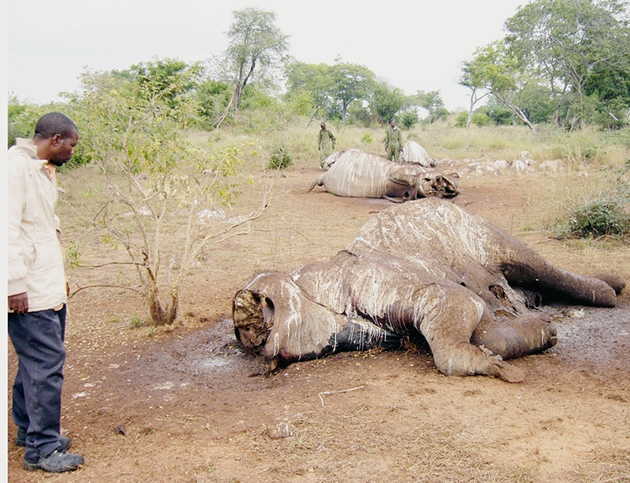
Lovemore Ranga Mataire
SINCE the Earth Summit held in Rio de Janeiro, Brazil, in 1992, environmental issues have become topical issues the world over.
Countries that attended the Rio de Janeiro resolved to come up with an action plan to urgently address the issue of environmental degradation given frightening reports of the depletion of the ozone layer, threatening life on earth.
In Zimbabwe, issues of environmental conservation have since then taken centre stage with many organisations mushrooming all over the country with the sole purpose of conserving the environment.
However, the recent wanton killing of elephants through cyanide poisoning has put into sharp focus serious shortcomings within the environmental discourse mostly peddled by Western funded organisations.
While the Communal Areas Management Programme for Indigenous Resources must be commended for being the first community-based environmental initiative in the world that considered consider wildlife as renewable natural resources and involve the sharing of profits accrued from such an environment with the local people, its commercial leanings have tended to dilute its noble founding principles.
This has led many analysts to believe that the discourse on environmental conservation has not been effective in changing people’s attitudes in realising the importance of preserving the country’s flora and fauna.
Cases of streambank cultivation, indiscriminate cutting down of trees and disposal of toxic chemicals into rivers seem to go undeterred while organisations like the Environmental Management Agency pay lip service in implementing and enforcing radical deterrent policies.
It is against this background that many African environmental experts are now calling for a total overhaul of the whole approach being used to conscientise people about environmental issues. The experts argue environmental organisation needed to have introspection and desist from always apportioning blame on the local people.
One of the reasons attributed to the failure of the discourse on biodiversity has been the use of the English language as the sole medium of communication resulting in the information not being easily understood and largely alien to local communities.
The problem with these experts is that they employ a linear perspective which involves the knowledgeable sender and the ignorant receiver. It is assumed that the ignorant receiver must gullibly accept all information relayed to him or herself without question unaware that people have an inherent ability to resist any information that is recklessly imposed upon them without consideration of the prevailing cultural, social and economic dynamics in individual communities.
It is from this perspective African experts have thus recommended the indigenisation of the discourse on biodiversity and the inclusion of indigenous knowledge systems that for long have sustained and fostered cohesion within the African space.
An environmental expert with the Youth Resource Centre Initiative, Mr Barry Muchenje, said the discourse has been dominated by a Eurocentric world-view which has proven irrelevant in the African context.
“It is time that environmental organisations understand that for any message to be meaningful, it must out of necessity incorporates the targeted community’s idioms, proverbs and phrases that the people are familiar with and can relate to,” Mr Muchenje said.
He added that the so-called modern environmental experts portray indigenous local people in negative derogatory terms as uncaring human beings who go about plundering their natural resources.
Indeed, it seems the common barometer among most environmental experts is their reckless imposition of the so-called modern ways of conserving the environment without due consideration of the historical, cultural and social context of individual communities.
Prominent educationist Professor Lovemore Mbigi also echoes the same sentiments saying the so-called experts needed to learn a lot from African culture and should try to incorporate some of its aspects in environmental issues.
Writing in Media, Culture and Development Volume 1 journal, Professor Mbigi says: “Our traditional culture embraces caring, harmony and humanity. This is our gift to the world.”
Prof Mbigi contends that the coming of colonial settlers disrupted some aspects of indigenous knowledge structures which were essential in preserving the environment. The concept of “matongo” or ancestral attachment was adversely affected since Africans were forcibly removed from their original homes to Tribal Trust Lands, which limited their creative prowess and ability to relate meaningfully with their environment.
Another concept that should be incorporated into the environmental discourse is the concept of “mutupo” or totem. The totem formed the basis of interaction within and among communities in that most of the totems are derived from the ecosystem which entailed that people placed a special importance on the environment.
Animals like pangolins were symbolically important to the well-being of the African community and no individual was allowed to kill them as they were allowed to roam in the wild or brought before kings as “mupiro” or gift.
Trees like mukute, mainly found on the river banks, were taboo to cut as they were believed to be the source of water, which symbolises life. This prevented siltation of rivers and sustained all aquatic animals including fish which is a totem of a large section of the Zimbabwean populace.
Besides the concept of mutupo, there is also the concept of “mashura” which labelled certain places as sacred. This instilled fear in people and prevented them from tempering with the flora and fauna within the environs of such places.
As what one analyst said, Africa’s own efforts must form the basis of development. Instead of environment experts labelling Africans ignorant and uncaring beings, it is imperative that environmental experts looked at other aspects currently contributing to environmental degradation.
These aspects include the restrictive land tenure systems, erosion of cultural values, lack of communal approach to biodiversity issues and inadequate incentives for the rural folk who live with the biodiversity. It is important that indigenous systems are blended with certain compatible Western concepts.
In other words, Zimbabwe needs socially conscious communicators who are prepared to speak with fellow Zimbabweans about our concerns and our interests and learn African indigenous knowledge in order to contribute towards popular emancipation and not to mock, plagiarise and co-opt it into Euro-American discourse.
- Feedback: [email protected]



 Online Reporter