admin
admin
Tafadzwa Zimoyo
Senior Lifestyle Writer
Many people on the streets have been questioning if face masks help slow the spread of the coronavirus.
Their reasoning is that there are a lot of designs and styles being made and it is not clear if they have the qualities stipulated by the World Health Organisation for the protective wear.
According to The Guardian, there are different types of mask which offer different levels of protection such as the surgical grade N95 respirators which offer the highest level of protection against Covid-19 infection, followed by surgical grade masks.
However, these masks are costly, in limited supply, contribute to landfill waste and are uncomfortable to wear for long periods.
As the global Covid-19 pandemic has evolved, it is true that the face mask has appeared as one of the items to help lower the rate of infection — alongside social distancing and washing one’s hands, of course.
But with the rise of face coverings as an essential piece of PPE for non-essential workers and citizens, even required in some public places, there has also provided designers and fashion enthusiasts to show their creative side.
Saturday Herald Lifestyle took a toll and stroll in the CBD to find out different kinds of masks and how people have been receiving the new norm as masks become a part of most people’s wardrobes, while some are having a little fun with them.
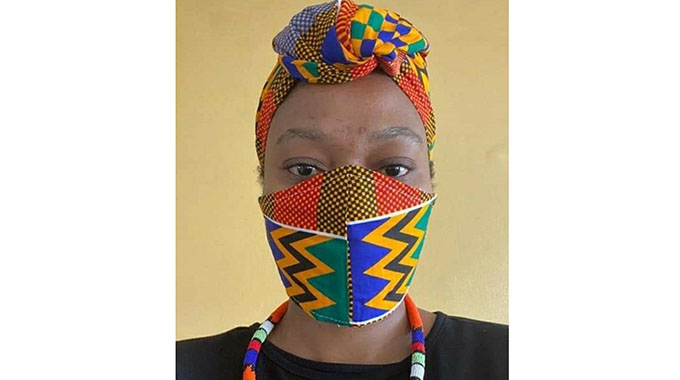
Artists, designers, corporates and ordinary people have shown their creativity by turning face masks into art projects, expressions of identity and for advertising.
South Africa-based Zimbabwean fashion designer Ngugi Vere made his brand name famous three months ago when he designed face masks with ‘Shona Ankra’ print.
The masks were sold out on the first week it was announced they were mandatory and he said most people wanted to connect with their ‘roots’.
“The African print design made a hit in South Africa and I am very proud of that. I managed to do designs for some of the celebrities and I noticed that people want something they can relate to when it comes to designs. Yes, there are Gucci, Prada and Armani face masks designs but those trendy and stylish would need a matching outfit which some do not have and to get the original face designer mask it is costly,” he said.
One of the owners Fusion Arts Clothing, Anthony Zisengwe, said business boomed in these hard times compared to six months ago.
Zisengwe who focuses on branding and printing said he got orders from corporate companies including those who hosted mini weddings.
“I have done masks for the bride and groom and now I am working on a 3D-printed respiratory valve fittings mask. The good thing is times are changing and when we started it was just normal but now the orders are becoming too big. We design according to what the client wants and again they vary on prices too,” he said.
Zisengwe said many companies are using masks to advertise their brands and this has become a new and easy way of maintaining brand visibility. Most companies are buying branded masks for their employees.
Zisengwe said that masks are no longer a fashion accessory but now important in the sense that they coordinate with the outfit.
“Fashion has always been a platform for self-expression. As face masks are quickly becoming a part of our daily routine, many of us are choosing to showcase our individual style through them.
“Taking it from the fashion world, many people want matching masks with their outfit. Some want to have their names inscribed on the masks and of course, it is now a fashion statement,” he said.
Harare-based businessman Levi Mwachiolo affectionately known as The WaterGuy because he specialises in selling bottled water has started creating and selling face masks.“I started doing it as a hobby and little did I know it was business in the making. I have done masks for most celebrities who have been hosting online shows to entertain their fans. My masks are two-plier with tie-backs tied at the head because most people were complaining about the ears being strained by the masks,” he said.
He said although children below the age of six are not allowed to wear one because of fear of suffocation, he had designed cartoon characters with light material so that they are not left out. Renowned designers who include Joyce Chimanye, Fatima, Eve, Nandi and Joan Nyambe created a movement called ‘Mask4Zim’, in order to promote the culture of always wearing one.
In Austria, artist Matthias Kretschmer has started creating face masks based on pop culture and movies to entertain himself.
Kretschmer paints one mask per day, usually in the evenings, and posts them to social media so his friends and followers can see.
Kretschmer has joined other celebrities and designers in creating masks that stand out.


 Online Reporter