Tinaye Agere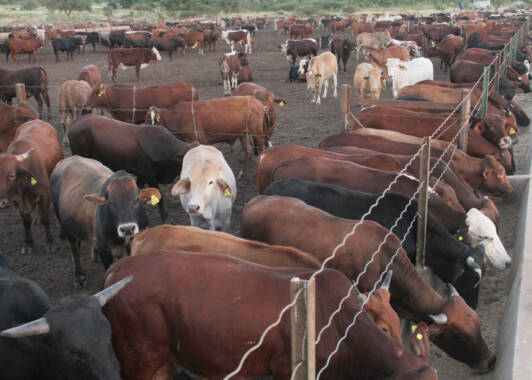
Business Reporter
THE Livestock and Meat Advisory Council (LMAC) says the removal of value-added tax (VAT) on meat and poultry products shows the Government’s commitment to the growth and development of the livestock industry.
Presenting the 2024 Mid-Term Budget and Economic Review on Thursday, Finance, Economic Development and Investment Promotion Minister Professor Mthuli Ncube proposed to exempt live cattle, pigs, goats, sheep and bovine semen from VAT to encourage formal trade in meat products.
Additionally, to encourage the trading of poultry meat in the formal market, he proposed to exempt the meat from VAT.
In an interview, LMAC agricultural economist Dr Reneth Mano said the policy move by the Government would restore the viability of the sector.
“We commit our support to the growth and development of Zimbabwe’s livestock industry and agriculture sector towards sustainable and resilient national food security and growth,” he said.
Dr Mano said LMAC appreciated the policy decision by the Government to restore the viability of the livestock and meat industry at a time farmers, abattoirs and consumers were enduring the double adversity of the El Niño drought-induced loss of income and purchasing power, as well as a VAT-induced fall in livestock producer prices and a rise in retail prices of meat.
In the 2024 National Budget, Prof Ncube increased the standard VAT to 15 percent from 14,5 percent effective January 1, 2023.
According to the Finance Minister, the recent changes in VAT legislation, where live animals and meat are standard-rated, have caused the industry to experience a decline in demand due to low disposable incomes, which is attributed to the El Niño-induced drought.
He said observations showed that 85 percent of live animals were sourced from smallholder farmers, who, at most, sold two beasts per
year, making them ineligible for VAT registration.
Furthermore, Prof Ncube said the emergence of middlemen, who use toll slaughtering abattoirs, had substituted livestock auctioneers and formal slaughterhouses to minimise, or, in other cases, evade payment of VAT.
“Resultantly, carcass sales have shifted from formal, inspected abattoirs that feed into the formal meat value chain.
“This has been exacerbated by non-tax-compliant butcheries that prefer purchasing toll-sheared meat carcasses from the informal market to avoid VAT, posing a risk of diseases as the meat would not have passed through the mandatory inspections,” he said.
In the poultry industry, Minister Ncube said a third of the broiler production was traded in the formal market, whereas the rest
was dominated by micro and small poultry farmers, whose livelihoods and empowerment were sustained through such economic activities.



 Online Reporter