Online Reporter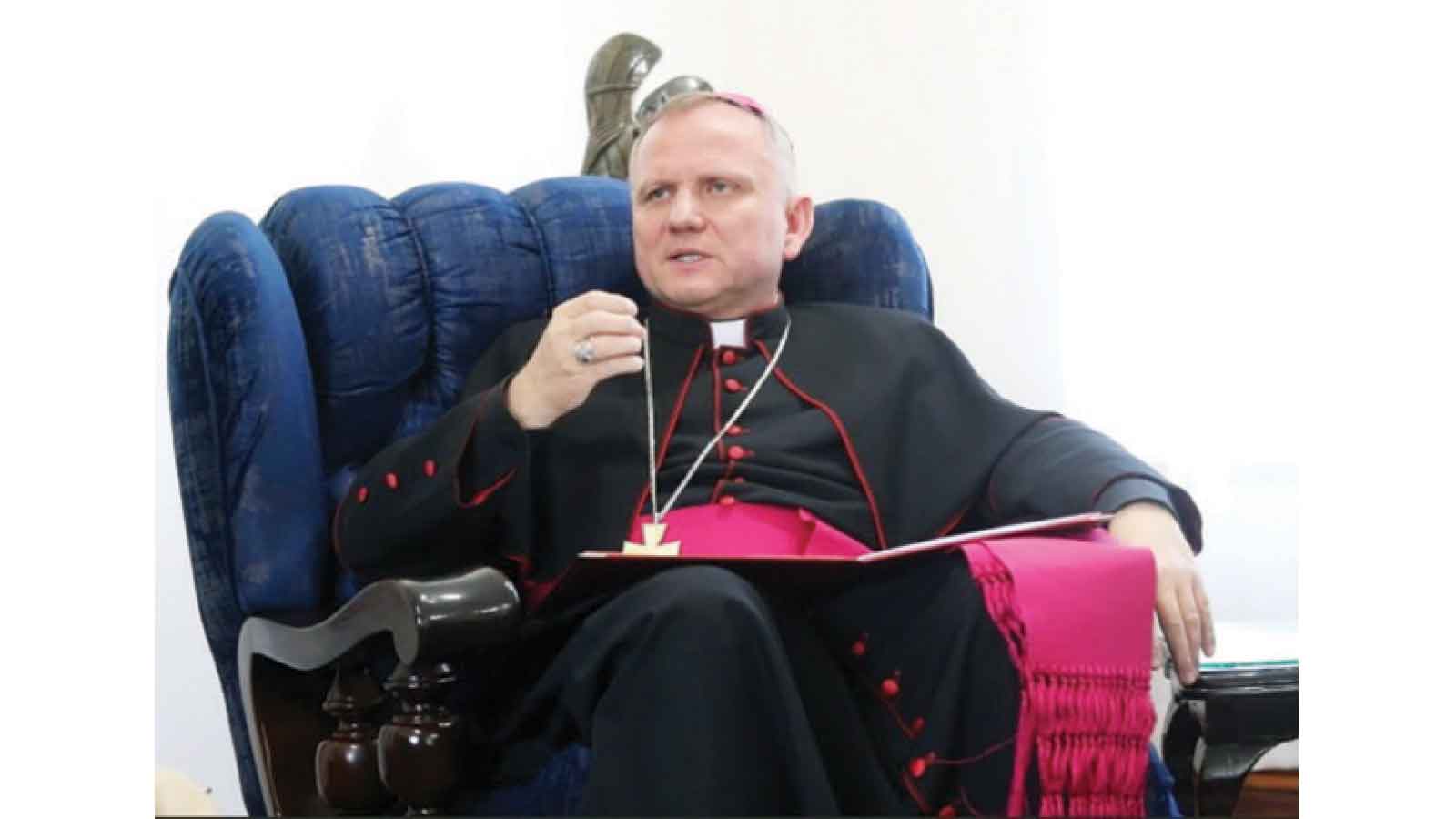
At a time when the world is characteristically drifting towards conflict, Zimbabwe and the Vatican continue to pledge efforts to promote peace and cooperation among nations. In an interview with Zimpapers Politics Hub’s Gibson Nyikadzino (GN), the Vatican’s Ambassador to Zimbabwe, Archbishop Janusz Urbańczyk (JU) said besides pledges on dialogue, the two partners enjoy fruitful and friendly relations, grounded in a shared concern for the dignity and rights of the human person. Below are the excerpts:
GN: What is the state of the Zimbabwe-Holy See relations?
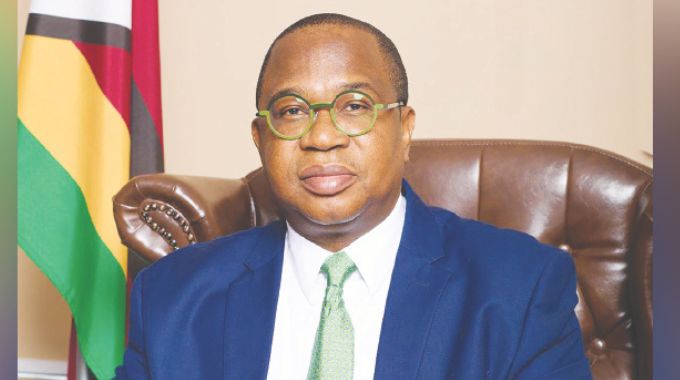
JU: Zimbabwe-Holy See relations have been described as “fruitful and friendly” and grounded in a shared concern for the dignity and rights of the human person, including the defence of human rights and the promotion of peace and integral development. On August 30, 2025, President Mnangagwa paid a State Visit to Pope Leo XIV, becoming the first African Head of State to meet the new pontiff.
This private audience emphasised the good relations between the Holy See and Zimbabwe, while paying particular attention to existing areas of cooperation, especially the active role of Catholic institutions in Zimbabwe in the areas of healthcare, education and the environment, and the church’s role in promoting social justice and human dignity.
The importance of promoting multilateralism, dialogue and cooperation among nations was emphasised as these activities promote peace and development in Southern Africa. The Holy See is always concerned about the promotion of human rights.
In this regard, I would mention just few examples from the recent Zimbabwean perspective, which is, abolishing the death penalty and the protection of the right to life of the unborn, thereby affirming the sanctity of the life of the most defenceless of human beings, namely the child in the mother’s womb. The defence of human life from conception to natural death should remain a distinguishing mark of African culture.
GN: What are integral areas of convergence with clear cooperation?
JU: Diplomatic engagement has focused on integral development and a culture of dialogue. The Holy See’s diplomatic activities are oriented towards peace and the common good.
The church also pledges support for building a culture of dialogue rather than confrontation and reconciliation rather than conflict. Convergence in the church’s practical social contribution of education, health care and social services is aimed at integral development of the human person, particularly for those most in need. Moreover, it focuses on human dignity, peace, reconciliation and dialogue.
GN: In April, Pope Leo XIV had a four-nation tour of Africa, and he was here in Southern Africa. What symbolism does the visit in Southern Africa (Angola) have for Zimbabwe?
JU: Pope Leo XIV’s African journey was a pastoral visit to accompany Catholics, encourage fraternity and peace, and to draw the Gospel into the concrete social realities of each country. Pope Leo XIV noted social tension that runs across the continent, “great wealth and so many times . . . an unequal distribution of wealth.” This was a visit to offer spiritual encouragement, but also a recognition that faith must also engage justice and social life. Moreover, to promote dialogue, fraternity and efforts aimed at peacebuilding with people of all faiths.
All the above-mentioned examples can carry a concrete symbolism for Zimbabwe that the church and society must work to strengthen unity through the celebration of diversity and fruitful dialogue, care for the elderly, and a path of forgiveness, listening, and social justice sustained over time.
GN: The Vatican strongly advocated environmental protection. How are the two parties fostering responsible stewardship in this context?
JU: The Catholic teaching speaks of the need for responsible stewardship, moral guidance rooted in linking environmental integrity, human rights, and peace, promoting regional and international cooperation to prevent conflict and uphold justice.
The Vatican and Zimbabwe collaborate on environmental stewardship primarily through Catholic-led initiatives inspired by Pope Francis’ Laudato Si’, with campaigns encouraging conservation, youth engagement, and responsible resource use. Zimbabwe’s bishops also emphasise safeguarding communities from destructive mining and displacement, framing stewardship as both ecological and moral responsibility. The Laudato Si’ conference in Zimbabwe has become a platform where Catholic leaders, environmental advocates, and youth groups gather to promote Pope Francis’ vision of integral ecology linking care for creation with social justice. Recent events highlight campaigns against deforestation, mining abuses, and climate degradation, with strong Vatican encouragement through the Apostolic Nunciature and local bishops.
GN: The Holy See commended Zimbabwe for abolishing the death penalty in 2025. How can the Church work with the Government to strengthen restorative justice policies?
JU: The Catholic Church considers the death penalty inadmissible because it holds that human dignity is never lost, even after the commission of the gravest crimes, and because punishment should have not only a punitive function, but also a rehabilitative one. Within this rehabilitative understanding of punishment, restorative justice plays a fundamental role. As Pope Francis stated, restorative justice is “the true antidote to vengeance and oblivion,” because it seeks to rebuild broken relationships and restore the social fabric.
In this respect, the Catholic Church may play an important role in several ways, like expanding prison rehabilitation and reintegration programs, which may help reduce recidivism, an essential prerequisite for the development of restorative approaches to justice.
The need for victim-offender mediation programmes, which allow victims to express directly the harm they have suffered, encourage offenders to take responsibility for their actions, and create opportunities for restitution and reconciliation. More broadly, the Catholic Church may help promote a public culture of mercy and accountability.
However, restorative justice must not be confused with being “soft on crime.” It is important to affirm clearly that mercy does not eliminate accountability; rather, justice also includes repairing harm, while recognising that human dignity remains intact even after wrongdoing.
GN: Following the abolition of the death penalty, how is the Vatican collaborating with Zimbabwe to ensure the protection and empowerment of women in local communities?
JU: Pope Leo XIV, in his first address on May 16 2025 to members of the diplomatic corps accredited to the Holy See, spoke about the importance of truth. “Truly, peaceful relationships cannot be built, also within the international community, apart from truth. Where words take on ambiguous and ambivalent connotations . . . it is difficult to build authentic relationships, since the objective and real premises of communication are lacking.”
In connection with Pope’s words and the question, I would like to highlight the ambiguous and ambivalent connotations of two concepts: namely, women’s rights and gender-based violence, as they are understood or used by international organisations.
I hope that in Zimbabwe those concepts are genuine without ideological connotations and refer to the concrete needs of countering violence, particularly against women and of fostering a public culture in which the dignity and rights of women are fully recognised and protected.
This includes recognising the importance and pertinence of women’s participation and engagement in all aspects of public, political, economic, social, and cultural life, in accordance with their own aspirations, while affirming that authentic development and peace are impossible without the full respect of women’s human dignity.
The church can support prevention and awareness programmes aimed at addressing the cultural and social roots of violence against women and promoting a culture of respect, mutual responsibility, and the equal dignity of men and women, while condemning abuse and exploitation.
GN: What message can you share with the youth in Zimbabwe when it comes to issues of national development and the need to foster cultural or people to people cooperation between the Vatican and Zimbabwe?
JU: Pope Leo XIV, during his recent visit to Africa, emphasised the need for young Africans to hold on to hope, responsibility and reject despair. He urged youth to rediscover confidence in their future, resist violence and corruption, and embrace solidarity, family values, and faith as the foundation for leadership and societal renewal.
I advise young people of Zimbabwe not to lose hope and never to compromise the values and high standards that are prerequisites for the achievement of a better life.
National development is not only about money, projects, or politics. Instead, it is about the integral development of the whole person, guided by truth, charity, moral responsibility, and solidarity, so that Zimbabwe can grow in a way that is genuinely African, respectful of cultural identity, and open to cooperation across communities and nations.
Finally, to the dear youth of Zimbabwe, I would like to make a demanding call: build Zimbabwe with integral development, guided by truth, charity, justice, and solidarity; protect and strengthen Zimbabwe’s cultural identity; and become bridge-builders through listening and dialogue, working for peace, reconciliation and the protection of the dignity of every person.