malvernmugadzikwa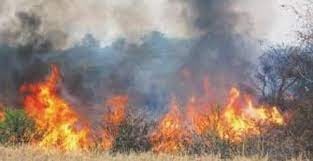
Theseus Shambare
At least 360 000 hectares have been destroyed by veld fires in more than 1 800 incidents of fire outbreaks recorded so far during the current fire season.
One person, a 78-year old Masvingo woman,was killed in a fire incident, while others have lost houses, agricultural equipment and other valuables.
The fires have largely affected wheat-growing regions, prompting Government to urge wheat farmers to remain on high alert.
This year’s wheat growing season is close to conclusion, with harvesting of the early crop expected to commence this week.
About one million hectares of forests and farmland were destroyed from 6 042 incidents of veld fires between July and October last year.
According to the Environmental Management Agency (EMA) Fire Management Interventions Report, 1 811 veld fire incidents have been recorded so far, destroying 363 913 ha.
Agricultural Advisory and Rural Development Services (AARDS) chief director, Professor Obert Jiri, said no fire incidents have been recorded on wheat fields.
“Farmers must ensure fire guards are constructed or renewed around their farms and fields according to the law,” said Prof Jiri.
“Traditional leaders and farmers are encouraged to activate Village Fires Committees (VFCs) for quick response to fires.
“We are fast approaching the harvest time and we want to ensure that we meet and surpass our targets, as has become our norm.”
VFCs consist of traditional leaders, Forestry Commission and EMA officers as well as agricultural extension officers.
The committees are responsible for disseminating information related to fire fighting and leading communities’ response to fire outbreaks.
Zimbabwe Commercial Farmers’ Union president, Dr Shadreck Makombe said there is no room for complacency this year.
“There are prescribed fire guard sizes, but we urge farmers to double the sizes of their fire guards and continue maintaining them so that we leave no room for destruction,” he said.
“We also urge relevant authorities to operationalise punitive measures to ensure that culprits are deterred.”
EMA spokesperson, Ms Amkela Sidange, said a nationwide awareness campaign has been launched.
“We have since launched an extensive fire awareness campaign with AARDS, the Forestry Commission, police and other stakeholders,” she said.
“To date, we have issued 15 tickets, with each worth up to US$5 000.
“Two dockets have been opened and are awaiting litigation.”She said fire bugs could face up to six months in prison.
“Currently, veld fires have been recorded in rangeland, with some having damaged two huts while posing a serious threat to wheat fields, from which we are expecting a bumper harvest,” she continued.
Most of the fire damage has been recorded in Matabeleland North (101 298 ha), Mashonaland West (79 482,88 ha), Mashonaland East (43 608,92 ha), Matabeleland South (37 663,68 ha), Mashonaland Central (36 118,06 ha), and Matabeleland North (101 298,9 ha).
“Several loses associated with veld fires have been recorded across the country, with an estimated combined value of US$10 000.”
She said land clearing and wildlife poaching were the leading causes of veld fires.
Senior agronomist in the Ministry of Lands, Agriculture, Fisheries, Water and Rural Development training department, Mr Izah Jaidi, said current wheat condition was at a stage where the crop is prone to fire damage.
“Wheat is now getting to the stage where it is gaining maximum dry matter in the developing kernel and this can help veld fires spread wildly in the field,” said Mr Jaidi.
Veld fires destroyed wheat valued at US$800 000 last year.
This year, a total of 86 000 ha have been put under wheat.
X: TheseusShambare



 Online Reporter