


 malvernmugadzikwa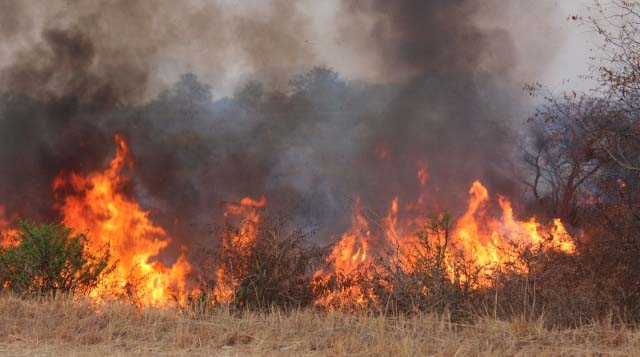
Standrick Chagadama
Veld fires have destroyed property valued at more than US$317 000 and claimed three lives since the beginning of the fire restriction period on July 1.
More than 4 000 fire incidents have consumed nearly 900 000 hectares of land, a 20,15 percent increase from last year’s 744 000ha over the same period.
According to the Environmental Management Agency (EMA), dry conditions from the El Niño-induced drought have worsened the fire season, placing additional strain on the environment.
Responding to questions from The Sunday Mail, EMA environmental education and publicity manager Ms Amkela Sidange said: “Since the beginning of the veld fire restriction period on July 1 to October 18, 2024, a cumulative total area of 894 402,9ha has been burnt from 4 076 fire incidences, while during the same period in 2023, a total area of 744 431,23ha was burnt from 3 067 incidences.
“The veld fire land loss has increased by 20,15 percent in 2024, thus further stressing the already El-Nino drought impacted ecosystem, resulting in subdued ecological services and good from the same. The analysis of the average area burnt per incident is higher at 897,56 ha in 2024 compared to 227,21ha in 2023.”
She said the fires have disrupted agriculture, tourism and telecommunications, while plantations and farms have also suffered significant damage. Authorities, Ms Sidange added, have since opened 25 dockets to hold offenders accountable for fire-related violations.
“In terms of human life, the country has lost three lives to date. A total of US$317 702 of property has been cumulatively lost from key economic enablers such as agriculture, tourism, plantations and communication sector,” she said.
EMA’s fire risk models classify 55,71 percent of the country as high-risk, with 18,6 percent at medium risk, 12,42 percent at low risk and 13,27 percent at extreme risk.
Mashonaland West, Mashonaland Central, Manicaland and Mashonaland East provinces face the greatest exposure to veld fires, added Ms Sidange.
She said farmers and communities have been mobilised to enhance fire prevention efforts to reduce losses.
“Cumulatively, a total 1 227 931
hay bales have been harvested, protecting 16 634,3ha, and 6 496,5km cumulative fireguards have been constructed, protecting 1 500 557ha nationwide.
“A total of 208 925 thatch grass bundles have been harvested, protecting 4 629,5ha, and cumulatively a total of 1 271 beehives have been set up in woodlands as part of fire management by farmers.
“Recent rainfall has led to a decrease in the weekly area of land burned, although the figures remain elevated. It is recommended that farmers implement effective fire suppression strategies during their land preparation activities.
“Additionally, it is crucial to ensure that vulnerable groups, including the young, elderly and those with health issues, do not engage in firefighting efforts to protect their well-being,” she said.


 Online Reporter