

 admin
admin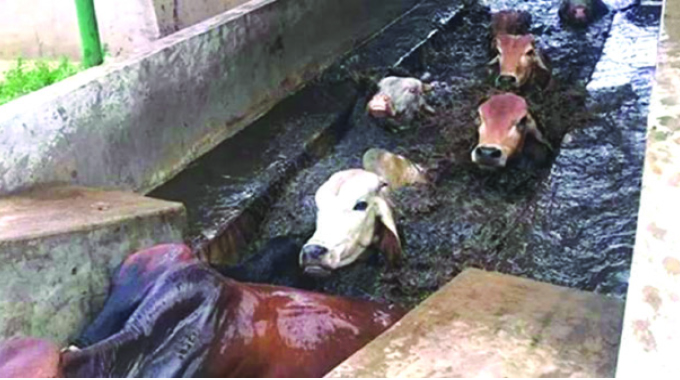
Herald Reporter
Communal farmers are advised to religious take their cattle for dipping in order to control tick borne diseases.
This comes after a number of cattle died in Guruve in the past two weeks.
To ensure compliance, the Department of Livestock and Veterinary Services is working with traditional leaders to ensure every farmer takes their cattle for dipping.
Tick borne diseases are widespread during the wet season and animals are susceptible to many challenges.
In an interview, Zvimba District Veterinary Officer, Dr Reverend Spargo said they are currently working with traditional leaders to carry out awareness campaigns in mobilising communal farmers to take their cattle for dipping sessions.
“The challenge we are having now is that some of the farmers are refusing to bring their cattle for dipping claiming that dip tanks are the super-spreaders of tick borne diseases, but this is not the case,” he said.
Dr Spargo said if traditional leaders enforced dipping measures, tick borne diseases such as January disease would be conquered.
He urged farmers to start intensive dipping, that is dipping their cattle every week to interrupt the breeding cycle of ticks and prevent the build-up of the tick population in the veld.
Theileriosis commonly known as January disease, has killed thousands of livestock during the rainy season in the past few years.
The four major tick borne diseases that affect cattle are heartwater, anaplasmosis/gall sickness, babesiosis/red water and theileriosis/January disease.
In the past year, January disease accounted for more than 60 percent of all the cases and cattle deaths due to tick borne diseases.
Presently, Masvingo and Midlands provinces have been affected by tick borne diseases, with Shurugwi, Chirumhanzu, Gweru, Gutu and Zaka being the worst affected.
Dr Spargo said the illegal movement of animals was responsible for the increase and spread of tick borne diseases.
He advised farmers to seek movement permits from the Veterinary department to minimise chances of spreading vectors.
He said January disease is the major killer of the cattle in the country.
Farmers are also encouraged to make use of tick grease offered to them through the Presidential Tick Grease Blitz programme in between dipping sessions to fight ticks.
“After 48 to 72 hours after dipping sessions, inspect cattle to see if ticks are dropping, then apply tick grease,” said Dr Spargo.
During the 2019/20 agricultural season, there were 46 715 tick borne disease cases and 33 514 deaths, while in the 2020/21 period, 25 036 cases were recorded and 12 503 deaths, indicating a 62,7 percent decrease in cattle death.



 Online Reporter