Vusumuzi Dube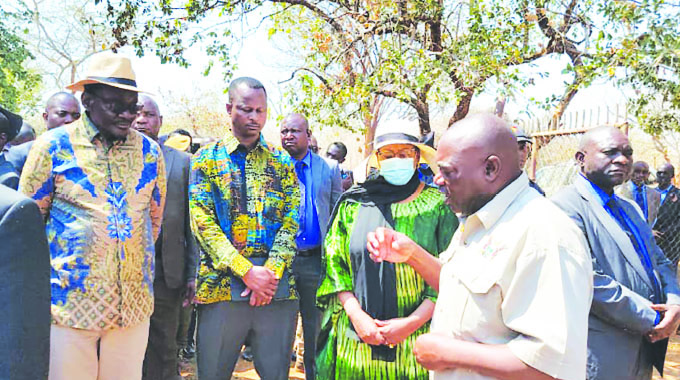
Africa Moyo in Lusaka, Zambia
IT was an emotional moment yesterday for Vice-President Kembo Mohadi as he visited the house where the late former Zanu Chairman, Cde Herbert Wiltshire Chitepo, once lived in Chilenje, Lusaka.
Cde Chitepo resided at House No 150, Muramba Road, in Lusaka’s Chilenje suburb, just a few kilometres from the residence of Zambia’s founding President, Dr Kenneth Kaunda.
VP Mohadi stood beside the spot where Cde Chitepo’s blue Volkswagen Beetle exploded, killing him instantly on 18 March 1975, along with one of his bodyguards, Silas Shamiso. Another bodyguard, Mr Sadat Kufamadzuba, was injured and is believed to be living in Bindura.
Neighbours recalled that the explosion was so powerful it hurled part of the car onto the roof of the house, uprooted a tree, and injured a boy living next door.
The house now has a new owner, who has agreed to sell it to the Zimbabwean Government so it can be preserved as a national monument.
Mr Lovemore Mandima, Director of the National Museums and Monuments of Zimbabwe, led the tour. He informed VP Mohadi that the garage where the car was parked had remained intact until recently.
“But what is critical is that the Government’s efforts to acquire the house for the purpose of memorialising Cde Chitepo are progressing well. I received encouraging news yesterday evening. Our colleagues from the National Heritage Conservation Commission have engaged with the current owner, who not only allowed us to visit but is also willing to sell the property. You may be aware that the blue vehicle used by Cde Chitepo is now housed at the National Heroes Acre — we retrieved it from here,” he said.
VP Mohadi said he vividly remembers the exact spot where Cde Chitepo was killed.
“This is where his blood was spilled — I remember it clearly. It is painful,” he said, pointing to the location, visibly moved.
Mr Kagosi Mwamulowe, Acting Executive Director of Zambia’s National Heritage Conservation Commission, stated that since the precise location of Cde Chitepo’s death is known, they can assist in erecting a statue in his honour.
Earlier, VP Mohadi began his working visit by touring Chilenje House, where Dr Kaunda lived with his wife, Madam Betty Banda, and their family. Chilenje House, located in Lusaka’s Chilenje suburb, was Dr Kaunda’s residence from January 1960 to December 1962.
VP Mohadi was shown the Land Rover Defender used by Dr Kaunda, as well as his bedroom, kitchen, and lounge.
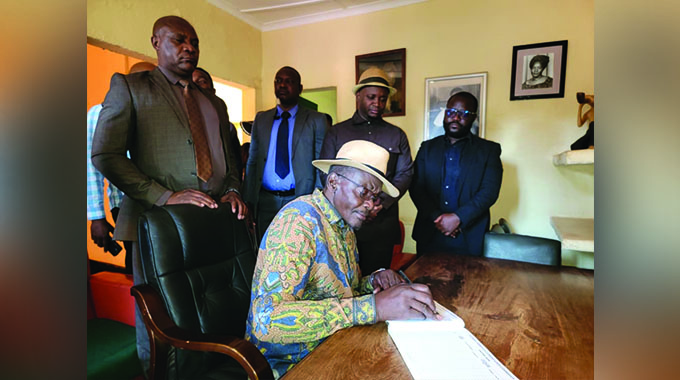
The red sofas in the lounge remain intact, having undergone minimal restoration, while the mattress and wardrobe in the bedroom are original.
It was from this house that Dr Kaunda led the struggle for the independence of Northern Rhodesia, now Zambia.
Zambia gained independence on 24 October 1964, but Dr Kaunda famously said their freedom was incomplete until neighbouring countries, including Zimbabwe, were also liberated.
Zambia subsequently provided Zimbabwe with a base to train freedom fighters and launch operations from camps such as Nampundwe, Freedom Camp, Mkushi, Mulungushi, and Kavalamanja — at great cost to its citizens, including loss of life.
Many soldiers were killed, particularly at Kavalamanja near the Kanyemba Border in 1978. 15 police officers were ambushed and killed while attempting to rescue female freedom fighters attacked by Rhodesian forces at Mkushi Girls Camp, also in 1978. 14 of those soldiers are buried at St Mary’s Cemetery in Kabwe, while one was laid to rest in his home area. Of the 45 police officers who survived, only two are still alive: Mr Alex Ostern Shimambo, aged 72, and Mr Ignatius Katemba, aged 69.
Journalist Alick Nkhatha was also ambushed and killed after reporting on the massacre of the female freedom fighters. A school has been built in his honour, and a major street in Lusaka bears his name.
In an interview following the tour of Chilenje House, VP Mohadi reflected on the early days of the anti-colonial struggle.
“We were all governed under one administration — the Federation of Southern Rhodesia, Northern Rhodesia, and Nyasaland — from Salisbury (now Harare). The Zambia you see today was not like this. Black people were confined to the outskirts of the city. That’s why we say whites are evil — and they remain so. We have never colonised anyone, yet they travelled all the way to steal our land and resources, which they continue to do,” he said.
VP Mohadi remarked that colonialism persists in a different form — through debt.
“Once they place you in debt, development becomes impossible because you must service that debt. This leads to frustration among our people, who then rebel and attempt to overthrow their governments,” he said.
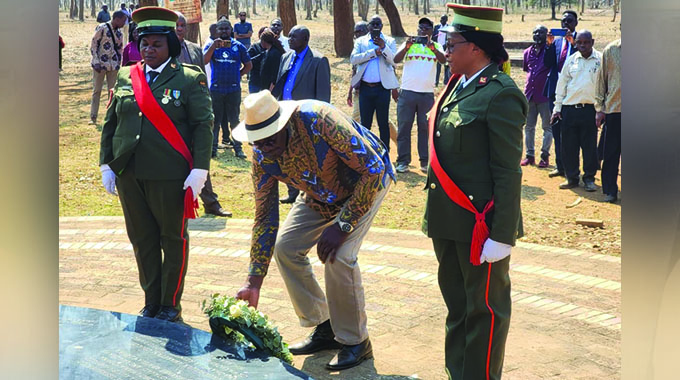
After visiting Chilenje House, VP Mohadi proceeded to the Nampundwe Shrine, a transit camp for female fighters located about 32km north of Lusaka. Over 200 nationalists were killed there in November 1978 by Rhodesian forces.
A moment of silence was observed in honour of the fallen freedom fighters, who are buried in two mass graves at Nampundwe. VP Mohadi laid a wreath at the shrine, which is fenced, built up, and has access to tap water. He instructed Deputy Minister of Home Affairs and Cultural Heritage, Chido Sanyatwe, to ensure the installation of a solar-powered borehole and ablution facilities.
VP Mohadi then visited Freedom Camp, located about 30km off Kabwe Road, north of Lusaka. The site contains 23 mass graves but lacks fencing, ablution facilities, and drinking water for visitors. He noted that he had visited the shrine multiple times during his tenure as Home Affairs Minister and had contributed to the establishment of the war memorial and mass graves.
“This brings back painful memories of how we lost so many people in a single day. These individuals did not die over time — it was on one specific day, the 19th of October 1978. They had done nothing to provoke anyone, except to demand their freedom,” he said.
The Vice-President expressed frustration with young people who dismiss the sacrifices of liberation heroes and heroines.
“Would you be willing to sacrifice your life in the way these people — and we ourselves — did?” he asked.
Today, VP Mohadi is expected to make a courtesy call before travelling to Kabwe for visits to St Mary’s Cemetery, Mulungushi, and Mkushi Girls Camp.
He was accompanied on the tour by Deputy Chief Secretary to the President and Cabinet, Reverend Paul Damasane; Deputy Minister of Information, Publicity and Broadcasting Services, Dr Omphile Marupi; Zimbabwe’s Ambassador to Zambia, Charity Charamba; and Institute of African Knowledge (Instak) chief executive officer, Ambassador Kwame Muzawazi.


 Online Reporter