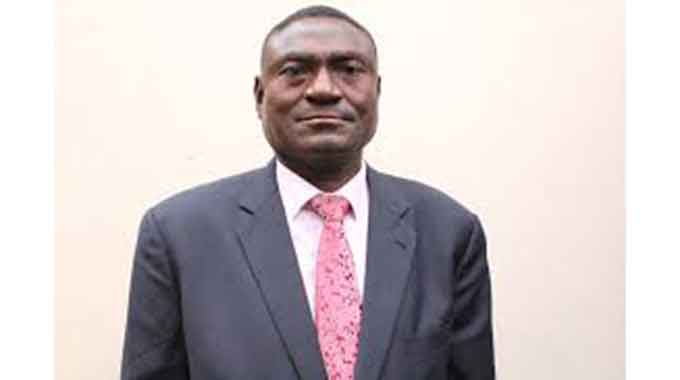
Vusumuzi Dube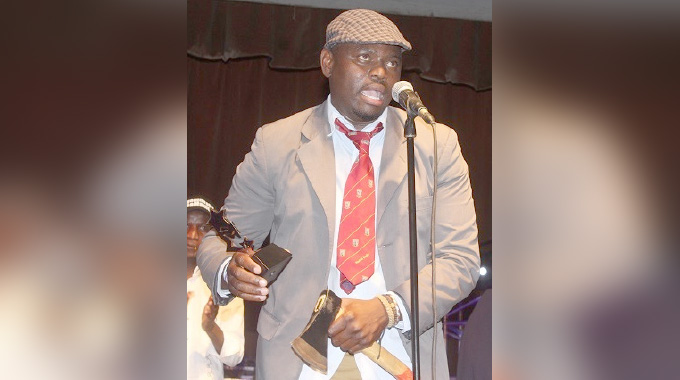
Bruce Ndlovu, [email protected]
ONCE upon a time, Bulawayo prided itself in producing a steady stream of professional actors.
At the peak of Amakhosi Cultural Centre, which emerged as a powerhouse for stage and screen talent in the early to late 1990s, the city became a reliable conveyor belt in a country hungry for authentic local performers.
While a trickle of talent continues to fly the Bulawayo and Zimbabwean flag high, the city is no longer the juggernaut it once was.
Stage plays, once the lifeblood of Bulawayo’s arts and entertainment scene, have largely dried up. Television productions, already few and far between, are now almost non-existent, as the pipeline of talent, both in front of and behind the camera, appears to have collapsed.
In a city yearning for new stars, a vacuum has emerged as the structures that once nurtured talent have either died or are barely surviving.
Into that void has stepped a new wave of content creators, producing skits that generate millions of views and proving that while Bulawayo may no longer be creating stars for the small or big screen, it still possesses talent capable of capturing the public imagination.
Last month, Minister of Information, Publicity and Broadcasting Services Dr Jenfan Muswere met Bulawayo-based creatives and independent content producers during the ZBC Content and Channels Strategic Workshop, as Government committed US$10 million towards local content development.
The meeting was dominated by the city’s young content producers, many of whom believe they are now well positioned to claim a share of the pie in a city desperate for new artistic leadership.
With content makers such as Yung Steazy and Langa Ndimande taking social media by storm, questions are increasingly being asked about whether veterans who once captivated audiences are still capable of wrestling relevance from this emerging crop of digital stars.
In an interview with Sunday Life, producer and playwright Raisedon Baya said many practitioners working behind the scenes were facing a dilemma, as producers increasingly gravitated towards casting content creators with no formal acting background, simply because of the numbers they could pull online.
“For film and television, this is a game-changer because some producers now insist on checking social media numbers before casting. The thinking is that once a project is announced, it will gain instant traction.
“We are caught in the middle of this debate, and it is something that has also caused tensions in South Africa, where trained actors are complaining that content creators are taking their jobs,” he said.
Baya said while professional actors were indeed at risk of being displaced, it was important to acknowledge that social media and mainstream film or television had fundamentally different requirements.
“We are living in an era where we are chasing views, but in the mainstream, if it still exists, we cannot accurately track how many people are actually watching our content. Those statistics are simply not there. Social media is different because everything is visible, which is why everyone is rushing to those platforms.
“There are dangers and challenges to this. Radio, film and television are structured and operate within defined formats. You know a programme will be 30 minutes, an hour or longer if it is a film. Social media, on the other hand, has no structure and therefore no restrictions.
“With that in mind, can Government sit down with someone like Queen Nadia and say, ‘This is content we want to promote’? Yes, it may have views, but is it something that can be endorsed? This raises questions about morality and what exactly we want to do with our content creation,” he said.
Baya added that the collapse of formal structures meant Zimbabwean actors could no longer claim superiority over young content producers.
“In Zimbabwe, it is different because very few actors are formally trained anyway. If we had proper structures, trained actors would have stood together and asked how they could be protected.
“Right now, it is like street football, anyone can come in, play and leave as they please. In the end, only the strongest, the most visible or the most daring survive. We have not seen the best yet because the nature of the medium is confusing. Even those we once called gatekeepers are being swept aside,” he said.
Musician and actor Madlela Sikhobokhobo, who rose to fame through skits during the DVD era, said he was envious of how social media had simplified distribution for younger artistes.
“When we started, we did not have all these platforms and could only package our work on DVDs for distribution. However, young creators also need to be careful about blindly following trends. I have noticed young girls exposing their private parts simply because something has gone viral. That is not something to emulate.
“Choose content that allows you to keep your dignity intact. It is important to remain in the good books of the corporate world because while monetisation on platforms like Facebook helps, numbers alone cannot sustain us. Corporate endorsements are still crucial,” he said.
Given the options available to them, Sikhobokhobo said maintaining high quality was perhaps the greatest challenge for young content creators, particularly when competing with more experienced artistes.
“Young content creators are doing well, as shown by their numbers. It is not easy to amass followers, and when many people gravitate towards someone’s content, it means it resonates. What is critical is consistency — you cannot take people to the mountaintop today and drop them tomorrow. Skits must be well thought out because these platforms have wide reach,” he said.
Fellow content creator Ntandoyenkosi Moyo of Umahlekisa Entertainment said while the success of young artistes was admirable, there was a need to guide them away from negativity.
“Content creators should not allow people to push narratives that will ultimately damage their brands. More research can be done to improve quality. Not everything has to be vulgar or controversial.
“If we focus on topical national issues and align our work with national goals, we will not go wrong. Personally, I am passionate about tourism, and I believe this is an area where content creators can do more. That is where the money is. Not everything needs to be negative.
“Sometimes you ask yourself why people do not highlight the positives of places like Makokoba. Instead, you hear comments about Cowdray Park producing the ‘worst girls’ or about witchcraft. Why not spotlight something positive for once?”


 Online Reporter