Online Reporter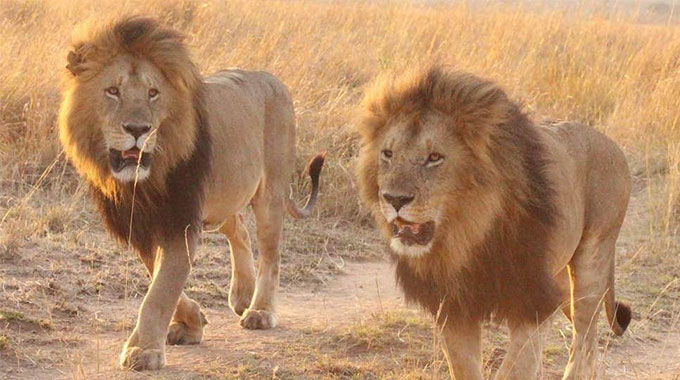
Thupeyo Muleya-Beitbridge Bureau
VILLAGERS in Tshitulipasi, Nuli and Mawale in Beitbridge District are sleeping lighter than usual, ears tuned to the night and eyes scanning the edges of homesteads, after two collared lions with their cubs wandered across the Zimbabwe-South Africa border and into community spaces where people ordinarily move by routine and trust.
In a place where dawn chores and evening errands are as predictable as the seasons, the presence of big cats has turned the everyday into something watchful, tightening the air with a fear that travels faster than footsteps.
The lions are believed to have crossed into Zimbabwe through the Greater Limpopo Transfrontier Conservation Area (GLTFCA), that sprawling, borderless wilderness stitched together by geography rather than politics, where animals follow ancient instincts and human lines on maps mean little. It is a landscape designed for movement – a conservation vision that allows wildlife to roam across countries as it has for centuries, even when the modern world insists on fences, checkpoints and boundaries.
The GLTFCA spans more than 100 000 square kilometres and blends state-owned parks, private conservancies and community areas across South Africa, Mozambique and Zimbabwe.