Online Reporter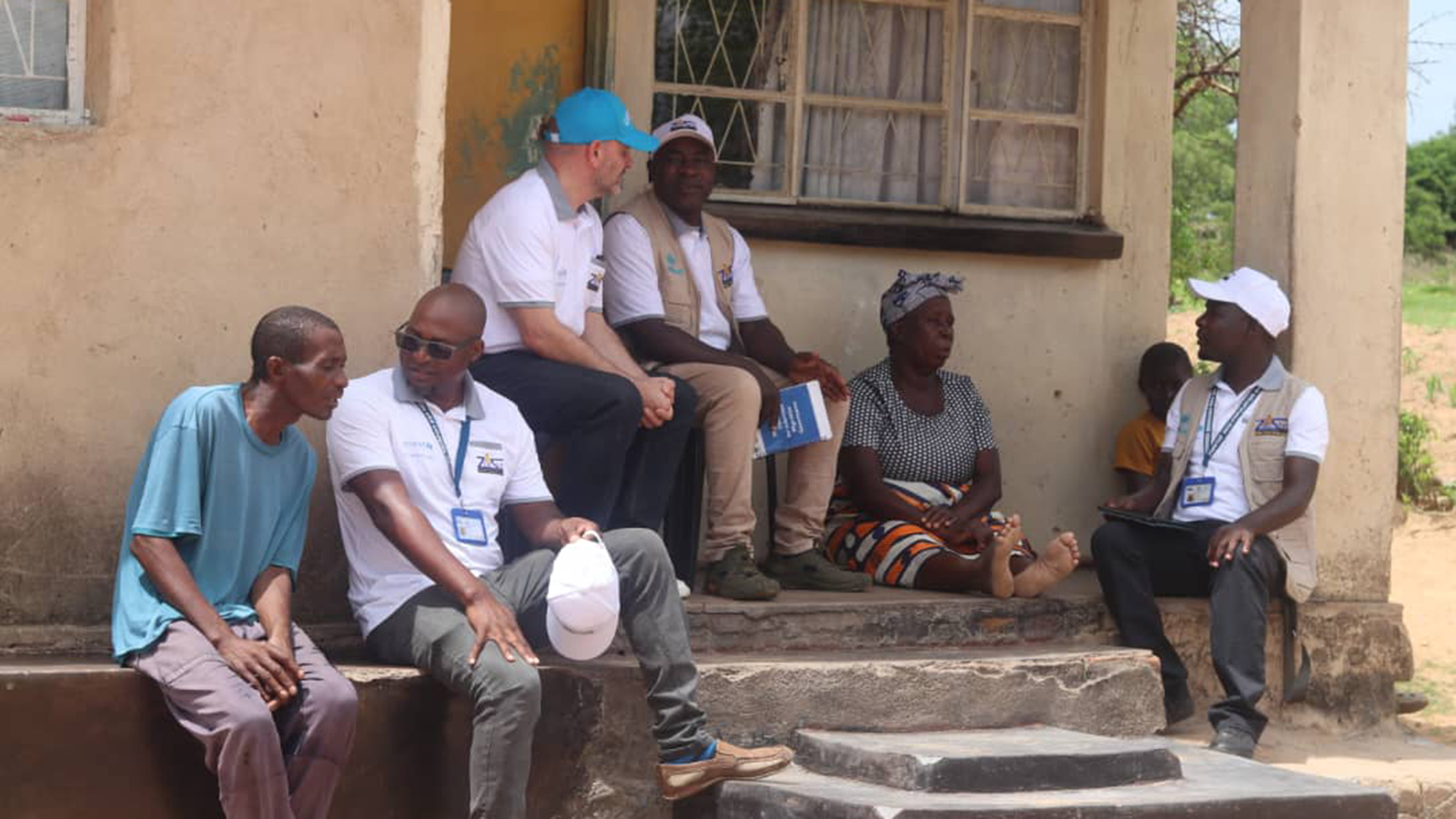
Ivan Zhakata
in Makoni District
Rural communities in Manicaland province have called for urgent improvements to safety, water access and healthcare as the Zimbabwe National Statistics Agency (ZimStat), in partnership with UNICEF continues national data collection under the seventh round of the Multiple Indicator Cluster Survey (MICS).
The Government has formally committed to strengthening national evidence systems through an MoU signed with UNICEF in April 2024.
The collaboration underpinned the implementation of MICS 7, the fourth national round following surveys conducted in 2009, 2014 and 2019.
ZimStat has provided technical leadership, fieldwork vehicles, trained personnel and other essential materials, while the Government has contributed about US$480 000 towards the revised US$2,3 million MICS budget.
UNICEF has provided US$1,2 million, with an additional US$250 000 from other UN agencies.
The State is also expected to mobilise the remaining US$230 000 required for data analysis and dissemination.
ZimStat Director for Demography and Social Statistics, Mr Aluwisio Mukavhi, said the survey was designed to produce reliable, disaggregated data to guide Government policy.
“We expect to finalise data collection by the end of January 2026, after which we will analyse and disseminate the results,” he said.
“Our statistics inform policymakers on education, health, social protection and other areas. Evidence-based decisions require accurate information about conditions on the ground.”
UNICEF chief of Social Policy, Mr Pepukai Chivore, said the findings will guide the implementation of the National Development Strategy (NDS2).
“This survey provides the baseline for tracking progress under NDS2 and Vision 2030,” he said.
“It supports the devolution agenda by generating evidence down to the ward level so that policymakers know which interventions are required and where.”
UNICEF research officer, Dr Godfrey Chagwiza, said the survey captures data on community safety, energy sources, internet access and digital inclusion.
“This information enables authorities to identify wards that require targeted support,” he said.
During the visit by survey teams, villagers said the data collection exercise aligned with long-standing concerns in their communities.
Elderly resident Gogo Clara Mudondo, said insecurity remained a major issue.
“I do not feel safe walking at night. As elderly people, we fear being attacked,” she said, adding that water shortages have worsened her vulnerability.
“I cannot walk long distances to the borehole.”
Another villager, Mr Elias Mupindu, said the absence of nearby healthcare facilities was affecting families.
“When someone falls ill at night, accessing a clinic is difficult and costly,” he said.
A local mother, Mrs Rudo Chinyama, said water scarcity was disrupting daily life.
“Sometimes we go days without reliable water. It affects hygiene and our children’s wellbeing,” she said.
Youths also expressed concerns about crime and poor lighting.
“Without streetlights or police presence, night-time security is a challenge,” said 21-year-old Tawanda Mazarura.
The MICS programme is aligned with NDS2, which identifies quality data as a key enabler of national development.
The strategy prioritises reliable, timely and disaggregated statistics for planning, monitoring and equitable resource allocation, with a commitment to ensuring no community is left behind.
The MICS results are expected to guide future investments in water supply, community safety, healthcare access and other essential services across the country.