Chronicle Editor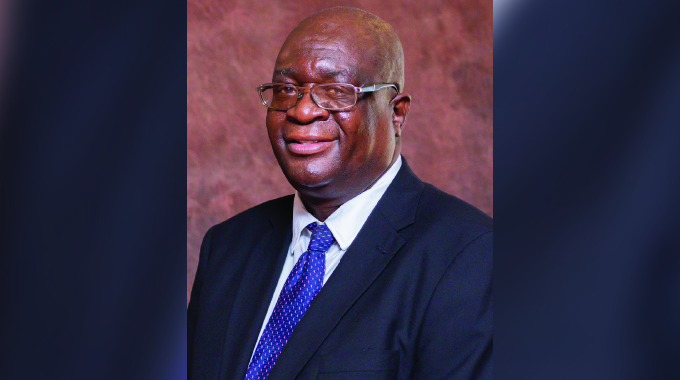
Nqobile Tshili, [email protected]
CONSUMERS will be able to share or transfer excess electricity units to their relatives and friends anywhere in the country under the virtual net metering system, which the Government expects to operationalise soon.
Tests have been done to prove the feasibility of the unique technological breakthrough and the fine-tuning of the legislative processes is underway.
Zimbabwe initially adopted the net metering model when it allowed private renewable energy producers with output of at least five megawatts to feed their excess output to the national grid and get paid for it.
Under the virtual net metering initiative, consumers will enjoy enhanced convenience and be able to use their units freely, including sharing with their family members and friends in need.
This would be a milestone step by Zimbabwe as consumers would be able to transfer their power units from one property to another, which would also promote energy efficiency, Zimbabwe Energy Regulatory Energy (Zera) chief executive officer, Engineer Eddington Mazambane said in an interview.
He said trial runs on the virtual net metering process have been successful and the new system would soon be introduced to clients.
“We have what we call the virtual net metering system which entails that an electricity user can transfer the excess units to another premise,” said Eng Mazambane.
“This means that when you have electricity credit on one location, you will be able to transfer it to another premise, and this will be done through the billing system using your name or your nomination (address).
“I might be staying in Harare but can credit electricity to a house in Bulawayo or a farm elsewhere through the virtual net metering through my account.”
Eng Mazambane said at the moment it was impossible for members of the public to transfer from one premise to another. He said the energy regulator and the power utility company, Zesa, were at the moment engaged in talks with clients on the possibility of adoption of the new technology.
“The system is still to kick off, regulations on that are still to be concluded. The regulation is not yet in place but consultations with consumers have been done and they are warming up to the idea,” said Eng Mazambane.
“The power utility, ZETDC, will be responsible for that through the billing system.”
In a comprehensive report on township economies and rural entrepreneurship, Eng Mazambane noted that mini-solar grids have become an important pillar in balancing the country’s energy generation. Examples of successful mini-solar grids include the 59,4kw Bemba project in Tsholotsho developed by the Rural Electrification Fund (REF), 100kw project in Ndolwane area in Bulilima District done by DPA/Ugesi Energy, 100kw Mashava solar project in Gwanda by Practical Action and SNV and several others across the country.
“The mini-grids will provide electricity to marginalised communities that are far away from the national grid and where the terrain may not be suitable for grid extension,” he said.
“The mini-grids increase national energy access in line with the proposed goal of Universal Energy Access by 2030. There is potential to integrate mini-grids with the national grid, thereby, creating embedded generation, which helps to stabilise the grid and reduce transmission losses.”
Eng Mazambane said the mini-solar grids are expected to contribute to rural industrialisation and reduce deforestation by at least 60 percent.

Energy and Power Development Minister, Edgar Moyo, has said the adoption of renewable energy has lessened load shedding in the country.
“We have independent power producers that are significantly contributing to a reduction in the pressure on the national grid,” he said.
“We have several companies that are generating power for their consumption and in the process, reducing the pressure on the national grid.
“We are also happy that more companies are investing in renewable energy and in the coming weeks we will be commissioning two solar projects where mining companies are generating power for self-supply, which will reduce pressure on the national grid,” said Minister Moyo.
He said the marginal increase in power tariffs has also seen consumers being efficient in their consumption of electricity as power is now more expensive.
Zimbabwe is already working on crafting the Energy Efficiency Policy to promote responsible usage of electricity.
While the country has a general power deficit, the supply situation remains relatively stable with the bulk of the output coming from Hwange Thermal Power Station. Zimbabwe largely relies on thermal and hydro generated power but lately there has been increased investment in renewable energy, especially by the private sector as they aim for energy self-sufficiency.
Independent Power Producers are now supplying excess power to the national grid. —@nqotshili


 Online Reporter