

 admin
admin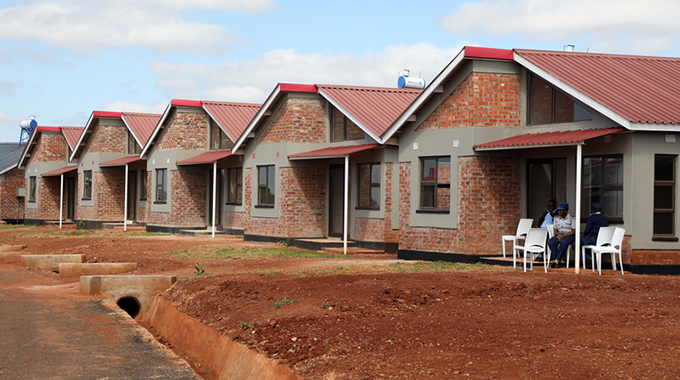
Continued from last week
Zimbabwe is moving onwards achieving Vision 20230 which entails the country becoming an upper middle income society. The Herald has been serialising the Vision 2030 every Thursday for the benefit of our readers. This is the last part of the Vision 2030.
***
Housing
Given that accommodation is a basic human right, Vision 2030 prioritises investment in construction of affordable housing across the country.
In addressing the housing backlog, Government will collaborate with various stakeholders, including financial institutions and other private sector players.
This will be underpinned by increased development in public infrastructure, complemented by the adoption of non-budgetary financing mechanisms that include Public Private Partnerships and Joint Ventures.
Social development pillar
The Vision for Social Development is for Government to invest in sufficient state of the art medical and educational facilities, in collaboration with the private sector, development partners and faith based organisations.
Social service facilities for low income citizens will be prioritised, whilst investments in those for the well-resourced will also be undertaken.
Education
Education Curricula
Realisation of the Vision for globally competitive, quality education and training facilities will be achieved through development of an education curricula that speaks to the requirements of industry.
To increase skills development in the country, emphasis will be placed on Science, Technology, Engineering and Mathematics (STEM) subjects.
Tertiary Education Facilities
Upgrading of domestic tertiary education facilities will also overcome the need for a disproportionate share of student numbers seeking university education beyond the country’s borders. Government is committed to creating economic opportunities for empowering youths through to broadening the establishment of Vocational Training Centres so that there is a Centre in each Administrative District.
Special Needs & Adult Training
Vision 2030 also targets development of key programmes for learners with special needs, as well as those that cater for adult training, again with a view to enhance individuals’ capacity to become entrepreneurs.
Health
Provision of an efficient, integrated and quality health care system is recognised in Vision 2030, with priority being given to preventive care at community and household levels.
This also targets combating of HIV, malaria and other non-communicable diseases.
District Hospitals
During the Vision period, specialist health services currently obtainable only at Provincial level will be decentralised to district hospitals.
This will entail investment in minimum levels of basic diagnostic facilities, such as imaging scans and x-rays, medical laboratories, among others.
Oncology & Dialysis
Vision 2030 envisions set up of oncology and dialysis centres at the eight Provincial hospitals, that way reducing dependency on the Referral Hospitals in Harare and Bulawayo.
This will reduce travelling distances for patients seeking access to cancer and renal related health services currently only available in Harare and Bulawayo.
Specialised Health Care
Vision 2030 also envisions establishment of specialised, well equipped health care facilities that draw both from internal and external expertise, also taking advantage of such developments in technology as TeleMedicine to reverse increased reliance on outside the country patient management referrals.
Improved provision of specialised health care will also entail increasing training of specialised medical personnel across various disciplines.
People with Physical Challenges
Vision 2030 recognises that vulnerable groups, such as People with Physical Challenges, will require special support to enable participation in policy formulation, decision making processes, and realisation of their potential towards contributing to Zimbabwe’s development.
This requires improved awareness, overcoming discrimination and ensuring equitable access to resources.
Vulnerable Groups
Vision 2030 programmes for safety nets targeted at protection of vulnerable groups will benefit households with orphaned children, the elderly and other special groups in need of support, that way avoiding the poverty dangers arising out of exclusion.
Vision 2030 cross cutting themes
Vision 2030 mainstreaming of cross-cutting themes covers support towards Micro,
Small and Medium Enterprises, Youth Development, Gender Equality and Women Empowerment, as well as the development of Sport, Recreation, Arts and Culture.
Micro, small and medium enterprises
Vision 2030 envisages creation of an enabling environment to support Micro, Small and Medium Enterprises so that these contribute meaningfully towards economic growth, value addition, exports, and decent employment creation.
In addition, skills development and provision of funding will be key for Micro, Small and Medium Enterprises start-up and businesses run by previously disadvantaged groups.
Youth development
Youth development interventions will be integrated in policy formulation, programmes and strategies at all levels within Government, the private sector and civil society.
Realisation of Zimbabwe’s demographic dividend from its youthful population will entail improved access by the youth to education, housing, health, and employment opportunities and other essential services.
Gender equality & women empowerment
The thrust of Vision 2030 is also in sync with the United Nations’ Sustainable Development Goal 5 which seeks to “Achieve Gender Equality and Empower all Women and Girls”.
Vision 2030 will be characterised by mainstreaming gender equality in all sectors of the economy in order to eliminate all negative economic, social and cultural practices that impede equality of sexes.
Government will prioritise women’s participation in politics and decision making in all development processes, a fundamental prerequisite for the attainment of gender equality and women empowerment.
Sport, recreation, arts & culture
Sport, recreation, arts and culture play a significant role in human development as they contribute to creating an environment in which people can fulfil their potential and lead productive and creative lives in accordance with their needs, competencies and interests.
In this regard, sports, recreation, arts and culture will be harnessed to contribute positively to economic growth and development.
Conclusion
Zimbabwe Vision 2030 is a reflection of long-term aspirations of Zimbabweans. During the Vision period, strategies and action plans will be systematically reviewed and adjusted in order to effectively respond to the changing global, regional and local environment.
Thus, the Vision will be delivered over:
• A Transitional Stabilisation Programme for 2018-2020; and
• Five Year Development Strategies for 2021-2025, and 2026-2030.
Delivering this ambitious process of national transformation will require a fundamental shift from business as usual to a “business unusual” approach. Zimbabwe Vision 2030 is focused at reducing poverty through transformation of Zimbabwe towards an upper middle income country.
The aspirations may appear highly pitched, but Zimbabwe has no choice as remaining under the current situation of helplessness is unsustainable. Therefore, there is a need to implement difficult and painful policies that bring about the necessary transformation to achieve the Vision. Those countries that persevered with Visions of development succeeded, notwithstanding seemingly unfavourable initial conditions. It is essential that macro-economic stability is achieved in the shortest possible time in order to regain confidence, attract investment, facilitate technology and skills transfer, grow exports and GDP, create employment and broaden the tax base to realise this Vision.



 Peter Tanyanyiwa
 Online Reporter