Online Reporter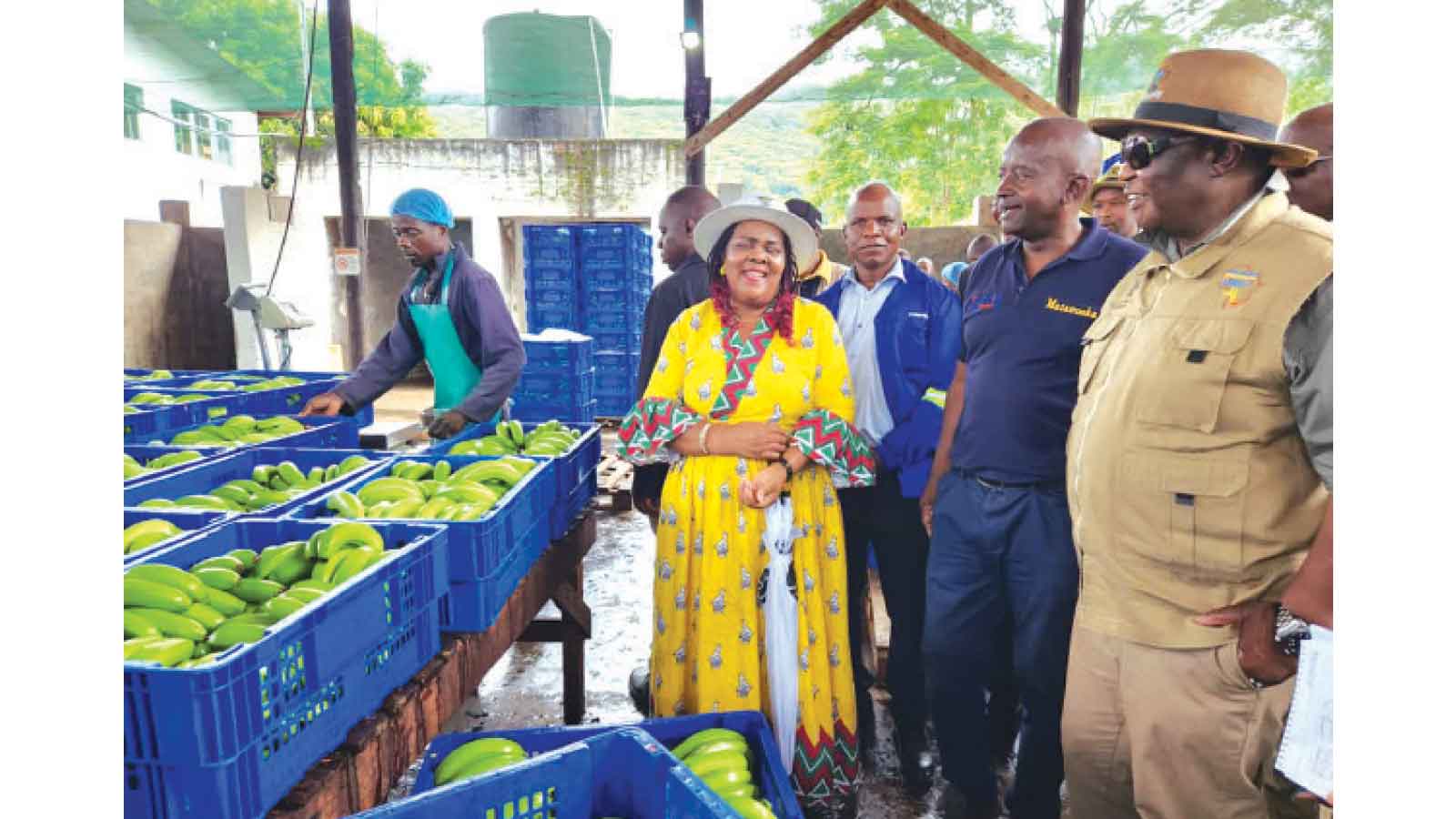
Mukudzei Chingwere in Burma Valley
Zimbabwe stands to benefit substantially from the export of horticultural products and the sector could perform even better with increased engagement between industry players and policymakers, Vice President Dr Constantino Chiwenga has said.
He made the remarks after meeting stakeholders in the horticulture sector, which generated US$120 million in exports in 2024.
The sector is now being primed to grow to US$500 million this year, with exports projected to progressively increase to US$2.5 billion by 2030 under the Government’s economic development strategy towards an empowered upper-middle-income economy.
VP Chiwenga yesterday visited Matanuska in Burma Valley — the country’s largest producer and distributor of bananas, and a key player in the horticultural sector.
At the company, the Vice President was briefed on its challenges and noted that while the issues were relatively small, they required continuous engagement to resolve.
He emphasised that the Government’s role is to set policy and provide a framework within which industry can thrive, and that sectors must articulate their needs clearly so they can be addressed.
Speaking after the tour, the Vice President said the target under the Horticulture Recovery and Growth Plan — growing the sector’s exports to over US$2.5 billion — is easily achievable.
“I think we can surpass that. There has been a lack of coordination between the sector and the Government. On our side, we must also accept blame for not having pushed what needed to be done,” said VP Chiwenga.
“The private sector has many innovative, progressive ideas to grow the industry. From what I have seen so far, starting at Beitbridge and coming here, that US$500 million figure is modest; we can exceed it.
“We have not yet engaged the major blueberry farmers. So far, we have visited orange, banana and avocado producers, among others. They can beat the target they were given once we hear their ideas, identify their problems and assist them.”
VP Chiwenga said that in many cases the challenges facing producers are not technical but arise from a lack of communication.

“I think we can surpass that. There has been a lack of coordination between the sector and the Government. On our side, we must also accept blame for not having pushed what needed to be done,” said VP Chiwenga.
“What they want, Government can provide; what Government needs, the private sector can provide. These things can be done,” he said.
He noted that in the Burma Valley area, for example, there are already 30 outgrowers, but the road network is in poor condition.
He suggested that they engage the Provincial Minister, the Minister of Local Government and the Minister of Transport, and then raise the issue with the Ministry of Finance to secure credit facilities.
“That is doable. They could repair the roads and make them passable, not only for their businesses but for the local communities.
“This was the same concern in Chipinge. They want rebates; that is not a problem. We can design mechanisms to refund them, for example through taxes.
“Then there are farmers who have built dams for irrigation, yet we tell them to start paying taxes on those investments. Some levies are extraordinarily high. Why? Every Tuesday, we meet to try to remove unnecessary levies to ease the cost of doing business,” he said.
He added that some producers were being over-levied — with both the Rural District Council and, at times, Zinwa demanding payments.
“Aren’t they supposed to be the same?”
VP Chiwenga said such practices cause frustration and hinder expansion.
He also visited the Chipinge Operational Business Units of Ariston Holdings, where he commended them for their diversification.
“As Government, we take pride in such an estate with substantial operations in tea and macadamia nuts, crops that are important for both domestic consumption and export.
“I applaud you for exporting approximately 70 percent of your tea to the United Kingdom while supplying the remaining 30 percent for local consumption,” said VP Chiwenga.
His final stop was Manica Boards and Doors, the country’s leading manufacturer of hardboard under the Zimtex brand.
He commended the company for its wide product range — including doors, ceiling boards and furniture components — as well as its expanding export footprint into Mozambique, South Africa, the Democratic Republic of Congo, Australia and beyond.
“This contribution to export growth is critical in strengthening our foreign currency earnings and industrial competitiveness.
“Equally commendable is the company’s investment in a 5MW solar power plant, which will not only address energy challenges but also contribute excess power to the national grid,” said VP Chiwenga.