Online Reporter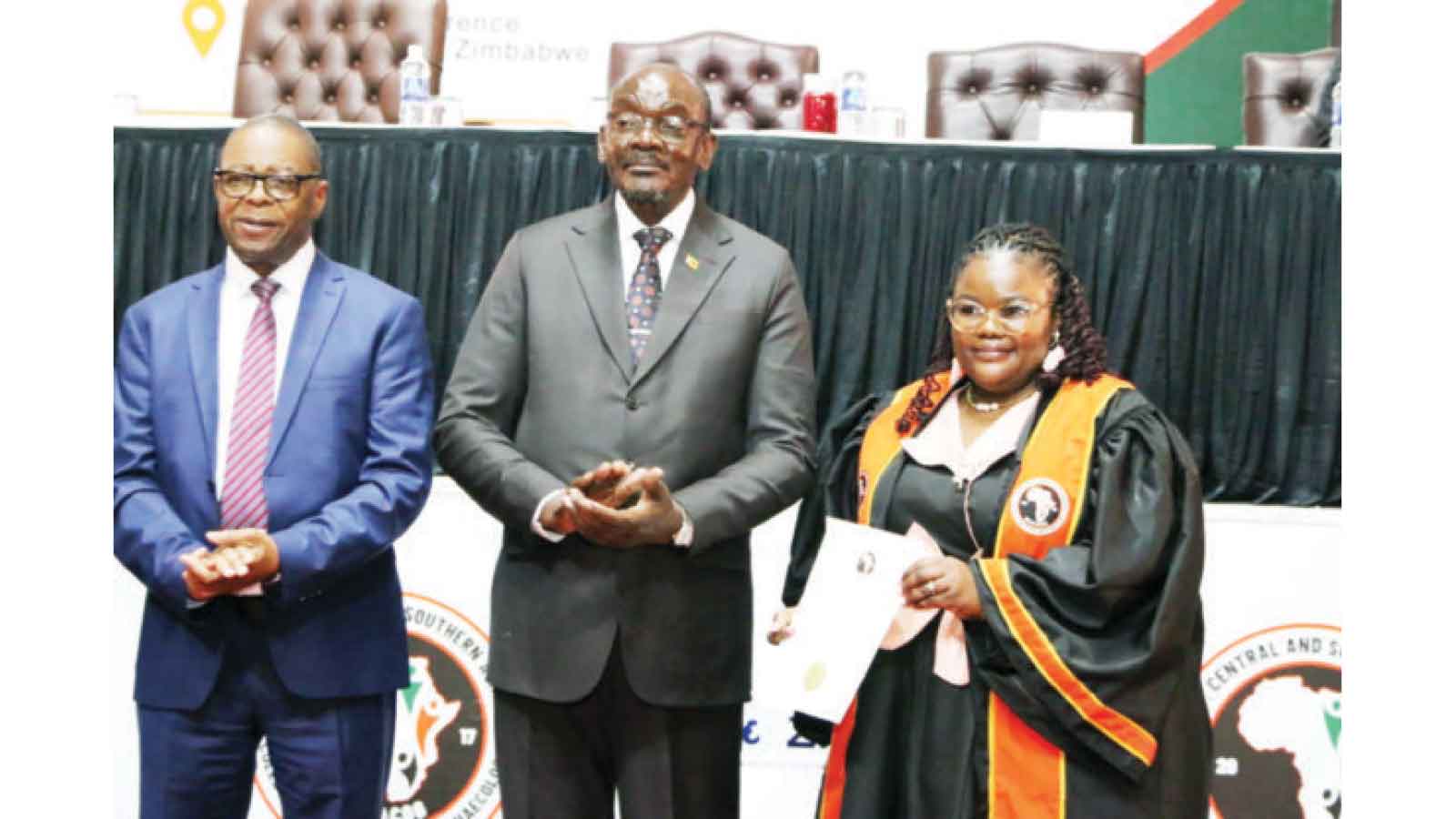
Rumbidzayi Zinyuke
Senior Health Reporter
ZIMBABWE has called for greater investment in specialist medical training and the retention of health professionals as the country and the region seek to accelerate progress in reducing preventable maternal and newborn deaths.
Speaking at the inaugural graduation ceremony of the East, Central and Southern Africa College of Obstetrics and Gynaecology (ECSACOG) in Harare yesterday, Vice President Kembo Mohadi said the graduation of 19 specialists, including 12 Zimbabweans, demonstrated the importance of African countries developing their own specialist capacity.
“The 12 Zimbabwean specialists among today’s 19 graduates are a practical demonstration of this philosophy. We are building our nation by investing in our people, developing our own expertise and strengthening our own institutions, while working with partners across the region and beyond,” he said.
VP Mohadi said ECSACOG represented the fulfilment of a regional vision that began almost a decade ago when ECSA Health Community Ministers of Health resolved to establish a regional institution dedicated to strengthening specialist capacity in obstetrics and gynaecology.
“ECSACOG is a powerful example of this principle; African countries working together to build African expertise for African people,” he said.
He said the health of mothers and children remained one of the clearest measures of the strength and equity of health systems.
Zimbabwe’s maternal mortality ratio declined from 651 deaths per 100 000 live births in 2015 to 212 in 2024, but VP Mohadi said the country could not afford to become complacent.
“Every maternal death is a tragedy not only in Zimbabwe, but in our region and anywhere in Africa. Our collective task is, therefore, to accelerate progress and ensure that every woman, every mother and every newborn can access quality care, regardless of where they live,” he said.
VP Mohadi said investment in human resources for health was critical to achieving Universal Health Coverage, strengthening health security and accelerating Africa’s development.
Health and Child Care Minister Dr Douglas Mombeshora said the graduation represented an important milestone in the evolution of specialist medical training in Zimbabwe and the region.
“The emergence of regional colleges has added a new and important dimension — building African specialist capacity within African health systems. The College of Surgeons of East, Central and Southern Africa was an important pioneer in this model, enabling Zimbabwe and other countries to train surgical specialists within our own institutions,” he said.
He said Zimbabwe’s central and some provincial hospitals were increasingly becoming specialist training centres in addition to providing specialist services.
ECSACOG president Professor Annettee Nakimuli said the inaugural graduation was the fulfilment of a vision built on the belief that countries in the region could achieve more by collaborating on specialist training.
She urged the graduates to remain committed to lifelong learning, research, mentorship and leadership, while ensuring women receive respectful, equitable and high-quality care.
“Our region continues to face significant challenges in maternal and newborn health, holding almost 70 percent of maternal deaths in the world. Every day, women still lose their lives from preventable complications of pregnancy and childbirth, and too many newborns fail to survive their first days of life. You now have the opportunity and indeed the responsibility to help change that reality,” Prof Nakimuli said.
ECSA Health Community director-general Dr Ntuli Kapologwe said the graduation was a milestone in efforts to increase the number, quality and equitable distribution of obstetrics and gynaecology specialists across the region.
He said ECSACOG had already demonstrated the value of regional collaboration, citing medical and surgical camps conducted in Lesotho, Uganda, Malawi and Tanzania, where more than 215 women benefited from essential services for gynaecological and obstetric conditions.
The first ECSACOG graduating class included 12 Zimbabweans, with other graduates drawn from Mozambique, Lesotho, Eswatini, South Sudan, Uganda, Malawi, Ethiopia, Tanzania, Rwanda and Kenya.
Dr Mirirai Muduchwa of Zimbabwe was named the best graduating student. She described the achievement as a culmination of years of hard work and sacrifice.
“I am grateful to be recognised as the best student graduating from ECSACOG. This training equipped me with skills that I hope to use to contribute to reducing maternal mortality and improving healthcare for women and children,” she said.
Another graduate, Dr Gerard Mbabane from Rwanda, said the four-year training programme had been demanding, involving multiple examinations and continuous skills assessments.
“It hasn’t been an easy journey until the end. It was a very tense training because we do roughly three exams in a year, taking us to about 12 exams. But I believe the skills that we have gained here will help us to reduce the ratio of maternal mortality and newborn deaths,” he said.
Zimbabwean graduate Dr Stephen Ganyani, who trained at Parirenyatwa Group of Hospitals and served as chief resident for the Zimbabwean group, said the programme combined clinical training and mentorship.
“This marks the end of the training, but it also marks the beginning of saving lives,” he said.
The graduation was held under the theme “Advancing Excellence in Women’s Health through Specialist Training, Service and Research in East, Central and Southern Africa.”