

 Chronicle Editor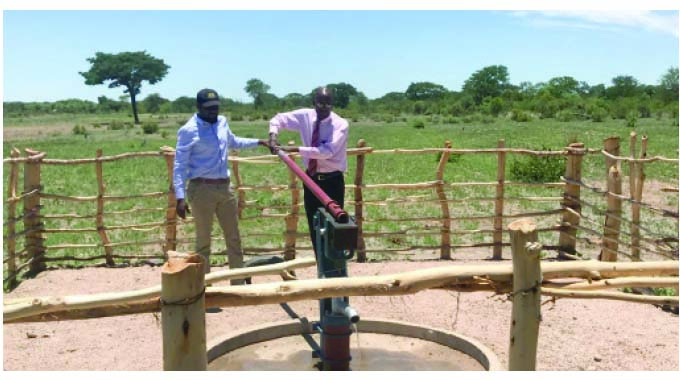
Patrick Chitumba, Midlands Bureau Chief
VUNGU Rural District Council (RDC) in Gweru has received over $200 million since 2019 in devolution funds which have resulted in the improvement in service delivery.
One of the unique achievements of the RDC was the purchasing of a mobile clinic van, a development that has seen thousands of villagers accessing cheap health services from their villages.
Gone are the days when villagers would walk more than 10km to get to health centres in Insukamini or Gweru to access health care services since the mobile clinic van now goes around serving the people.
Only villagers with emergency cases are taken to the health centres if the mobile clinic van is not available.
One of the biggest advantages of a mobile health clinic is that it provides greater accessibility to medical care, be it primary healthcare, preventative care like mammography, vision, health screenings, dental care, and so much more.
Vungu RDC has recorded huge successes in service delivery to the community thanks to the $213 million devolution funds availed to it by the Government since 2019 to date.
Devolution is enshrined in the 2013 Constitution, but its implementation began in earnest with the coming in of the Second Republic under President Mnangagwa when growing sums were budgeted to top up the funds local authorities raise themselves to fund essential infrastructure in their areas.
The Second Republic is scaling up the devolution thrust consistent with President Mnangagwa’s drive of leaving no one and no place behind.
Devolution funds are assisting local authorities to fulfil their obligations of ensuring improved access to social amenities across the country through development of key infrastructure such as clinics, classroom blocks, roads and bridges among other facilities.
Vungu RDC chief executive officer Mr Alex Magura said the projects have come as a game-changer for thousands of villagers.
“The amount received to date is over $213 million from 2019 to 2023. Roads have been rehabilitated, clinics and schools have been built and various service delivery equipment such as refuse trucks, graders, tippers, among others, have been procured,” he said.
Mr Magura said major projects undertaken include the construction of Impala Clinic in Ward 1.
“We are constructing a new clinic which is now 95 percent complete, so it is still work in progress. Work is still ongoing and we expect to complete it this year,” he said.
“We repaired clinic infrastructure that had been damaged by wind and termites at Chinamasa Clinic in Ward 10, Maboleni Clinic in Ward 6 and Makepesi Clinic in Ward 8.”
Mr Magura said the RDC purchased a mobile clinic to service areas that do not have static health facilities, thus easing access to health care challenges in their areas.
“The mobile clinic van brings basic health services to communities that are far away from static medical facilities. It is manned by nurses who go around on a daily basis treating people,” he said.
Mr Magura said the council is in the process of rehabilitating Maboleni Clinic in Ward 6 where they are replacing the termite-damaged roof.
“At Chinamasa Clinic in Ward 6, we are also replacing the storm-damaged clinic roof,” said Mr Magura.
On water and sanitation, he said they have drilled six boreholes in six different wards and procured borehole spares which they used to repair those that had broken down.
“Council has completed the drilling of six boreholes in Wards 1, 3, 9, 12, 17, 18 aimed at availing safe and quality water to residents as part of our duty to provide water to all areas under our jurisdiction,” said Mr Magura.
He said the local authority has also established a piped water scheme in Ward 1 to serve the new clinic, two schools and the community.
“The piped water scheme is at Tovho in Ward 1. It benefits about 150 households, two schools and a clinic. It draws water from a solar-powered borehole and extends over a distance of about 8km. Six communal water points have been installed along the pipeline. This has seen villagers travelling shorter distances to access clean and safe water for human beings and their livestock,” said Mr Magura.
He said Vungu RDC also constructed two classroom blocks at Nkenyane and Herbert Chitepo Primary Schools in Ward 16.
Mr Magura said they have also repaired classroom blocks that had been damaged by wind and storms at several schools across the district.
“Schools that have benefited include Dimbamiwa Primary in Ward 3, Shagari Primary in Ward 7, Gambiza Primary in Ward 10, Woodlands Primary in Ward 15, Tapiwa Primary in Ward 15 and Maboleni High School in Ward 6. The move has improved the availability and quality of education for pupils and the district at large,” he said.
Council, Mr Magura said, purchased a tipper truck and front-end loader to aid in its road construction and rehabilitation in various parts of the district.
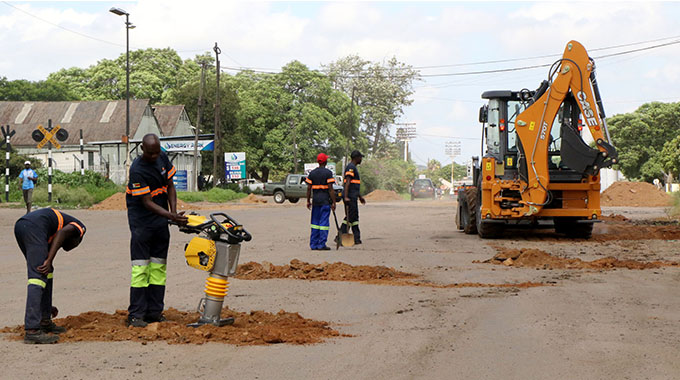
“The tipper truck and TLB are used for road maintenance work. We have been gravelling and rehabilitating our roads so that every part of the area we cover is trafficable,” he said.
Permanent Secretary for Provincial Affairs and Devolution in the Midlands Proince Mr Abiot Maronge underscored the importance of devolution funds to local authorities in line with Vision 2030.
He said local authorities want to use the devolution funds to buy water pumps, and equipment to use in fixing roads and procure ICT hardware and software, among others.
Through the disbursement of the money, Mr Maronge said local authorities have been able to address infrastructure projects in record time.
“The Government must be commended for living up to its promises by releasing the funds to the local authorities in the province.
We are grateful to the Government for the devolution funds which have been allocated to local authorities. We have success stories in most of the local authorities such as Vungu which is commendable,” he said. – @pchitumba1


 Blessing Chizhande
 Online Reporter