

 admin
admin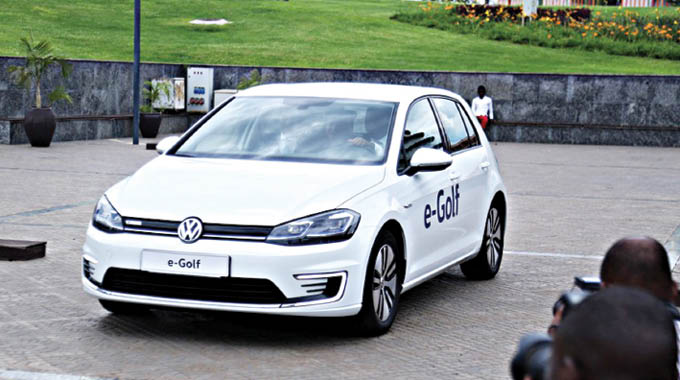
KIGALI — Rwanda has launched electric vehicles introduced by a partnership between Volkswagen and Siemens. The introduction of electric cars is under a pilot project that is aimed at informing the scale-up of the innovation across the African continent. Rwanda’s Prime Minister Edouard Ngirente said the innovation could enable Rwanda substitute expensive fuel imports with electricity generated in the country. Ngirente said at the moment fuel imports make up the largest single import product in Rwanda.
“In 2018, fuel products were the largest single import product category into Rwanda, accounting for 12 percent of all imported goods,” he said.
With the firm planning on rolling out solutions tested in Rwanda to the rest of the continent starting with Ghana, Ngirente said there was room for collaboration across policy fields, sectors and industries in order to make a holistic transition to the environment friendly transport on the continent.
Four cars were unveiled as well as a charging station that will be located at Volkswagen facility at the Special Economic Zone in Kigali. There is a plan to add more cars in the coming months to bring the number to about 50 cars and 15 charging stations across Kigali, Rwanda’s capital. The pilot project will involve data collection and analysis on aspects such as performance of the electric cars, reception by consumers, consumer trends and suitable conditions for the cars.
The electronic is the Volkswagen Golf Model produced in Germany and imported.
Siemens role in the partnership is setting up and managing charging stations.
Thomas Schafer, the chief executive of Volkswagen Group South Africa, said that the introduction of ride hailing solution and corporate car sharing gave them confidence on the latest introduction.
“Rwanda has a young and progressive population that appreciates individual and modern mobility. Together with our development partner Siemens and with the support from the Government of Rwanda, Volkswagen wants to make the e-Golf pilot project in Rwanda a blueprint for electric mobility in Africa,” Schafer said.
Sabine Dall’Omo, chief executive for Siemens Southern and Eastern Africa said that the innovation is also set to prepare stakeholders to changes in car ownership and preference trends whereby the youth have less demand on car ownership.
A fully charged car officials say can cover up to 230 kilometres in ideal conditions. However, the distance is subject to conditions such as altitude, terrain and gradient among other factors. Michaella Rugwizangoga, the chief executive officer of Volkswagen’s operations in Rwanda, said that the firm is currently training drivers and technicians on the driving and maintenance of the electric cars.
The electric vehicles will be added to the firm’s fleet to operate under its Mobility Solutions initiative where activities include ride-hailing, corporate car sharing and rentals. They will not be sold into the market at the moment and will be under the custody of Volkswagen Rwanda during the pilot project.
Volkswagen entered the Rwandan market in June 2018 to assemble and also introduce a mobility solution. — New Times


 Bongani Ndlovu
 Online Reporter