Online Reporter
Sukulwenkosi Dube-Matutu, [email protected]
FARMERS at Wanezi Irrigation Scheme in Matabeleland South Province have embarked on commercial horticulture production, aiming for higher earnings through exports — primarily focusing on chilli and Michigan peas.
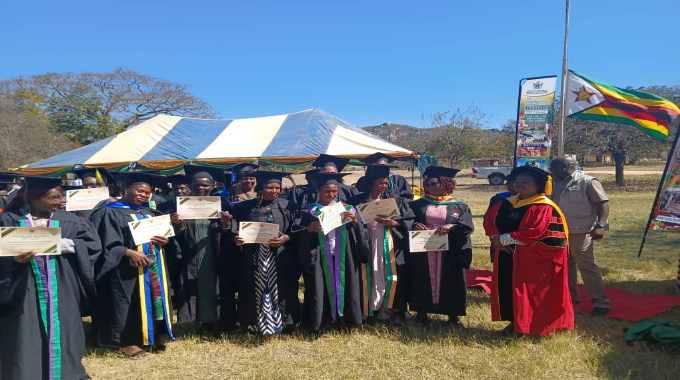
The irrigation scheme was established last year following the rehabilitation of a local dam and currently comprises 74 members; 43 women and 31 men.
The members are targeting the cultivation of 10 hectares of chilli and 20 hectares of Michigan peas.
Additionally, the scheme has planted 30 hectares of sugar beans under rain-fed agriculture. Once centre pivots are connected to the scheme, members expect a significant increase in production.
Installation of the centre pivots is expected to be completed by the end of September. Other outstanding works include the installation of solar power systems and water pumps.
Wanezi Dam, originally constructed in 1952, was once a major source of livelihood for local farmers. However, it was severely damaged by Cyclone Dineo in 2016, leaving villagers in despair.
In 2024, the dam was rehabilitated under the Community Climate Adaptation Water and Energy Project (CAWEP), funded by the British Embassy and implemented by the United Nations Development Programme (UNDP) in collaboration with the Government.
Project chairperson, Ms Chambika Nyamunganga, said members have received training in farming as a business, which will be crucial for their success.
“We only knew about centre pivots from books and long-distance bus journeys. We never imagined that one day we would be the ones boasting about having a centre pivot in our scheme — let alone having an irrigation scheme in our area. This was a long-awaited project.
“We managed to produce sugar beans under rain-fed agriculture, but yields were poor due to water challenges. We expect the centre pivots to be installed soon, which will improve our production. Our goal is to grow cash crops such as chillies and Michigan peas, which have international market demand,” she said.
Ms Bongani Sibanda, a project member, said the irrigation scheme will ensure food security for the community and provide members with sustainable income.
She said members are committed to maximising production and are pleased with the smooth operation of the project through the centre pivots.
“We’ve seen the potential this irrigation scheme has and the impact it can have on our lives and our families. Even though water supply was a challenge, we still managed to earn some income from sugar beans. Once water supply is guaranteed, we expect even greater returns. We won’t take this opportunity for granted — we’ll work tirelessly,” she said.
During a visit to the irrigation scheme, Lands, Agriculture, Fisheries, Water and Rural Development Permanent Secretary, Professor Obert Jiri, said focusing on cash crop production is vital for achieving Vision 2030.
“Vision 2030 means every person and household must have money in their pockets. A middle-income economy means a household should be able to generate at least US$4 000 per year. That means our irrigation schemes must include a component of cash crops.
“Production of chillies for export, where markets exist, is critical. We must also focus on local value addition and beneficiation. What is produced at these irrigation schemes must be processed for sale to the market. To create rural industries, we need primary value addition and beneficiation at the local level to increase farmers’ incomes,” he said.
UNDP CAWEP project manager, Mr Solomon Mutambara, said works at the irrigation scheme are expected to be completed by September. The overall project — including dam rehabilitation, piped water systems, and irrigation infrastructure — is valued at US$3,3 million.
“This Wanezi Dam rehabilitation project is impacting over 12 000 people in this community. The irrigation scheme is directly benefiting 74 farmers. We expect all works at the irrigation scheme to be completed by the end of September. We’ve taken deliberate steps to capacitate farmers in farming as a business.
“We’ve also brokered contract farming arrangements with the farmers and facilitated training, including the establishment of biogas digesters. Community members have received training in biogas technology,” he said. —@DubeMatutu