Online Reporter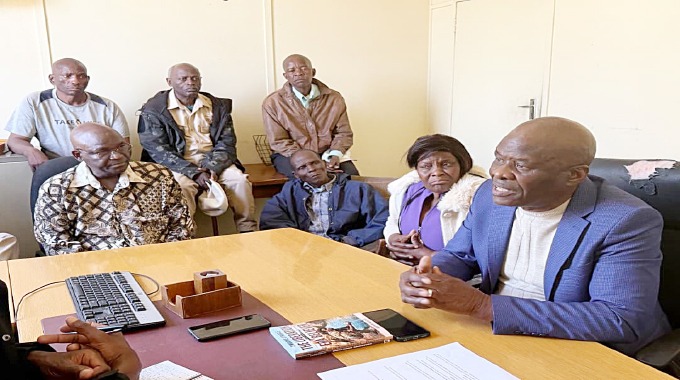
DURING Zimbabwe’s fight for independence, much of the history highlights the bravery of guerrilla fighters and political leaders.
However, behind the scenes, a complex web of collaboration existed, some out of conviction, others out of necessity. These war collaborators known as oGwa or khutshukhutshu played a subtle yet crucial role in shaping the course of the liberation struggle.
In the 1970s, as the liberation movement gained momentum, the conflict was not only fought on the frontlines but also within communities and among those who navigated dangerous loyalties.
Some local villagers and community members, often caught between fear and hope, chose to assist the guerrillas by providing shelter, intelligence or supplies. Their cooperation was risky. Betrayal could mean death or imprisonment, but their silent support often made the difference in many battles.
They would clean the meeting places in the forests of bones and other food leftovers and sometimes bloat out footprints from homesteads that would have been visited by the liberation fighters by giving road-runners millet so that they delete the footprints as they scramble for food.
Among these collaborators were individuals like Nkululekho Mlotshwa (Cde Zakeo) who supplied intelligence and food to the ZPRA fighters in the Northern Front 2 (NF2) whose zone commander was Cde Adrew Ndlovu also known as Cde Volunteer Mkhwananzi.
His actions, though uncelebrated, helped sustain the morale and operational capacity of the liberation forces. He was captured and trained by the Rhodesian forces with nine others but after training they decided to rejoin the guerrillas.
Their actions, whether courageous or cautionary highlighted that the war was not only fought with guns and political speeches but also through the nuanced choices of everyday people caught in a turbulent fight for freedom.
Our Day Editor, Vincent Gono (VG) spoke to Cde Zakeo to understand the role of war collaborators that offers a more complete picture of Zimbabwe’s journey to independence.
It reminds us that history is shaped not just by heroes but also by ordinary individuals making difficult decisions in extraordinary times.
VG: Mr Mlotshwa, thank you for joining us today. To start, could you tell us about your early involvement in the liberation struggle? How did it all begin for you?
Cde Zakeo: Thank you. Well, I was just a small boy around 16 years old back in 1975-76. That was the time when the liberation fighters, known as guerrillas, arrived in our area. Their arrival marked the beginning of a new chapter for us. I quickly became politicised and understood that the movement relied heavily on the support of the masses, including myself.
VG: At such a young age, you were already involved in significant activities. Can you describe what kind of support the guerrillas received from the local community?
Cde Zakeo: The community was the backbone of the guerrilla operations. We provided intelligence, reconnaissance and logistical support. For instance, I and other youths would move ahead of the fighters to identify Rhodesian patrols, gather information about their weapons and relay this back to our commanders. The support was mainly from us, the youth, who did the groundwork for their military operations. We would relay information on whether it was a section, a platoon or a company whatever, those structures and eventually they would then hammer them.
VG: You mentioned reconnaissance and intelligence work. How were these activities organised, especially given the danger involved?
Cde Zakeo: It was a coordinated effort. We had to be very cautious. Our commanders organised us into groups, and we operated with strict secrecy. We knew the terrain and the structures of the Rhodesian forces.
When they thought they were supported by certain locals, we would surround or ambush them. After some time, we were rounded up by the Rhodesian forces and we were taken to their camps for military training because they had realised how effective we were and wanted to convert us to their side. We were a group of ten who were captured and taken for training.
VG: Speaking of training, could you tell us more about the training you received? Was it ideological, military or both?
Cde Zakeo: It was purely military training, though it also carried an ideological component. The training was intense but brief, only about three months, unlike the standard six months. We learned combat skills, weapon handling and tactics. It was a crash programme because of the increasing pressure from the guerrillas. The training camps were in Nyamandlovu, Lupane, Tshiwale and Number 22. After training, we were sent back to our local camps to prepare for operational duties against the guerrillas and we were now armed with Rhodesian weapons.
VG: And after returning from training, at the Rhodesian camps what was your role? Were you directly involved in combat?
Cde Zakeo: Initially, yes. But my group and I decided not to immediately engage in combat. Instead, we coordinated with our local structures and decided to rejoin our comrades at a designated liberated zone. We moved about 20 kilometres to Dongamuzi after Cross Jotsholo, where we knew our commanders were waiting. We were armed and prepared to operate with them we had our small guns and machine guns that we got from the Rhodesians after training and they wanted us to work against our brothers and sisters but we refused.
VG: Did you face any suspicion from villagers or other members of the community when you moved?
Cde Zakeo: No, there was no suspicion from the villagers or the ZAPU structures. Zola, where we operated, was a liberated zone, so suspicion was minimal within our circles. The villagers understood that we were part of the struggle. Our movement was well coordinated, we had informants who would go ahead of us to relay information. And we went to the Zapu district chairperson who was called Nyathi. Information had already been passed to him so he knew because communication had been relayed by trusted contacts. We didn’t have radios, so it was all word of mouth and coded messages. The system worked efficiently because everyone knew our role as informants but it was a big advantage that we had been trained in combat by the Rhodesian Forces.
We went back to our roles as informants for the guerrillas as soon as we re-joined them. We also relied on young boys who would feed us with information that we will carry to the comrades.
To avoid suspicion, the young boys would carry a cup, a plate of some other container and run to the homestead next door as if they have been send to borrow something. When they get there, they would pass on the message and not continue to the next homestead. They will go back home to ensure that if the soldiers were watching, they would not suspect. It will be for the boys or girls of that homestead to pass on the message to the next homestead using the same modus operandi and that way information spread very fast.
VG: I understand that after joining your comrades at Dongamuzi, you continued operations. Were there any notable incidents or actions you took part in?
Cde Zakeo: Yes, we did. We ambushed regime forces, attacked trucks and burned vehicles. These actions were part of our effort to weaken the enemy. In one incident, we ambushed a truck and set it ablaze. It was a dangerous but necessary part of our fight.
VG: And what about the local leadership? Did they have any role in overseeing or guiding these operations?
Cde Zakeo: Yes, leaders like Nyathi played a crucial role. They coordinated the movements, ensured discipline and liaised with the broader command structures. For instance, after ambushing the regime forces, Nyathi would come to collect evidence and report back, ensuring our operations were aligned with the overall strategy. We had commanders such as Cde Andrew Ndlovu, they were highly trained and helped us navigate the challenges. They also trusted us even after we rejoined from the training we had undertaken at the hands of the Rhodesian forces.
The war was not easy, but through resilience and courage we made it clear that we were committed to the cause and not with the regime. We told them that our allegiance was with ZPRA and we had to join our comrades wherever they were.
Despite the risks, the community understood the importance of our fight and we received support from them. I also want to commend the Government for recognising the role that was played by the war collaborators in the liberation struggle.