Chronicle Editor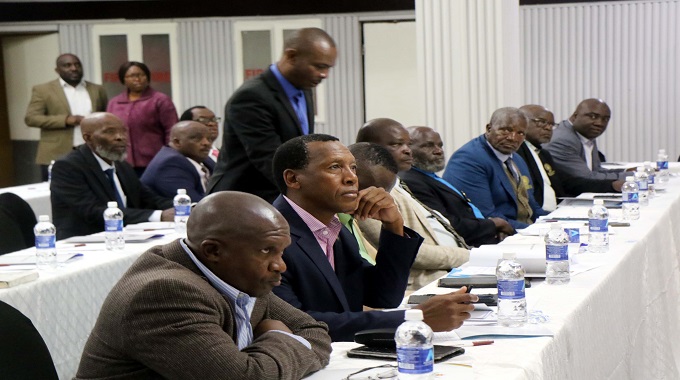
Sikhumbuzo Moyo, [email protected]
THE Second Republic has garnered accolades for its decision to bestow traditional leaders with the authority to issue birth and death confirmation records for individuals born or deceased outside of healthcare facilities.
The Government recently expanded this right to village heads, headmen, and chiefs as part of its ambitious vision to achieve 100 percent birth certificate coverage and an 80 percent issuance rate for death certificates by 2030. This noble objective aligns perfectly with the Sustainable Development Goals (SDGs) and Agenda 2063.
Previously, obtaining a birth record and subsequent birth certificate for a child was confined to clinics and hospitals. Similarly, acquiring burial orders necessitated a visit to the offices of the Civil Registry Department, armed with a death record obtained from a healthcare institution. However, it became evident that a significant number of births and deaths were not being registered within the stipulated timeframe. According to the Birth and Death Registration Act (Chapter 5.02), births should be registered within 42 days, and deaths must be registered within 30 days.

Statistics from the Ministry of Home Affairs and Cultural Heritage reveal that only approximately five percent of births and three percent of deaths are registered within the specified time frames. Moreover, there are glaring gaps in notifying births and deaths occurring within communities, aggravated by the absence of a formal notification system to capture these vital events accurately.
To address these challenges and bolster the Civil Registration and Vital Statistics (CRVS) systems, the Ministry has embraced the implementation of active notification for births and deaths. This proactive approach aims to provide continuous and comprehensive statistics while improving the overall registration process.
During an engagement workshop held yesterday with traditional leaders on the implementation of active notification for births and deaths, organised by the Civil Registry Department at a prestigious city hotel, Senator Fortune Charumbira, President of the Chiefs Council of Zimbabwe, expressed his satisfaction. He highlighted that traditional leaders had long advocated for the authority to issue birth and death confirmation records, even during the tenure of former Registrar General Tobaiwa Mudede. Their voices were finally heard under the new dispensation led by President Mnangagwa, showcasing the progressive capacity of the country’s leadership.
“The first thing I want to say is that today July 19, 2023, your department (Civil Registry) and the Ministry of Home Affairs and Cultural Heritage have finally awoken, they have finally seen the light. We have been on this issue from way back when RG Mudede was still in office, this matter was a thorn in the issue for us but today, probably as a result of the new dispensation, we are in the same boat, this is a great revelation of the capacity within the new dispensation that the country is now moving forward,” said Chief Charumbira.
Chief Ngungumbane of Mberengwa welcomed the Government’s decision, acknowledging the delay in granting traditional leaders these powers. Nevertheless, he expressed excitement about the newfound authority, as it is indeed better late than never. He pointed out that while birth certificates were originally provided free of charge for children six years and younger, the situation had changed. People now incurred substantial expenses by traveling to Civil Registry offices with witnesses, as per the requirements.
“Sometimes people would not be having money for themselves and their witnesses to travel to the Civil Registry offices, but now, the process is easy as we have village heads in every village in the country and this really shows the honour and respect given to the traditional leaders,” said Chief Ngungumbane.
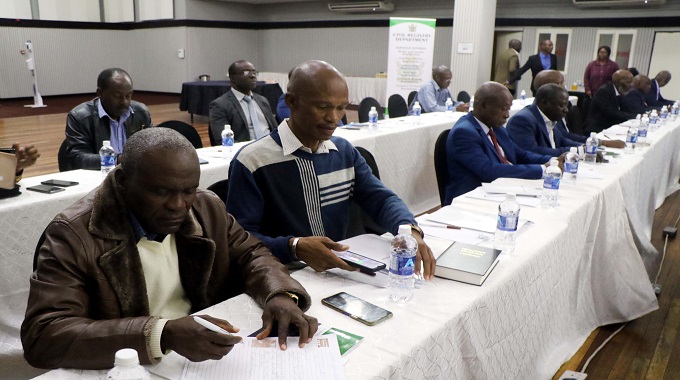
Echoing Chief Ngungumbane’s sentiments, Chief Skhobokhobo of Nkayi affirmed that involving traditional leaders in the document acquisition process was long overdue.
“We have so many people out there without these key documents and the effect of this is that it affects even the Government when planning and making policy decisions as the information will be based on wrong statistics so we are happy, we are excited as traditional leaders,” he said.
Addressing the chiefs and other stakeholders, Major General (Rtd) Dr Gerald Gwinji, the Permanent Secretary in the Ministry of Home Affairs and Cultural Heritage, shed light on the initiative’s purpose. He stated that it aimed to overcome barriers to birth and death registration at the community level while bolstering Zimbabwe’s Civil Registration and Vital Statistics (CRVS) systems on the path to realising Vision 2030. He emphasised that registering vital events was crucial for legally acknowledging an individual’s existence and establishing a foundation for tracking their life from birth to death.
“According to the Constitution of Zimbabwe [Amendment 20] Act 2013, every person has a right to be registered and acquire civil registration documents. The right to birth registration is closely linked to the realisation of other rights such as nationality, protection, access to social, health and education services. An effective civil registration system is, therefore, fundamental to the existence of mankind.
“In the recent past, Civil Registration and Vital Statistics (CRVS) has emerged as a topical developmental issue locally, regionally and globally. This is coming from a background where there is realisation that CRVS is the most reliable source of data and is central to any country’s developmental process, it also plays a pivotal role in upholding human rights and facilitating modern administrative systems and good governance. As a country, we therefore have a responsibility to establish how many people are born and die each year and the only reliable way to count everyone and to track all births and deaths is through civil registration,” said Major General (Rtd) Gwinji.
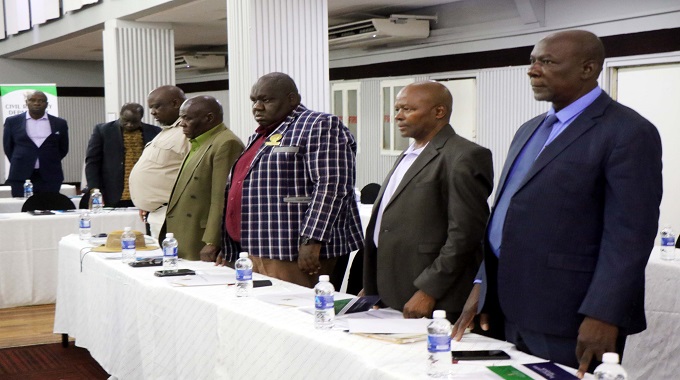
He underscored the constitutional right of every individual, as outlined in the Constitution of Zimbabwe [Amendment 20] Act 2013, to be registered and obtain civil registration documents. Birth registration, in particular, is closely linked to the realisation of other rights such as nationality, protection, and access to social, health, and education services. An effective civil registration system is, therefore, fundamental to the well-being of society.
Recognising traditional leaders as custodians of indigenous knowledge systems encompassing community culture, heritage, and traditions, Major General (Rtd) Gwinji stressed their critical role in the programmes implementation. The initiative focuses on empowering traditional leaders to actively notify births and deaths promptly, paralleling the function of confirmation records issued by healthcare facilities. These records will serve as valid documents for registration purposes.
“The programme will start with a pilot in selected districts, before being cascaded to all the districts countrywide. Once active notification is implemented, there will be no need for parents and relatives to bring witnesses to registration offices in cases of community births and deaths since the information would have been recorded by the village head and a confirmation record issued.
“This would significantly benefit members of the public who were incurring costs to transport witnesses to registry offices. Furthermore, the programme will also raise awareness on the importance of timely registering vital events, assist in planning targeted mobile exercises and increase registration rates in rural communities,” he said.



 Online Reporter