


 Online Reporter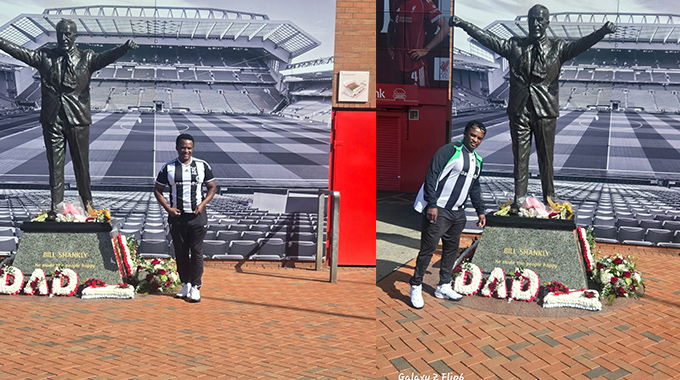
Lovemore Dube
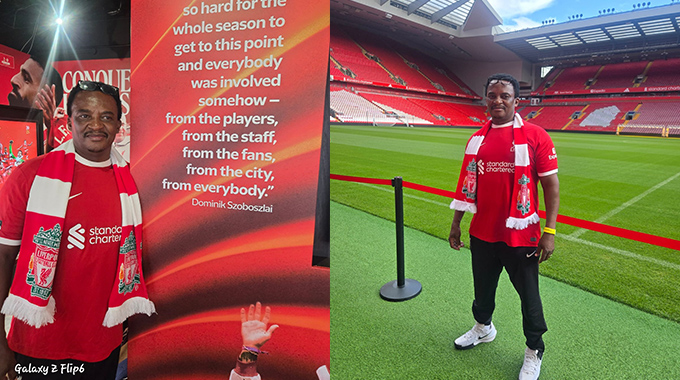
FORMER Matabeleland and Zimbabwe basketball champions Peking Stars player, Vincent Chingombe had a time of his life on Saturday afternoon when he visited the revered Liverpool home ground, Anfield Stadium.
He described the atmosphere as electric and worth every pound paid and time spent on organising the excursion.
An ardent Liverpool supporter, Chingombe said the 76 Pounds which he parted with to tour the facility with his wife, was worth the day’s entertainment.
“Anfield is something, you feel the aura once you are there. We had to go through some procedures and paid 46 Pounds for both of us for the tour and another 30 Pounds for photos and videos that we took.
“How I wish back home Dynamos and Highlanders could have tours organised with curators. For instance Highlanders starting with their offices, clubhouse, Luveve camp house and Barbourfields Stadium and some homes relevant to the club’s history,” said Chingombe.
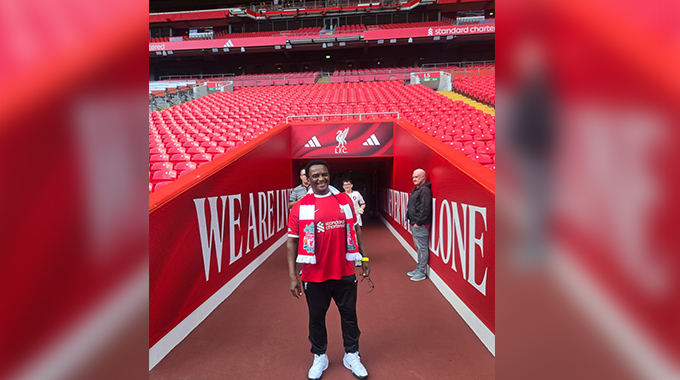
He described the reception at the stadium as welcoming and very professional.
“The guides are very welcoming and very professional, they make you feel really part of the institution. It was emotional to be in the tunnel that we see on television and that area written ‘This Is Anfield’.
“You are given the history of the club before the tour starts, getting to The Kop you feel it as much as you do on television,” said Chingombe.
Why The Kop is called “The Kop”
It was named so by a local journalist Ernest Edwards, who was the sports editor of newspapers the Liverpool Daily Post and Echo.
He named it the Spion Kop after a famous hill in South Africa.
It is said local regiment suffered heavy losses during the Boer War in 1900.
More than 300 men are said to have died a majority from Liverpool, as the British army attempted to capture the strategic hilltop.
The name, Spion Kop is derived from the Afrikaans name of the area called “Spioenkop” which roughly translates to “Spy Head/Hill.”


