Online Reporter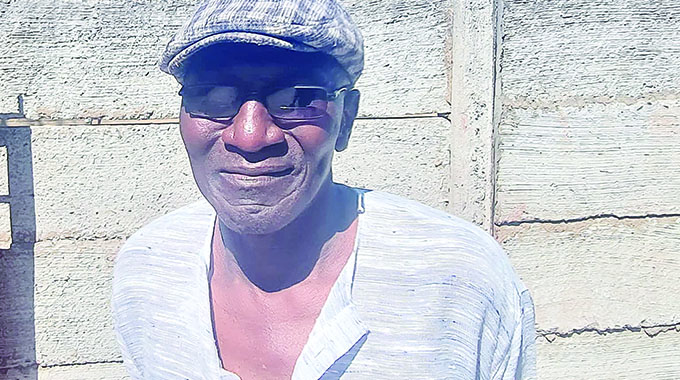
Lovemore Dube, Zimpapers Sports Hub
WHAT could’ve happened if the Highlanders Under-16 team that won the Castle Cup in 1976 had never left the pitch?
Sixteen teenage footballers walked away from the game and into the armed liberation struggle, disguised as a team heading to play a match in Kezi District. The decision wasn’t random.
Jabulani Tshuma, who played centre-back, says the atmosphere in late 1976 was charged with a sense of urgency. The country was on edge and many young people, athletes included, felt the pull to join the fight for independence.
“When we left in November 1976, the political winds were blowing west and north. Everyone, teenagers and adults alike, felt the need to go and join the struggle,” Tshuma said from his Mzilikazi home.
The momentum had been building since the 1975 release of nationalist leaders like the late Vice-President Joshua Mqabuko Nkomo. That moment, Tshuma recalls, sparked a wave of determination.
“The atmosphere was politically charged, and everyone felt the urge to go and join the struggle to liberate Zimbabwe. Even in football circles, the feeling was mutual.
Many of us wanted to go because the country’s environment was no longer good,” he said.
The team had just won the right to play as curtain raisers in the Castle Cup final between Dynamos and Zimbabwe Saints at Rufaro Stadium in Harare. A bus was arranged, and supporters even chipped in for seats. Tshuma, who’d started out with the Under-16s as a central defender, remembered the moment clearly.
“We beat St. Johns, which was a racially mixed school with mostly Coloured players. George Nkomo, Peter Nkomo’s brother, scored both goals. We won 2–1,” he said.
“But what pained us was that we were handed a trophy, no cheque, no prize money. That stung. We felt unwelcome because we were from Bulawayo. It made us even more determined to leave the country.”
On the return trip from Harare, the mood in the bus shifted. Tension built, and the plan to cross the border into Botswana started to take shape.
This was no ordinary youth team. They were talented, undefeated for years, and had grown up idolizing a senior Highlanders side filled with rising stars, players like Cavin Duberley, Boet Van Ays, Billy Sibanda, Lawrence Phiri, Peter Bepe (Bhebhe) and Bruce Grobbelaar.
Tshuma said the mood intensified after the death of nationalist Lazarus Nkala. Authorities tried to suppress public mourning, which only deepened their resolve.
“We mobilized ourselves as youths to protect our leaders if anything happened,” he said. “We were already active in ZAPU structures. The release of people like Joshua Nkomo, Enos Nkala and Robert Mugabe just pushed us further.”
Tshuma named several teammates who joined the mission: George Nkomo the brother of legendary goalie Peter Nkomo, Richman Sibanda, Ralitan Ngwenya, the twins Tendai and Oliver, Smart Moyo, Talent from Makokoba, Jabulani Mbambo, Lawrence Mhlanga among others. Those left behind were Reuben Tsengwa and Evans Chiweshe, the elder brother to Elvis.
The late Mackenzie Sibanda, David Mbawula, and Washington “Come to Washie” Mpofu made up the technical team, but were not part of the mission to cross the border.
Tshuma says when the team once back in Bulawayo, they stayed out of sight while gathering pocket money and covering travel costs, including the Pelandaba Bus Services fare.
“We gave back the kit to Mackenzie Sibanda, then later convinced him to let us borrow it. We used it to disguise ourselves as a football team.
We got through four roadblocks, got off the bus around midnight and were taken in by a family who fed us and gave us a guide. He walked us across the border and left us in Botswana,” said Tshuma.
There, a local headman contacted the chief, who alerted the Botswana Defence Forces. They were picked up, interrogated, and taken to Francistown, where ZAPU representatives eventually moved them to a refugee camp.
Tshuma travelled with the second group, following one that included former Matabeleland South Provincial Registry boss Jabulani Mbambo.
“About a week later, a plane flew us to Zambia. We were then sent to Nampundwe Transit Camp, and from there to training camps. I trained in Angola,” he said.
After the war, he was stationed at Gwayi River Mine Assembly Point, where he tried to return to football.
“George Moyo became Peter Nkomo’s understudy. George Nkomo played for Bosso alongside Nkosana Ngwenya. I stopped playing, it became too hard to fund my return. The war took its toll on our careers.
Highlanders had something special with our generation. Winning the Castle Cup, a national tournament, meant we were the best at our age,” said Tshuma, a former Mzingwane High School student who remembers sprinter Elijah Nkala as his head boy.
He believes football played a quiet but powerful role in the liberation struggle.
“Stadiums were more than places to watch the game. They were where people met, where word spread and where the fight for freedom quietly gained ground,” said Tshuma.