Chronicle Editor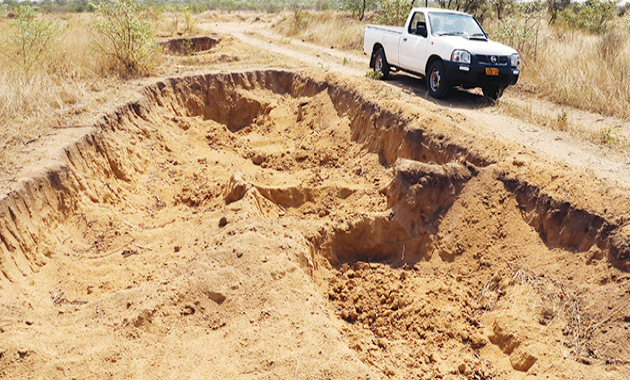
Judith Phiri, Features Reporter
To 81-year-old Mr Sauli Ngwenya of Silunguzi Village, Ward 17, Matobo District, in the sprawling Matabeleland South province, each tree has its own purpose and uses. Trees have always furnished human beings with two of life’s essentials — food and oxygen. As people evolved, trees provided additional necessities such as shelter, medicine and tools.
For Mr Ngwenya’s generation and generations before, trees were viewed as sacred, worthy of awe and respect. However, there have been a lot of changes to Mother Nature since the new millennium. Mother Nature (sometimes known as Mother Earth or the Earth Mother) is a personification of nature that focuses on the life-giving and nurturing aspects of nature by embodying it, in the form of a mother or mother goddess. As Mr Ngwenya puts it, for reasons known only to human beings, Mother Nature is suffering and the effects of its destruction have resulted in extreme heat, wildfires and floods among other disasters.
“What is happening these days is very hard to explain. It is as if people are on a mission to destroy the environment and leave nothing out of it. What pains me the most is the loss of very important trees that give us life. Back in the day when we were young, trees were not being cut as they are now,” he said during an interview at a recent commemoration of International Environment Education Day in Matobo.
The commemoration was held at Amagugu International Heritage Centre in collaboration with Caritas Zimbabwe. In attendance were students from Whitewater Primary School and Nduna Primary School, lead farmers and the Matobo Ward 17 community who were challenged to be environment ambassadors and encourage others to take care of the environment.
Man-made changes to nature as well as crimes that disrupt biodiversity, such as deforestation, pollution and sand poaching among others, have accelerated the speed of destruction of nature, while triggering climate change.
The International Environment Education Day is a global event that aims to raise awareness and promote action on the protection and preservation of the environment. It is celebrated every year on January 26, in recognition of the importance of education for sustainable development and peace.
Mr Ngwenya said the commemoration was a wake-up call that something needed to be done to cascade information on the importance of protecting and conserving Mother Nature.
“When we were growing up, a tree would only be cut down for a very important reason, either when one wants to make ingiga (wooden mortar and pestle) you would choose only one tree and it would not be just any tree but a specific one. We however, are now witnessing the total destruction of the environment through random and excessive cutting down of trees. This is not the respect that we would give to Mother Nature when we were growing up.”

Mr Ngwenya said some of the key trees of importance that are becoming extinct were iminyela (commiphora glandulosa), ivimila (white syringe) and umkamba (pod mahogany) among others.
He said when they were growing up, the elders would use some of the trees such as isihaqa (sjambok tree) and umfumfu (violet tree) for medicinal purposes whose continuous appearance in communities is a cliff hanger as their use involves human survival.
“The environment is now dead and it is being destroyed by us as humans. In our community, we are seeing these younger generations burning trees to use them for brick drying. What is more puzzling is that they are cutting down any tree of their choice even some of the oldest that we knew were never meant to be cut down, as well as medicinal and fruit trees. Money is now taking centre stage over Mother Nature that gives us life. Whereas trees are supposed to be taken care of just as the way we take care of our own lives. The air we breathe comes from the trees but as we continue destroying them we are also destroying our well-being and lives.”
Also contributing to environmental concerns in Matobo District is sand poaching. Silunguzi Village A village head, Ms Aefa Ndlovu said sand poaching has affected their water sources such as rivers and streams.
“Not only do we have people cutting down trees but we are also witnessing sand poaching by people coming all the way from big cities such as Bulawayo and others. Riverbanks are being eroded, rivers are polluted, riverbeds are deepened, while river-mouths are widened. The river ecosystems are destroyed because of sand poaching,” she said.
Turning to trees, Ms Ndlovu said growing up, these played an important role in shielding them from harsh weather conditions such as strong winds, floods and water pollution. Ms Ndlovu bemoaned the destruction of infrastructure, soil erosion and floods due to extreme weather conditions.
“This is because we have been left out in the open with the continuous cutting down of trees. What pains us the most is that we do not know these people that cut down our trees. After engaging some to stop, they have resorted to coming in the middle of the night. When we wake up you see that a number of trees are gone, while some would have been sapling trees,” she said.
To tackle the cutting down of trees and sand poaching menace, Ward 17 Councillor, Sthembiso Ndlovu who is also the Matobo Rural District Council (RDC) Environmental Management Committee chairperson, said they have deployed some environmental officers.
“These are villagers who have volunteered to be the eyes of the community to address the social ills that we are witnessing in our area. We are seeing the destruction of the environment in the community and as each day goes by, it is becoming worse. People are cutting down trees to sell firewood and others are wood carvers. Trees such as mopane (butterfly tree) that are an important income source for many people because of amacimbi (mopane worms) are also not being spared,” she said.
“As a committee, we have tried to set up strategies that ensure we protect and preserve our environment working together with various stakeholders and organisations. Even the villagers have taken it upon themselves to be whistle-blowers and those that are caught cutting down trees are charged.”

Clr Ndlovu said they were facing challenges of transportation in order to do rounds within the community, while other villagers would be attacked when they try to confront those who would be cutting down trees. She said sand poachers were leaving behind a trail of destruction as they cut down trees and clear the land before digging for the sand, while they also leave behind open pits which are dangerous to livestock and other animals.
Clr Ndlovu called for collaboration among community members to triumph against these social ills and promote preservation of the environment. The Government continues to step up efforts to curb illegal tree-cutting, which has resulted in massive deforestation in many areas across the country.
Deforestation continues to spread at a high rate due to over-reliance on firewood in the rural areas, with the country losing an average of 300 square kilometres of forest cover every year. The destruction of natural resources is not only a threat to the country’s unique biodiversity, but also to the communities which depend on the forests for their livelihoods.
Sand poaching is also on the rise as there are increased construction activities around the country, both legal and illegal, which have led to massive demand for sand, a crucial component in the building industry. Sand is vital for almost every aspect of construction as it gives strength and stability to materials such as concrete, mortar, asphalt and cement. Climate change researchers have highlighted that sand poaching is a disruption to ecological balance and most people do not realise that sand is a finite resource that needs to be conserved, cherished and preserved.



 Online Reporter