Chronicle Editor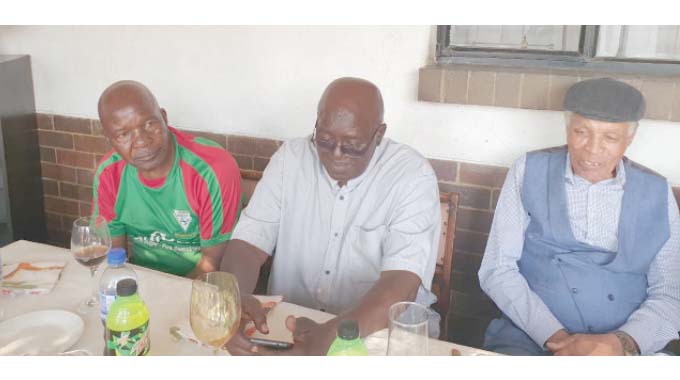
FOR the converted at Highlanders FC who have dared go into the club’s history, Silas Ndlovu’s name is high up there among those whose contribution has to be celebrated.
A former player of the club who in the late 1950s Highlanders used to send a car to fetch him from Dadaya Mission near Zvishavane, where he was a pupil, Ndlovu was that good. He carried the club’s hopes of success in tournaments such as the Tapitapi Cup and Townshend and Butcher Trophy.
He played in that era with the likes of Jambok, Mackenzie Sibanda, Vana Hlabangana, Nicodemus Sibanda, Denis Bhejane, Richard Donga, Jafter Nxumalo, James Nxumalo, Canaan Mdenga, Mike Sofie, Andrew ‘Srupata’ Jele, Edward ‘Magungubala’ Dlamini and Edward Dzowa.
Ndlovu in 1971 became Bosso coach and turned around the club’s fortunes winning the 1973 Chibuku Trophy and as they say the rest is history. It was about that time that Ndlovu and senior players like Dzowa, Jele, Lawrence Phiri and Billy Sibanda advocated for a leaner executive at a time Highlanders had 15.
The club has since the early 1970s been envied for its constitution, adherence to corporate governance tenets like audited statements and annual general meeting at the beginning of every year.
As a coach, he won several regional titles and the 1974 national league play off and returned in 1990 to win the league and cup double. But very few know that Ndlovu is a former Dynamos player. He joined the Glamour Boys soon after its formation in 1963 and was among the club’s goalkeepers having moved to the capital to train as a postal clerk.
A Kunyongana Trophy winner as a player for Lobengula Primary School in 1957, coincidentally it turned out to be the same competition for seniors that propelled him to Dynamos’ attention.
“There were two Kunyongana trophies, one for primary schools in the four regions and the same for the quarter for seniors. I won the trophy with Lobengula Primary School and with Highlanders as a player in 1963,” said Ndlovu.
He says it was after beating Dynamos in 1963 that the move came by.
“I joined them after they came to play in the Kunyongana Trophy soon after their formation in 1963. Highlanders beat the just formed Dynamos at Barbourfields and I was the goalkeeper that day,” said Ndlovu.
Ndlovu said at that time nationalism was taking shape and leaders of Dynamos and Highlanders agreed that a player of either club who moves to the other city will play for the team.
“So I was able to join them because when we played them I was at PTC as a postal clerk transferred to Harare. The clubs had an agreement of that sort back then,” said Ndlovu.
Vana Hlabangana son of Highlanders founding player Nsele, also collaborates that story of unity between Dynamos and Highlanders.
“There was that agreement between the two teams that should a Highlanders player move to Harare, he joins Dynamos and should they transfer to Bulawayo they play for Highlanders,” said Hlabangana a former teammate of Ndlovu.
Ndlovu does not remember the final score but recalls that Dynamos had in its ranks the founding players like Obadiah Sarupinda and Josiah Akende.
“I don’t remember the score line but most of the Dynamos original players like the Sarupindas and Akende were there. For Highlanders I remember players like Jambok and Canaan,” said Ndlovu.
Of the 1950s generation Dlamini and Jambok are known to be alive. Ndlovu, a man, many still insist had a Midas touch at Highlanders, South Zone Soccer League, NPSL and tied relations with Moroka Swallows, Kaizer Chiefs and Orlando Pirates enabling Zimbabweans to play in South Africa and the teams to tour Bulawayo and Harare, remembers playing with the majority of the 1963-1970 Dynamos greats.

“At Dynamos I played with among others: Sarupinda, Akende, Alois Meskano, Bernard Marriot, Freddie Mkwesha, Allan Hlatshwayo, Danny Bricks, Lameck, Jairos Nkumba, Garincha, Morrison Sifelani, Erick Skala, Stewart Gilbert, Galloway, Ben Zinyama, Stephen Chimedza and Kiddy. I recruited Ben Zinyama and Chimedza from Mufakose,” said Ndlovu.
Chimedza would rise to be a Soccer Star of the Year finalist alongside great players like Simon Sachiti, Daniel Chikanda, Topsy Robertson, Gibson Homela, John Gallacher, Ernest Kamba, Billy Sharman, Phineas Chideme, Ernest Kamba and George Shaya. The Mufakose recruit also captained both Dynamos and the national team to emphasize the fact that Ndlovu had a great eye for talent as he did wonders at Highlanders. Perhaps his national approach to the game was born out of the fact that he had lived in Harare as in 1973-75, he put together or attempted to bring to Highlanders players drawn from all over the country.
Players that come to mind include Tendai Chieza, Itai Chieza, George Chieza, Winston Chieza, all these from Mhangura, John Nyumbu (Gweru), Isaac Mafaro (Harare), Chutika Tembo (Hwange), Bruce Grobbelaar (Harare), Chita Antonio (Harare) and Peter Bepe from Mutare.
Ndlovu remembers the heated debate that ensued over whether Mkwesha should be released to go to Portugal after impressing visiting Sporting de Bragga. He said the departure soiled his relationship with Sifelani who had insisted among other players that Mkwesha should stay at home and be the club’s poster boy.
“We argued out that they should let the boy go as football looked like the only thing he could do. Sifelani was not happy about my stand on the matter,” said Ndlovu who in 1975 with the former Dynamos chairman became the first Black coach from the country to attain English FA Coaching Badges.
Ndlovu returned to Bulawayo in 1965 with Dynamos having won several pieces of silverware and was transferred to Lupane where when time permitted he returned to Bulawayo to play for Bosso.
In 1971 he was promoted to interim coach as the club faced relegation. Relegated they were at the debut national elite division league and were runners-up in the South Region promotional league to Philemon Dangarembwa and Bruce Mawa’s Rangers in 1972.
With the national league having a North and South Region Division One, Ndlovu guided Amahlolanyama to the championship and Chibuku Trophy. They were national league runners-up to Metal Box.
Since his pioneering transfer, Makwinji Soma-Phiri, Lovemore Ncube, Colsen Mabeza, Rodrick Mutumwa, Stewart Murisa, Lenny Gwata, Cuthbert Malajila, Washington Arubi, Tinashe Makanda, King Nadolo and Bhekimpilo Ncube are some of the players who have played for both Dynamos and Highlanders showing that sport is universal and unites communities.
In 1991 Ndlovu was a member of the technical team that worked with Reinhard Fabisch as the Dream Team Foundation was laid with emphasis on the Under-20 and 23 teams. A good number of the players would rise from there to star for the Warriors. Despite all these successes and association with the Big Two, the humble Ndlovu stays in Manningdale, Bulawayo with his family where he is a farmer.
A man of principle and value, Ndlovu has never sought to join Dynamos’ squabbles despite being a former player at the club’s initial stages. Last week Ndlovu celebrated his 84th birthday with a few football personalities who included Agent Sawu, Lawrence Phiri, Gibson Homela, John Nyumbu and Cosmas Zulu where speaker after speaker spoke glowingly about his contribution to Zimbabwe football and Highlanders FC.


 Online Reporter