Amos Mpofu [email protected]
SOLUSI University is prioritising the establishment of a drug rehabilitation centre as part of its efforts to complement Government initiatives to tackle the growing problem of drug and substance abuse in the country.
The proposed facility is among several projects being pursued by the institution, which also plans to establish a law school and expand its sustainability initiatives through investments in solar energy.
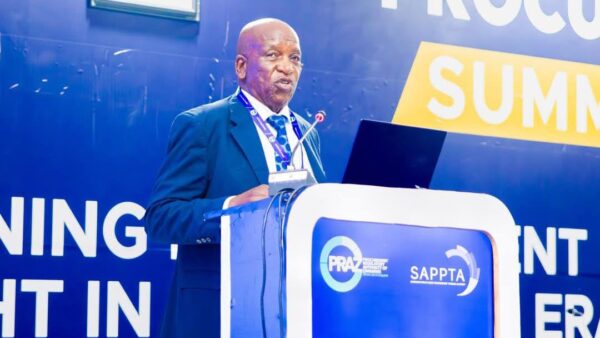
Speaking to Zimpapers on the sidelines of the university’s 30th graduation ceremony, Vice-Chancellor Professor Khumbulani Mpofu said the rehabilitation centre was part of the institution’s response to the drug and substance abuse challenge, which he described as a global problem.
“There are various projects that we are working on that are going to be coming up in the coming days. We have got a rehabilitation that we are going to be doing at the institution in line with dealing with the challenges that the State has spoken about with respect to the drug pandemic,” he said.
Professor Mpofu said the university was engaging international partners to secure technical expertise and resources for the project.
“Actually, with that, we’re also talking to international partners who have said to us they would like to partner with us in developing professionals around that space. So, the International Consortium of Drug Demand Reduction is working with us to come up with programmes that will fit into that.
“So while we are helping those who are struggling with drug abuse, we’ll also be ensuring that we’ve got trainers who are internationally recognised and our trainees can go and function anywhere in the globe,” he said.
The Vice-Chancellor also highlighted the university’s growing international partnerships, citing the participation of Romanian delegates at the graduation ceremony through an Erasmus exchange programme.
“On today’s graduation, we had Romanians who came for an Erasmus project. The State is clear about the internationalisation strategy, not just of institutions but of the country,” he said.
He said Solusi had more than 120 sister institutions worldwide, creating opportunities for academic exchanges, collaboration and the sharing of expertise.
The Romanian delegation had visited the university to familiarise themselves with its systems and explore practices that could be replicated at their institutions.
Professor Mpofu also outlined progress in the university’s sustainability agenda, particularly its planned solar energy project, as well as efforts to improve water and electricity supplies through partnerships.
He further highlighted an initiative to trace the historical footprint of missionaries across Africa, saying it could help strengthen tourism in Matabeleland and the country at large.
“As the historical site for Adventists in the continent, the tracing of the footprint of the missionary speaks to strengthening tourism, not just here in Matabeleland but also in the country,” he said.
He said the initiative could complement visits to major tourist attractions such as Victoria Falls while providing an opportunity to tell Zimbabwe’s story through its faith, mission, purpose and the impact of missionary work across the continent.
On plans to establish a law school, Professor Mpofu said the university was working towards meeting the requirements set by the relevant authorities.
“We have got a team of professionals who are lawyers, practising lawyers who are legally registered here with the lawyers’ association. We’ve reached out to the associated authorities with respect to what is needed from our side, so they’ve given us a list of what is required for us to get going, and we are working on that list,” he said.
He said the institution was working to fulfil the requirements before proceeding with further engagements with the authorities.