admin
admin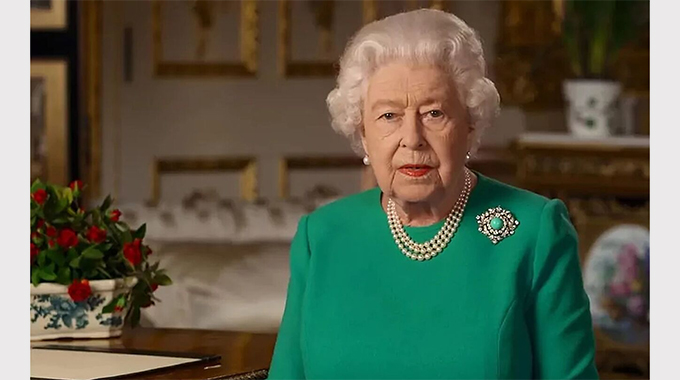
Gibson Nyikadzino-Correspondent
When the images of victims of terror fleeing their homes in Mozambique’s Cabo Delgado region following an Islamist attack last year were broadcast on international media, the attention given to the misery of fellow Africans quickly diminished when helicopters were sent to rescue white tourists who had been caught in the attack.
Quite revealing was a video of a black African who was left by a rescue helicopter while the rescuers saved a dog belonging to a white tourist.
The importance of human life was belittled by the priority given to a dog that belonged to the white tourist.
That is the complexity of the hierarchy of grief.
The world has a binary way of looking at grief. It is clear that there is a race of people in this world who are grieved more than the other races and they can go to extreme ends to banish in their minds the idea that human life can outweigh the life of a pet.
Such is the post-colonial weakness that is being cultivated by some of the formerly oppressed people of Africa who are being indoctrinated into the belief that theirs is a less important life than that of the other when the world is built on the equality and reciprocity.
This is a danger to the physicality of our mentality.
In the post-industrial world where freedom, liberty and the importance of history are key in shaping the future of the world, in such a crucial time some Africans are turning a blind eye to these defining moments which are key in helping us shape our futures and conceptualise how we respond to such subtle acts of racism.
The cultivation of these acts of subtle racism without regard of their consequences diminish any forms of critical thinking patterns, hence make Africans the comparative of the Dead Sea, where we are forced to receive and accept all developments without any passage to let that out.
Reframing the image after death
“We are going to die, and that makes us the lucky ones. Most people are never going to die because they are never going to be born. We the privileged few, who won the lottery of birth against all odds, how dare we whine at our inevitable return to that prior state from which the vast majority have never stirred?”
It is Professor Richard Dawkins, a British erudite in the field of the public understanding of science, who made the above remarks.
Death is inevitable occurrence and the natural fate of Queen Elizabeth II was an expected anticipation.
But her death has left a complex legacy in both the “free world” and in Africa which has been termed by European scholars a “zone of turmoil”.
The impression is that Africa as a “zone of turmoil” is because of how most of its pockets have failed to be at peace years after the end of colonialism and the onset of democratisation.
In her death, Queen Elizabeth II has remained a polarising figure for most in Africa who feel the European establishment is using her death for political marketing and as an instrument of political communication.
Western media is using Queen Elizabeth II’s death to cajole Africans to accept the post-colonial reconciliatory remarks of the British by saintly reframing her to the continent’s citizens, by-passing her role in the loud silence of the Western world’s brutality on other races.
Phrases such as her “love for Africans”, “passion for equality” and “values of humanity” have been passionately emphasised to reconfigure the perspectives of the victims without mention of the Royal Family’s silence in the perpetration of abuses by the British on the continent.
Use of such terms is entrenching the idea of dependence on the perpetrator, a classic example of the Stockholm Syndrome.
Soft-power influences emerging from Queen Elizabeth II’s death are apparently showing footprints of a dissipating nationalist spirit.
Colonisation is violent as decolonisation
Colonialism is an epoch that cannot be easily forgotten and wished away by mere words of reconciliation. Such mentality exposes future generations to the dangers of liberal democracy that does fight hard to re-write history. Those who do not understand the gravity of colonialism are probably those who have never lived through the experiences of this brutal historical epoch or who are ignorant about the conditions their forebearers were exposed.
For this reason, in June a Kenyan elderly ex-Mau Mau freedom fighter Muthoni Mathenge asked the British monarch to compensate her for the brutal torture she faced during the struggle for Kenya’s independence.
She wanted the payment to be sent to her directly without involving middlemen.
Besides being physically subjugating, colonialism was also a socially engineered force that reproduced episodes of violence and torture which made the victim more compliant than more conscious.
Such is why at the present moment there are Africans who are mourning more than the bereaved.
It is through such actions that young people with African political ideals of consciousness should work hard and thrive to defend their moral political compasses for the enlightenment of the entire generation by wearing decolonial characters.
However, the task ahead is not an easy one for the process of decolonisation is as violent as that of colonisation because by decolonisation, Africans will be wrestling to separate where the mind of the colonised meets the mind of the coloniser.
Political, economic or social spheres of African life must be decolonised. We should also decolonise grieving for those that colonised our people.
Weep not, child!
One good thing about Africans in their great diversity is the ability to understand and share grief and the burdens brought by death.
Traditionally, good language use becomes the driving etiquette at the funeral.
Those outpouring their grief to the British for the loss of the Queen are free to do so, and should not be condemned by those who think otherwise. For those not sharing such grief, they are not being insensitive.
To make a claim that Africans who are not sharing their grief with the British are insensitive should consider that the British Monarch was not a bystander to the effects of colonisation and colonialism, but an architect of it.
Indigenous Africans suffered through labour exploitation during colonialism only to build and add to the wealth accumulated through inhumane means, but inequality and subjugation.
Too many Africans are not appreciating how inaction to the suffering of the African indigenous people and the gathering of wealth is a fundamental in colonial incursion.
While the departed Queen Elizabeth II may be described as a “kindly grandmother”, we should also critically look at her life and make fundamental conclusions that part of her role was being an “overseer” of acts that pauperised most indigenous Africans that made Indigenous peoples lives worse.
The young people today ought to defend the nationalist ideas and values from the lingering emotional and physical trauma of colonialism that left indelible scars on our people, both dead and alive, with some still carrying those misfortunes today.
Remember Peta MacGillivray last Saturday said: “We are not being insensitive (about the Queen’s death), we are decolonising your grief.”



 Online Reporter