


 Online Reporter
Phew! What a profoundly symbolic and epochal week it was for the world!
Following the death of Pope Francis on April 21, which was incidentally Easter Monday, a new pontiff, Pope Leo XIV (Robert Francis Prevost), was elected on Thursday to become the 267th successor of Saint Peter, Jesus’ disciple, upon whom the Roman Catholic Church was founded more than 2 000 years ago.
Last week’s election was historic, as it saw an American being elected as the vicar of Christ for the first time in the storied history of the Catholic Church.
Before the conclave — a gathering of cardinals to elect a pope in observance of a centuries-old tradition — there was a lot of speculation on who the next pope would be.
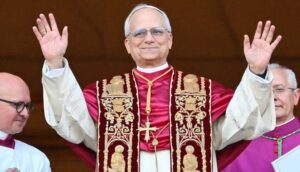
This part of the world understandably wanted to see a black pontiff emerge on that balcony of St Peter’s Basilica.
It was understandable because the world has never seen a black pope.
While history tells us there were possibly three popes from Africa — Pope Victor I (189-199), Pope Miltiades (311-314) and Pope Gelasius I (492-496) — scholars believe these were mainly from North Africa, particularly areas that covered Tunisia, north-east Algeria and western Libya, which were under the Roman Empire.
This area was what some termed the “Bible belt of ancient Christianity”.
So, while the popes were African, chances are they were not black in the strictest sense of the word.
Also, in the period preceding the conclave, the media, as they are wont to do, talked about front-runners in a subtle but clearly desperate attempt to canvass for preferred candidates.
In Luke 23:34, Jesus said: “Father, forgive them, for they know not what they do.”
This rings true in this instance, because the media, as many others like them, were observing this deeply spiritual process through the eyes of man.
However, those like Bishop Lazi knew that there is nothing called a front-runner when it comes to the election of a new pope.
You see, the sequestration of cardinals behind Vatican walls for the start of a conclave is meant to conjure a pious environment of reflection through which the best possible candidate is chosen among a collective that would have distinguished themselves and risen through the ranks to deal with contemporary challenges.
It is neither about race nor origins, but divine ordination.
From altar boy to pope
And the new 69-year-old pope should be viewed through the same lenses.
He is a man whose grandparents were immigrants and parents are of Spanish and Franco-Italian descent.
He is a man who has risen from an altar boy to pope, a man of distinguished intellect, who, however, spent most of his priesthood in the poor Latin American country of Peru.
As most popes before him, he has to steer the church and navigate through a tumultuous world that is currently plagued by war, climate change, wokeism, controversial gender ideologies and increased challenges to age-old conventions, ideals, norms and traditions.
Here is a man who has already indicated that the “promotion of gender ideology is confusing, because it seeks to create genders that don’t exist” and also accused the Western media of being “extraordinarily effective in fostering within the general public enormous sympathy for beliefs and practices that are at odds with the Gospel.”
Bishop Lazi, therefore, has no doubt that Pope Leo XIV has the requisite theological and ideological grounding needed to be yet another competent God’s athlete.
This, folks, is what has given the Catholic Church the stamina and gravitas to not only survive for millennia, notwithstanding the evolution of the world, but to also retain its core values and identity.
Matthew 16:18 says: “I tell you that you are Peter, and it is on this rock that I will build my Church, and the powers of death will not conquer it.”
Foundations of a new world order
Equally, there was also another key and symbolic gathering in Moscow, Russia, on Friday for the ostentatious Victory Parade that is held annually to commemorate the victory of the Red Army over Nazi Germany in World War II.
Our very own President ED took his pride of place on the high table of the 29 leaders who were invited by the host, Vladimir Putin, which included Xi Jinping of China, Luiz Inácio Lula da Silva of Brazil, Slovakia’s Robert Fico, Serbia’s Aleksandar Vucic, as well as Abdel Fattah el-Sisi of Egypt, Venezuela’s Nicolas Maduro and Mahmoud Abbas of Palestine.
There were also leaders from Armenia, Azerbaijan, Belarus, Bosnia and Herzegovina, Burkina Faso, Congo, Cuba, Equatorial Guinea, Ethiopia, Guinea Bissau, Kazakhstan, Kyrgyzstan, Laos, Mongolia, Myanmar, Tajikistan, Turkmenistan, Uzbekistan and Vietnam.
It must not be forgotten that Russians paid an unimaginably great and grave price to stop Nazi Germany, as more than 13 million — roughly equal to the current population of Zimbabwe — lost their lives in a war to re-establish world peace, which we continue to enjoy today.
But, if you grew up on a staple of America’s Hollywood films, you would be forgiven for thinking that it was the Americans who, Rambo-like, singlehandedly ended the war.
It is a distortion that was eloquently pointed out by the late Australian activist journalist, John Pilger (may his soul rest in eternal revolutionary peace).
“This sums up Americanism, the world’s dominant ideology,” Pilger once wrote.
“That it remains unrecognised as a predatory ideology is the achievement of an equally unrecognised brainwashing. Insidious, undeclared, presented wittily as enlightenment on the march, its conceit insinuates Western culture. I grew up on a cinematic diet of US glory, almost all of it a distortion. I had no idea that it was the Red Army (Russia) that had destroyed most of the Nazi war machine, at a cost of as many as 13 million soldiers. By contrast, US losses, including in the Pacific, were 400 000. Hollywood reversed this.”
It is this Americanism that progressively defined and sustained the unipolar world post-WWII.
The gathering in Moscow, therefore, was symbolic, as it was a “conclave” of “political cardinals” from the Global South, which is slowly carving out a new multipolar world order.
It is a new world, where small countries such as Zimbabwe are increasingly asserting themselves and staking their claim in the world.
The foundations of the old unipolar world are crumbling, heralding a new epoch of justice, equality, hope and new possibilities.
By virtue of being among this eminent league of architects of the new world, Zimbabwe is in good stead to join the BRICS+ club, which will be a key pillar of the Global South as the world evolves.
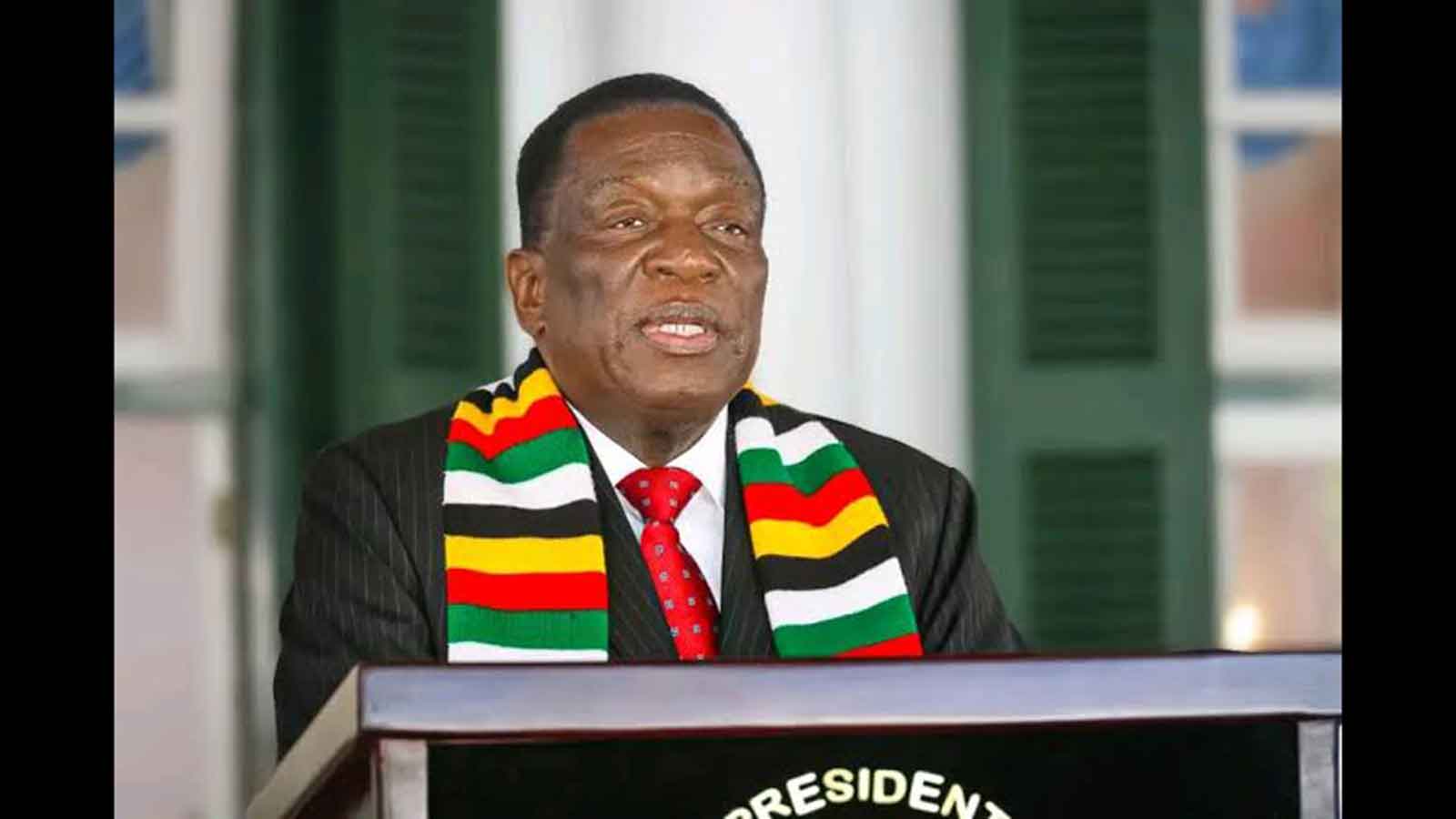
And in ED, Zimbabwe has a political pope who has managed to skilfully navigate the often-turbulent geopolitics and positioned the country to adapt to the realities and demands of the new world. From deepening relations with old friends and newly forged relations, as encapsulated in the Second Republic’s engagement and re-engagement foreign policy thrust, Zimbabwe is beginning to reap the rewards.
This might be through launching satellites through Russia’s support or getting machinery from Belarus needed to drive our modernisation and industrialisation drive.
So, we must embrace this new era with hope and expectation, not trepidation.
We are in good hands, as ED has a steady hand on the tiller.
Bishop out!


 Bongani Ndlovu