admin
admin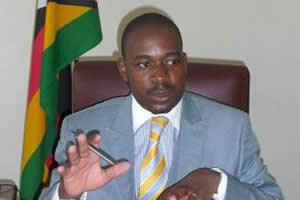
Government’s intervention to holistically arrest the crisis, a senior official admitted yesterday.
Briefing Kuwadzana East legislator Mr Nelson Chamisa during a visit to the Kuwadzana Polyclinic yesterday, council’s health services director Dr Prosper Chonzi said current interventions are reactive rather than proactive.
“The situation now needs your (Government’s) commitment so that we holistically arrest the crisis,” he said.
ALSO SEE
Council needs to ensure safe and adequate water supplies, refuse management and sanitation.
Dr Chonzi said the city has 20 refuse removal trucks instead of a required 60 to conduct door-to-door waste collection regularly and on time.
Council said a lasting solution to the city’s water challenges lied in the completion of the Kunzvi and Musami dams.
Town clerk Dr Tendai Mahachi earlier this week said the sewer system is no longer intact and council is currently upgrading it with funding availed by treasury and China.
Dr Chonzi said the social determinants had gone beyond the council’s control leading to the diarrheal outbreaks.
The current typhoid outbreak has affected more than 1 000 people treated with 71 still admitted at Beatrice Infectious Diseases Hospital as of yesterday.
He said council was not sure if they had contained the outbreak as cases continue to trickle in and others could still be incubating.
“We are seeing a situation whereby cases peak and sometimes drop and we cannot say whether the situation is now under control because other people could still be incubating,” he said.
The difference between typhoid and cholera is that typhoid takes an average of two weeks before one starts to show signs of the disease whereas with cholera the incubation period is about three days. To date, no institutional deaths have been recorded.
Mr Chamisa promised to take up the issue to Parliament.
Environmental health technicians who were present on the tour also called for construction of proper vending structures in Kuwadzana where there are proper sanitary facilities.
Local Government, Urban and Rural Development Minister Ignatius Chombo and his Agriculture, Mechanisation and Irrigation Development counterpart Minister Joseph Made also toured Kuwadzana Polyclinic and Mbare Musika.


 Online Reporter