


 malvernmugadzikwa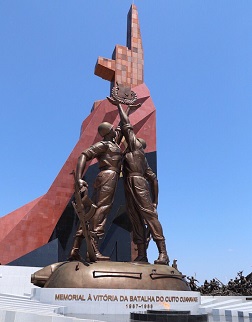
Ambassador Kwame Muzavazi
AS Zimbabwe commemorates Heroes Day tomorrow, we should first and foremost remember that the Museum of African Liberation, in celebration of the heroes of the African liberation struggle, is an institution that operates all year round and across all seasons.
The museum is being established to exist for a thousand years and beyond, in terms of promoting, protecting and preserving the legacy of the African revolution.
President Mnangagwa’s vision in championing the establishment of the Museum of African Liberation in Africa is to acknowledge that, while individual countries may have a day or public holiday to remember and celebrate national heroes, this is something that must be done continuously, tirelessly and relentlessly.
It must be done daily through the course and movement of time.
In that regard, the Museum of African Liberation commemorates our heroes daily, without necessarily having to wait for one or two designated days in the year.
So, that is a very important contribution by Zimbabwe and a very significant initiative by the President.
As a Pan-African institution, we also commemorate the important dates in African history, the birth of luminaries of African history and the heroes of Africa.
This happens throughout the year.
As mentioned earlier, this is a memory project; a project to keep the memory alive.
And this cannot be done once a year; it must be done every day through those various programmes.
Of course, the museum, being an institution that will endure beyond all of us, will be a living, daily reminder of the illustrious history of the people of Africa.
The President has appointed a special envoy, Ambassador Simbarashe Mumbengegwi, who has so far travelled to 21 countries.
He has met Heads of State in all these countries and has invited these states to participate in the Museum of African Liberation project.
Some of the countries have since responded and are already starting processes to make their mark at the facility.
Through all those visits, the exchange of information, knowledge and archives has been a top priority.
Benchmarking visits have been made to Cuba, Russia, China, Egypt, South Africa and many other countries that played a part in the liberation of Africa.
There is a necessary focus on benchmarking, working with others, comparing notes and learning from international experience.
We would like to encourage the people of Zimbabwe and, by extension, the people of Africa to always cherish their history, to love the person they see in the mirror and to honour our heroes and heroines who paid the ultimate price for our independence and freedom.
At this juncture, the most important thing, as we pursue full African independence, is to talk about mental freedom.
We must recall the statement by Marcus Garvey: “None but ourselves can free our minds.”
This statement was subsequently made into a song by Bob Marley.
We have to look at cultural, educational and intellectual freedom. We have to look at decolonising our educational content, and promoting our arts, our culture, our heritage, our thought and our literature. If we do this, we will have fulfilled the wishes of the national heroes and heroines, because that is ultimately what they died for and sacrificed their lives and time for. And it has to be given the recognition that it deserves.
The museum serves as a testament to the monumental struggle for African liberation from European colonialism and apartheid.
The latter half of the 20th century marked a pivotal era of emancipation for African nations, with most achieving independence by 1970 through peaceful means.
However, a few remaining colonies and apartheid-entrenched regimes refused to yield to African majority rule without resistance.
These included Portugal’s colonies — Angola, Mozambique, Guinea Bissau and Sao Tome and Principe — as well as British-ruled Rhodesia, South African-controlled Namibia and South Africa itself.
Notably, Kenya and Algeria fought fierce armed struggles, ultimately gaining independence in the 1960s.
This complex history underscores the museum’s significance as a tribute to the African people’s unwavering pursuit of freedom and self-determination.
During the era of imperialism, African territories were designated as settlements for surplus European populations, sparking a wave of liberation movements.
While some countries, like Tanzania, achieved independence through diplomatic means, others engaged in armed struggles.
This museum provides a unique opportunity for educational and cultural cooperation among nations that fought for their freedom, showcasing their histories, struggles and victories under one roof.
Each country will contribute its historical material, including organisations, weapons, battles, losses and victories, telling the story of Africa’s liberation from an African perspective.
This initiative empowers Africans to reclaim their narrative, no longer relying on external interpreters.
The museum will feature sections dedicated to individual countries, highlighting the sacrifices and histories of liberation parties like Frelimo, Swapo, and the MPLA.
Also, the museum will commemorate significant events, such as the massacres at Wiriamu, Maseru and Cassinga, as well as victories in the Battle of Cuito Cunavale in Angola, among others. The defeats of colonial powers, like the Italians at Adwa in Ethiopia, will also be showcased.
Displays will include imperialism’s superior weapons, alongside the simple, yet determined, weapons of freedom fighters.
The museum seeks to immortalise a vital part of the African heritage, emphasising the importance of national unity and Pan-African solidarity. By sharing their stories, Africans can appreciate the seamless struggle for freedom and the indomitable spirit that triumphed over oppression.
Happy Heroes Day to all Zimbabweans and indeed to the whole of Africa.
Ambassador Kwame Muzavazi is the chief executive of the Museum of African Liberation. He was speaking to The Sunday Mail’s Emmanuel Kafe.


 Bongani Ndlovu
 Online Reporter