Online Reporter
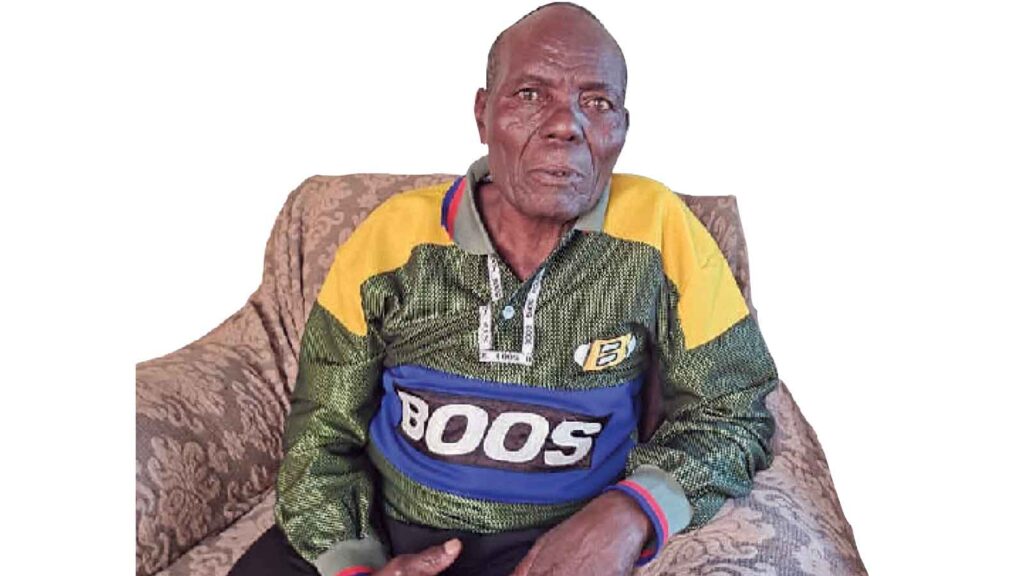
Last week, Lieutenant-Colonel (Retired) HARRISON DZUNGWA, who used the nom de guerre Cde Cover Takurira, recounted how he and fellow freedom fighters engaged Rhodesian Security Forces in fierce battles in the Chiduku Detachment in Manicaland, inflicting heavy losses on the enemy. In his final instalment, he tells Zimpapers Politics Hub’s KUDA BWITITI about his deployment to Mhondoro in 1978, where he says his unit mounted sustained military operations that forced Rhodesian soldiers to virtually abandon the district.
***************
Q: Tell us about your journey from Chiduku to Mhondoro.
A: We left Chiduku in 1978 after completing our operations there. We travelled on foot because that was how guerrilla fighters moved from one operational area to another. We passed through Hwedza Detachment before crossing what is now the Harare-Masvingo highway near Beatrice. The journey took several days. We moved through places such as Mhondoro-Ngezi and St Michael’s. Along the way, we did not experience many battles because our priority was to reach our new area of operation safely.
Q: When did you first engage the enemy after arriving in Mhondoro?
A: The fighting started after we passed St Michael’s and moved towards the Mupfure area. That is where we first encountered Rhodesian soldiers. From that point onwards, battles became frequent because the enemy had realised that guerrilla fighters had entered the area.
Q: Tell us about your first major battle there.
A: One of the biggest battles took place near the Presbyterian Mission in Mhondoro. Before reaching the area, we had already gathered intelligence that enemy forces had established a strong presence there. We agreed that instead of avoiding them, we would launch an attack. We carefully organised ourselves into battle formation before advancing on their position. Every fighter knew his role. Once we were in position, we launched a coordinated assault. A fierce exchange of fire followed.
Q: What was the outcome of that battle?
A: We inflicted heavy casualties on the enemy. I cannot give an exact figure because in the middle of a battle you do not stop to count the dead. What I know is that many Rhodesian soldiers were killed.
The battle began around 2pm and continued until about 6pm. It was one of the fiercest engagements we fought in that area and demonstrated that by then the liberation forces had become much stronger and more organised. After the fighting ended, we later saw Rhodesian soldiers returning to collect the bodies of their dead comrades. That alone showed the scale of the defeat they had suffered.
The people of Mhondoro celebrated that victory because they had witnessed the determination of the liberation fighters. After that battle, the Presbyterian boarding school closed due to the insecurity created by the fighting.
Q: What happened after that victory?
A: We established a base in the area and intensified our operations. We conducted patrols across villages such as Benhura, Muchena and Watyoka. Our presence made it increasingly difficult for the enemy to operate freely.
Because of the pressure we exerted, Rhodesian soldiers gradually abandoned parts of the area. Some white commercial farmers also fled their farms.
As they retreated, they left behind weapons and other equipment. We recovered a number of firearms that had been abandoned during their hurried withdrawal. Those weapons strengthened our operational capacity because every additional firearm improved our ability to fight.
Q: Who were some of the comrades you served with in Mhondoro?
A: The Detachment Commander was Cde SaChiweshe. Others included Cde Baba vaNhamo and Cde Matata, who was one of our commanders.
Following our successful operations, my commanders decided to promote me to lead my own section. That promotion recognised the contribution I had made in the battles we fought against the enemy.
From then until independence in 1980, I served as a section commander.
Q: What do you attribute your success in Mhondoro to?
A: By 1978 the liberation struggle had entered a different phase. We were much better armed than before, and our organisation had greatly improved.
We had moved beyond relying solely on hit-and-run guerrilla tactics. In many instances, we were capable of engaging the enemy in prolonged conventional-style battles because our numbers had increased and our commanders had gained valuable experience.
That gave us greater confidence whenever we encountered Rhodesian Security Forces.
In my section, the political commissar was Evaristo Muchineripi. We were nine fighters altogether. Other comrades included Cdes Countryboy and Mtonzi, among others whose names I cannot readily recall.
Q: Which battles stand out most after your promotion to section commander?
A: We fought many engagements during that period. The enemy eventually became afraid of confronting us directly. In many instances, whenever they received information that our section was approaching, they chose to withdraw instead of fighting.
Our operations expanded beyond the areas where we had initially been deployed.
At one point, my commander even cautioned me that I was moving beyond the boundaries of my assigned operational area because we were constantly pursuing the enemy. We also carried out operations around a number of commercial farms in Mhondoro.
The continued pressure forced many white farmers to abandon their properties.
From 1979 until the attainment of independence in 1980, we maintained sustained military operations in the area. Our objective was to weaken the Rhodesian Security Forces and ensure that they could no longer dominate the local population. After the ceasefire, I assembled at Dzapasi Assembly Point. I then joined the military and also fought in the war in the Democratic Republic of Congo in 2000.
I retired from the Zimbabwe National Army as a Major, gaining my title of Lieutenant-Colonel after retirement.