Vusumuzi Dube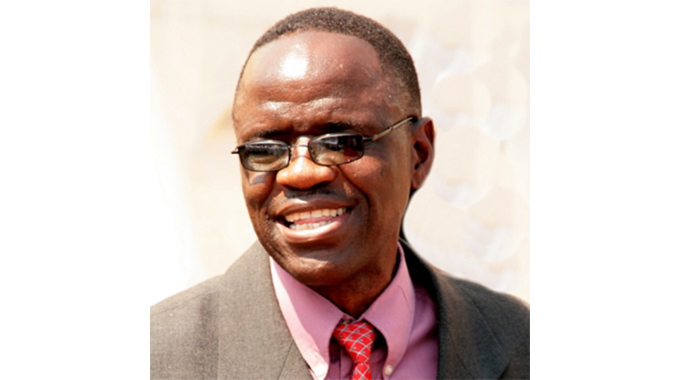
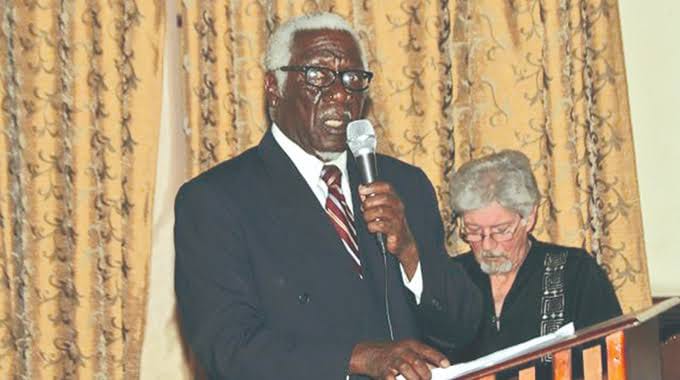
WE today round-up our interview with Colonel (Retired) Ernest Mganda Dube pseudonym Cde Bookless Chizororo. In the past few weeks Col (Rtd) Dube has been talking to our Assistant Editor Mkhululi Sibanda (MS) about his war experiences during operations in Mashonaland West Province.
He concludes his narration by talking about some of the battles he was involved in and then his recall to Zambia before being redeployed to Matabeleland South just before the ceasefire. Below are excerpts from the interview. Read on . . .
MS: In our last interview you spoke about your release by the Frelimo after you had strayed into Mozambique and got detained. Thereafter you said you were about to tell us about moving back to the Karoi-Mhangura Sector in Mashonaland West. Let’s resume the conversation from there.
Col (Rtd) Dube: Following the downing of the Rhodesian Viscount in the Kariba Dam general area by fellow ZPRA guerillas, our sector also felt the ripple effects of the Rhodesian sweep operations intended to make some revenge killings.

To our advantage, the spotter plane operated by Jim Bark, a local notorious white farmer was no longer flying low since the comrades had missed him by a whisker with a heat-seeking missile strike, which, however, failed to pick up the trail. As a result the enemy’s low-flying aerial support to ground forces was restricted to helicopter surprise strikes flying at tree-top level.
The level of attrition evolved a step further as the enemy started to make use of observation posts from Kapiri Hill to every small rising ground. On the arrival of horse-mounted enemy soldiers to complement the patrols searching every piece of ground either side of Angwa (Manyame) River, we quickly adopted the skills of survival. That is ‘if the enemy attacks, retreat. If the enemy withdraws, attack’.
That is the philosophy of Chairman Mao. We thus on seeing and being told of massive enemy patrols, sought cover along the fence line bushes covering the Jim Bark and Mr Brown’s farms.
For five to seven days we hardly moved anywhere. Luckily no single enemy shot was ever fire at my unit.
MS: Did the enemy continue hunting you or finally withdrew?
Col (Rtd): On hearing the povo telling us of seeing enemy trucks pulling out of the sector, we as well started filtering into the villages assuming the enemy had pulled out. Two or three days later we faced the wrath of the enemy. The first to be surprised by a heliborne strike force were the comrades who had started operating on the southern side of Kapiri Hill.
They were attacked while having lunch. I got knowledge that six of them were killed at the homestead of Headman Shumbayawonda. I still recall one comrade whom we lost there who I respected so much and was known as Cde Toyi-toyi.
He was fond of talking about Fort Rixon-Makhandeni. Probably he was from the Godlwayo area. The intensity of enemy patrols was now a routine thing. In between August 1978 and August 1979 we had encountered many man-man fighting with the enemy.
As such, we also recorded losses in terms of captives and those killed in combat. I recall the heliborne enemy attack on the eastern foot of Kapiri Hill where one comrade was seen being airlifted by a helicopter.
Personally, I had to encounter a terrible set-back which has affected me to date. There was this myth that brothers should not operate together in the same unit because it was taboo.
I happened to find my cousin brother whom we were separated long back, joining my group after splitting from his. Despite telling the detachment commander, Cde Xabanisa about our relationship, I was told to go for a task first after which we were to be separated.
Our mission was to reconnoitre Jim Bark’s farm including the hanger that housed the spotter plane.
MS: Take us through that mission.
Col (Rtd) Dube: From the Mapuranga-Kapiri general area we manoeuvred along the villages lying between the Jim Bark farm and Kazangarare Police-turned military post. As we moved we arrived at a village where the kraal (village) head was Shumbayawonda whom we gathered had travelled to Karoi Town without informing us as had become the norm.
Having established that he was about to return with the bus expected to arrive at 4pm or so, we decided to wait for him. The two-hour wait was really long, compromising our presence. At 5pm the kraal head was nowhere to be seen hence we deiced to continue with our manoeuvre to Jim Bark.
As usual I was the lead scout in the single file march. What we did not sense was that the enemy had deployed some 50 metres from the vlei. The enemy probably panicked by opening machine gun fire when we were first getting down the vlei. On running back to the bushy high ground I got tripped by the medical bag I was carrying that day being our routine requirement.
Those who saw me fall thought I had been shot. I then picked myself up despite the cracking sounds of bullets missing me but hitting the trees ahead of me. It was at that juncture that I caught up with my comrade brother, Jethro Mlalazi who seemed to be struggling in his running.
On hearing his voice calling me I looked back and saw him fall. That was that, never to see him again other than hearing of kraal head Shumbayawonda bringing an army patrol who took his gun and buried him in a shallow grave.
MS: Eish, that was unfortunate Col Dube. From there how did you proceed?
Col (Rtd) Dube: We as well became aggressive, subsequently attacking Kazangarare Police Station or military harbour using mortars.
There was a day when we ambushed a convoy of enemy trucks two or so kilometres from the police/military harbour. It was a successful operation. The following day we woke up to the news that our good old man, uMfundisi Shambare of the Methodist Church was seen loading his household property in some military trucks. He had turned our enemy’s friend.
Following the evacuation of Shambare the situation was never the same again. Two or so weeks later, for the first time we heard of the presence of a military outfit called Pfumo-Revanhu.
Many young boys were being taken away and we thus started coming across flyers potraying us as ‘Nkomo’s Ndebele terrorists traumatising Shona people’. The enemy was now using the divide and rule tactics. It was feeling the heat from the battlefield.
MS: How did you react to that and Bishop Abel Muzorewa’s Pfumo Revanhu’s offensive?
Col (Rtd) Dube: Our detachment commander then decided to filter the troops inland in areas such as Zvimba-Chitomborwizi settlements.
The aim was to hit the enemy where it mattered most. A recc unit was then sent to appreciate that terrain. Later on myself that was August 1979 I was recalled to the rear to prepare for a Soviet Union commissariat course. It was an exciting moment as I moved to Lusaka with Cde Rodwell Nyika who was re-locating to take up the rank of Northern Front Commander following his elevation.
I came to know of the comrades I parted ways with going to Zvimba-Chitomborwizi that five to six of them never returned to our original operational area as they were killed while returning from there.
I lost my good, good fighters of which two of them, Lemon Mampundu Ndebele and another were my homeboys from Tokwana in Bulilima District. Before their departure to Zvimba-Chitomborwizi we had encountered a bad omen in the area of the Chief’s homestead.
It was before sunset when we saw from a distance while observing from a high ground, an enemy section returning to camp. Some of our heroic comrades then starting conversing that why were we letting the enemy go scot-free without attacking it.
As usual Zinyerezinyere, the deputy detachment commander who always itching for a battle called for volunteers to pursue the enemy. Yes, 10 or so comrades wasted no time in pursuing the enemy who were moving along the gravel road.
These guys were running along the vlei line and appeared on the road only to miss the enemy position by some few metres. As they did that for the third time little did they realise that the enemy was at that point aware of their movement and took cover.
Our comrades simply and blindly fell into an enemy ambush out of which six got killed including Cdes Bee Phuthi and Taura, my homeboys. Cde Bee Phuthi was the younger brother of Honourable Dingumuzi Phuthi’s father. Dingumuzi Phuthi is currently a Member of Parliament and Deputy Minister.

MS: Then what about your trip to the Soviet Union?
Col (Rtd) Dube: I never succeeded in going to the Soviet Union. All medical and passport processing were done while we were going through an induction course run at the JZ Moyo Commissariat School.
Two months later, we were addressed by ZAPU Chairman, Cde Samuel Munodawafa who told us that our intended training had been shelved due to pressing demands for ZAPU mobilisation at the Southern Front (SF) in the Kezi-Beitbridge-Belingwe (Mberengwa) areas.
I found myself joining the Zambian-trained comrades heading for Kezi together with the ANC’s Umkhonto WeSizwe guerillas.
It was around November 1979 when we entered the Front from the Botswana side through the Tjinga-babili villages. At Tjinga-babili we laid an ambush on the enemy after picking the sound of their trucks. Although the ambush was very successful we left an MK comrade there who was killed in that battle.
His name was Cde Bruce and was a commissar. We laid him to rest in full The aim of the deployment was to definitely prepare for the peace mobilization as well as for the general elections.
When the ceasefire was announced I was at Kafusi in Kezi to which we had to move into the assembly points. My unit moved into Kilo Assembly Point in Brunapeg, later on we, moved to Zezani in Beitbridge.
From Zezani we went to Silalatshani in Filabusi before moving to Gwayi. I was integrated into the ZNA where I rose through the ranks and retired with the rank of Colonel. My life has come to another experience.


 Online Reporter