Chronicle Editor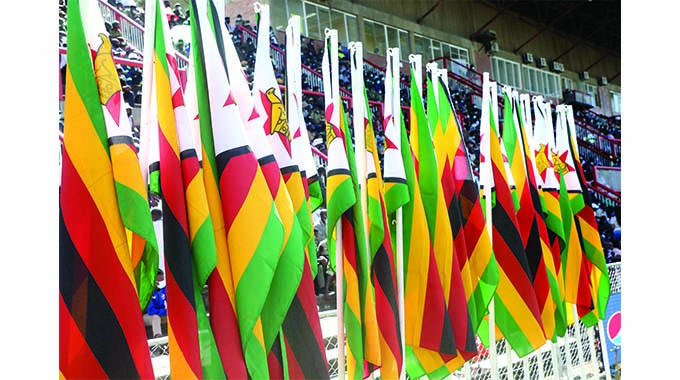
Ranga Mataire, Group Political Editor
EACH year, Zimbabwe commemorates Independence Day on April 18. It is a day that reconnects all Zimbabweans to a glorious and heroic past that saw thousands of sons and daughters of this land joining the liberation war to fight a colonial minority repressive regime that treated Africans as second-class citizens in their own country.
Unlike most Southern African countries, Zimbabwe got its independence after waging an armed insurrection where thousands of citizens perished either in combat or at refugee camps in neighbouring countries of Mozambique and Zambia.
If we are to mark July 4, 1964 as the effective day when the guerrilla war started, then we can safely say that it took us 15 years of fighting before attaining a settlement for independence.
It was clear to the Rhodesian forces that they were never going to win against both Zanla and Zipra forces whose numbers of recruits were ballooning by each passing day.
The last Rhodesia ruler, Ian Douglas Smith, who had declared “not in a thousand years” was advised by his own military advisers of increasing casualties in their ranks and that victory was not feasible under the circumstances.
It became apparent that guerrilla fighters were on the doorstep of the seat of power when they bombed fuel storage tanks in Southerton industrial area, Salisbury in December 1978.
An impending guerrilla victory was inevitable and Smith had no choice but to go for negotiations for a peaceful settlement chaired by Lord Carrington, the British Foreign and Commonwealth Secretary at Lancaster House from 10 September- 15 December 1979. With his superior weaponry including air power, Smith’s soldiers failed to subdue the resilience of freedom fighters who were determined to free their land.
So when Zimbabweans commemorate April 18, they are not just celebrating the attainment of independence but reflecting on the resilience, perseverance and unity of purpose of all those who sacrificed their lives to attain Uhuru.
While the majority of blacks supported the liberation war, others actually collaborated with the Ian Smith regime and 43 years after 1980 are now showing their true colours by trying to downplay the heroic deeds of freedom fighters and masses who sheltered and provided both moral and material support.
Together with remnants of white Rhodesians inside and outside the country – some Western nations and African lackeys – they are creating all sorts of counter-narratives that cast doubt on the valiant road to independence. Smith is now being resurrected, sanitised as a better leader and casting all manner of aspersions on current leadership.
The motive for this rehashing of history is to try and implant doubts in the minds of the impressionable young minds and obfuscate the horrendous experiences of colonial existence. Drawing false equivalences between the Smith regime and the current independent administrations is meant to create a wedge between the leadership and the people.
Just like the illegal and unilateral imposition of sanctions by the United States and its allies, the sanitisation of Ian Smith is meant to be a recruitment drive for Askaris that would be used as instruments of regime change. Zimbabwe must never be allowed to be an inspirational reference point to other African nations still grappling with the independence promise of an equitable land reform programme meant to economically empower previously marginalised black people.
It is no coincidence that in imposing sanctions on Zimbabwe, the Zimbabwe Democracy and Economic Recovery Act of 2001 (Zidera) enacted by the United States was a direct response to Zimbabwe’s “fast-track land reform”.
Among other things, Zidera clearly states that Zimbabwe poses a serious threat to the United States foreign policy interests.
How does an African country striving to correct a historical iniquity on land pose a threat to America?
Only those who are Americans’ lackeys fail to see that the real reason for Zidera is to punish Zimbabwe for its quest for total emancipation through an equitable land reform programme.
Zimbabwean journalists, writers and intellectuals/academics must be able to put everything in perspective and refuse to be browbeaten by narratives that seek to implant pessimism in our capacity to chart our own destiny.
Zimbabwean journalists, writers and academics must be able to see through the obduracy of Western nations’ obsession of wanting to impose their own mode of democracy at the expense of economic empowerment of the indigenous people. This misleading prioritisation of African realities has been popularised by the Western media, which likes to deflect people from seeing that imperialism is still the root cause of many problems in our country.
No man or woman can choose their biological nationality. Zimbabweans must be cautious to guard against the divide-and-rule tactics daily devised by erstwhile colonisers. In Ngugi waThiongo’s words, any blow against imperialism, no matter the ethnic and regional origins of the blow, is a victory of all these blows no matter what their weight, size, scale, location in time and space makes the national heritage.
Armed with superior economic means, the imperial forces deploy their cultural products through movies, social media and other platforms frequented by Africans. This is referred to as cultural imperialism or cultural bomb. The effect of this cultural bomb is to annihilate a people’s belief in their names, languages, environment, heritage of struggle, in their unity, their capacities and ultimately in themselves.
The effect of this cultural imperialism is to make us see our past as one wasteland of non-achievement and makes some of us want to distance ourselves from that past. Possibilities of victory are envisaged as remote or mere dreams.
It must be clear to everyone that the real motive of imperial forces is to control our wealth, what we produce, how we produce it and how it is produced. While colonialism imposed its control through military conquest and subsequent repressive racial regimes, the current target is on the mental universe of the people and how they perceive themselves including their relationship to the world.
Economic and political control can never be complete or effective without mental control. To control a peoples’ mental faculties is to control their tools of self-definition in relation to others.
Rhodesian scholars and soldiers have written and continue to write copious material about their exploits including painting colonial existence as a marvel. Sadly, we have not been able to create a tradition of immortalising our past by documenting them through writing books or production of documentaries to be distributed on various platforms.
We need to cultivate a liberating perspective within which we see ourselves in relationship to ourselves and to others in the universe. One story we must never get tired of re-telling is the story of our valiant struggle for Uhuru. It is a foundational struggle that defines who we are as a nation.



 Online Reporter