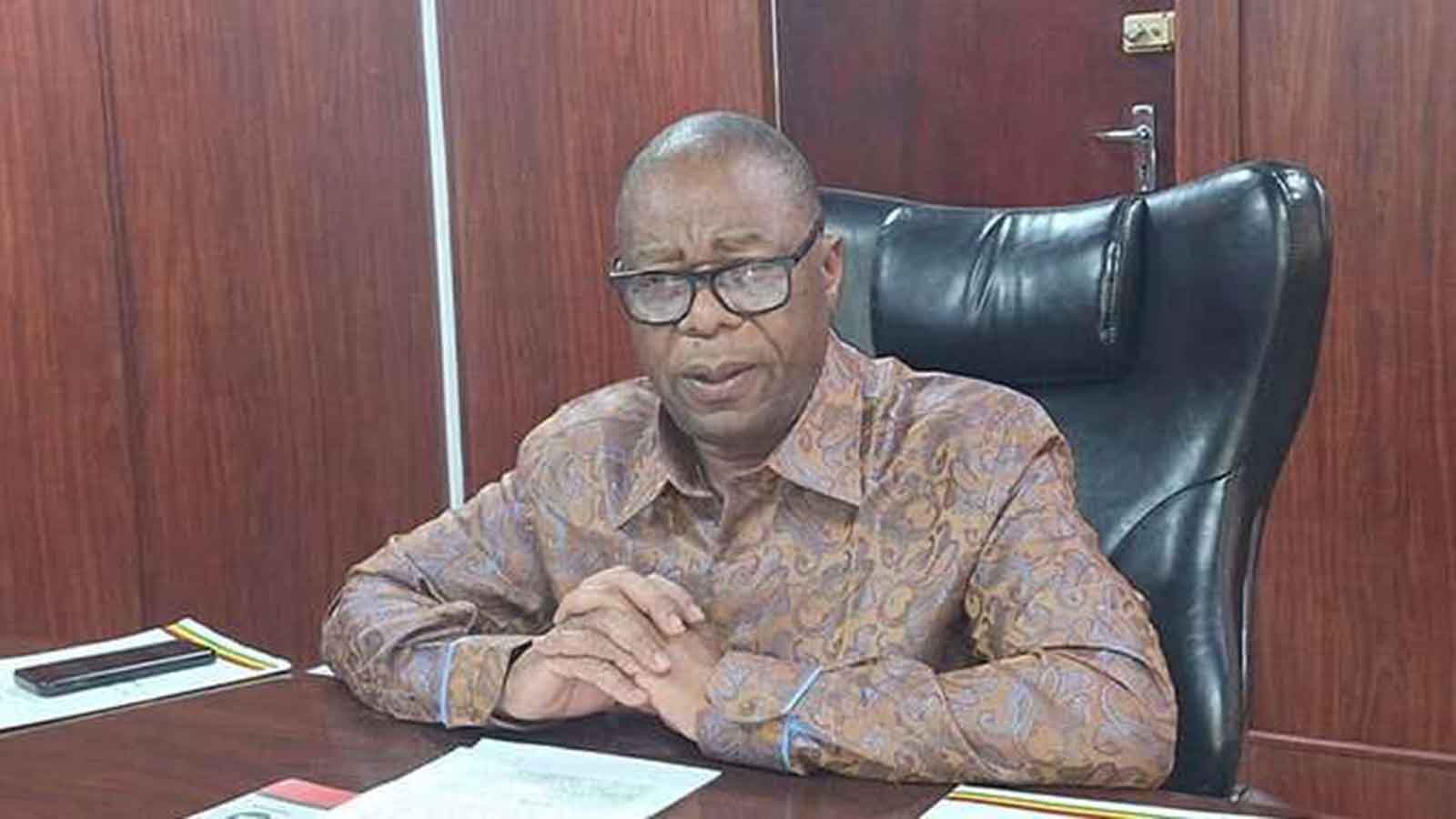
As Africa intensifies efforts to contain the ongoing Ebola outbreak affecting the Democratic Republic of Congo and Uganda, Zimbabwe is stepping up its preparedness despite being classified as a lower-risk country. Last week, President Mnangagwa attended a high-level African Union virtual summit, which brought together Heads of State to mobilise political commitment and resources for a coordinated continental response. The summit highlighted the importance of strengthening surveillance, laboratory capacity, research and cross-border collaboration to prevent the spread of the deadly virus. Zimpapers Senior Health Reporter RUMBIDZAYI ZINYUKE interviewed Health and Child Care Minister Dr Douglas Mombeshora on Zimbabwe’s state of preparedness and the country’s response strategy.
***************
Q: The high-level African Union meeting on Ebola held on Tuesday (last week) underscored the need for stronger regional preparedness. From the ministry’s perspective, how prepared is Zimbabwe to detect and respond to a potential Ebola case, and what are the country’s biggest strengths and remaining gaps?
A: The Ebola outbreak is mainly affecting two countries, the Democratic Republic of Congo (DRC), which is the epicentre, and neighbouring Uganda.
Most of the cases are in the DRC, while a few have been detected in Uganda.
It is, therefore, important for countries in the region to come together and ensure there is a coordinated response.
Countries that directly border the DRC have been classified as high risk, while those further away are considered low risk.
Zimbabwe falls into the low-risk category, but we are not taking that for granted because of our proximity to the DRC and the movement of people across the region.
In fact, we recently had a suspected case, which fortunately turned out to be malaria after laboratory tests.
The Heads of State meeting held on Tuesday, convened by the World Health Organisation (WHO) and the Africa Centres for Disease Control and Prevention (Africa CDC), was aimed at mobilising political commitment, highlighting the need for funding and emphasising the importance of a coordinated continental response. It was a very important meeting, with several Heads of State making commitments.
As Zimbabwe, we want to thank President Mnangagwa for pledging US$1 million towards Ebola preparedness.
This demonstrates the need for Africa to work together whenever there is an epidemic or disease outbreak.
There was also discussion on the need to strengthen research because Africa is not producing enough of its own medicines and vaccines to respond effectively to outbreaks. As Zimbabwe, we are prepared and we have put in place relevant systems to respond to any eventuality.
Q: What measures has the ministry put in place at ports of entry, border districts and referral hospitals to strengthen surveillance, screening and rapid response in light of the ongoing outbreak?
A: We have trained our port health workers in surveillance and case detection to ensure that all travellers entering through airports and land borders are properly screened.
We are using both thermal scanners and handheld thermometers to check temperatures, while health officials also conduct interviews to identify anyone who may have had contact with Ebola patients.
We have strengthened our laboratory systems and have the technical capacity to test for Ebola. We have also identified isolation centres at Wilkins Hospital in Harare and in Bulawayo to manage any suspected cases.
Surveillance has been intensified, particularly along our northern border with Zambia because of the movement of people from the DRC through that route. Thermal scanners are also in place at the Victoria Falls International Airport, the Robert Gabriel Mugabe International Airport and the Joshua Mqabuko Nkomo International Airport.
Overall, I believe Zimbabwe is well prepared.
Q: The strain in the current outbreak has no available vaccine. How does this influence Zimbabwe’s preparedness strategy?
A: The strain in the current outbreak is the Bundibugyo strain, for which there is currently no licensed vaccine anywhere in the world.
Existing Ebola vaccines were developed for other strains, but not this one.
Management is, therefore, largely supportive because there is no specific treatment for the virus. Antibiotics do not treat viral infections, and without a vaccine everyone remains at risk.
This highlights the need for Africa to strengthen its own research capacity because Central Africa continues to experience recurring Ebola outbreaks. We should be developing our own vaccines so that we can respond much faster. We also need to strengthen our laboratory systems. Countries that are at high risk should have laboratories capable of conducting rapid testing, and I believe this is one of the priorities that Africa CDC has been tasked to advance.
Q: Zimbabwe has faced several public health emergencies in recent years, including Covid-19, cholera and Mpox. What lessons from those outbreaks are now shaping the country’s Ebola preparedness and overall epidemic response systems?
A: The experiences we gained from outbreaks such as Covid-19, cholera and Mpox have taught us many valuable lessons.
One of the key lessons is the importance of having an emergency operations centre that can coordinate responses to disease outbreaks.
We also recognised the need to detect and report outbreaks within 48 hours, and I believe Zimbabwe now has the capacity to do that.
We have also learned the importance of maintaining adequate stocks of personal protective equipment so that we do not have to start sourcing these items after an outbreak has already begun.
Another important lesson is the need to have trained personnel who can be quickly mobilised whenever an outbreak occurs.
This has enabled us to promptly investigate suspected cases by collecting samples and sending them for testing.
However, one important gap remains.
We need a dedicated emergency response fund so that resources are immediately available whenever an outbreak occurs.
We should not have to wait until an emergency arises before seeking funding from Treasury because some diseases spread rapidly and can be fatal within a short period.
Q: Cross-border movement is a key concern during infectious disease outbreaks. How is Zimbabwe working with neighbouring countries, Africa CDC and the World Health Organisation to strengthen surveillance, information sharing and coordinated response efforts?
A: It is extremely important to have a well-coordinated response, timely information sharing and accurate data during any disease outbreak.
Zimbabwe has been working closely with neighbouring countries, WHO and Africa CDC to exchange surveillance information and coordinate response efforts.
Tuesday’s Heads of State meeting was one example of countries coming together to share information and agree on the way forward.
A few weeks earlier, SADC (Southern African Development Community) health ministers also met to review the situation, exchange information and discuss strategies for containing the outbreak.
Regional cooperation is critical, and we have been actively participating in these efforts.
Q: What is the ministry doing to strengthen laboratory capacity for Ebola testing?
A: Zimbabwe has the technical capacity to test for Ebola.
However, as part of the regional approach, South Africa serves as the designated reference laboratory for Southern Africa during outbreaks.
So, we do have the capacity to test for Ebola, but our main shortcoming is the availability of testing reagents.
Since Zimbabwe has never recorded an Ebola case, it would not be practical to stockpile large quantities of reagents because they would expire before being used.
We have, therefore, approached WHO to provide a limited quantity of reagents so that we can conduct initial testing locally before specimens are sent to South Africa for confirmation.
Q: What is the ministry doing to raise awareness about Ebola in communities?
A: We are using several platforms to disseminate information.
We have held press conferences, and the information is also being shared through radio and television.
We also have awareness teams working in communities and are engaging traditional leaders to ensure that people understand the symptoms of Ebola and know what to do if they suspect someone may have contracted the disease.
These awareness campaigns are continuing throughout the country.
Q: Looking beyond the current outbreak, what investments does the ministry consider most critical for building a more resilient health system that can respond quickly to future epidemics, whether Ebola or other emerging infectious diseases?
A: Going forward, we need to invest more in our health workforce because even if we have adequate infrastructure, we still need well-trained personnel to respond effectively to outbreaks.
We should train more healthcare workers in epidemic preparedness and ensure they are properly incentivised so that they remain available during public health emergencies.
Secondly, we must strengthen our laboratory systems so that we can conduct testing within the country instead of relying on laboratories elsewhere.
Long turnaround times, sometimes exceeding 48 hours, can delay critical interventions.
We also need stronger surveillance systems and well-equipped emergency operations centres capable of collecting and sharing information in real time.
Greater digitisation will significantly improve our ability to respond quickly and effectively to future epidemics.