


 Vusumuzi Dube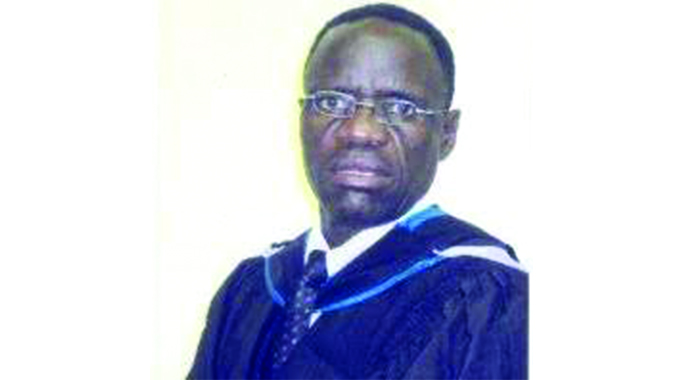
COLONEL (Rtd) Ernest Mganda Dube is a former guerilla fighter who saw action in Mashonaland West’s Hurungwe District following his deployment on 5 March 1978.
In November of the same year he found himself shifted from the Northern Front (NF) which Mashonaland West fell under according to the ZPRA operational regions to the Southern Front (SF) as a Political Commissar for the Matobo Sector.
That was in November 1978. After independence Col (Rtd) Dube whose pseudonym was Cde Bookless Chizororo served in the newly constituted Zimbabwe National Army (ZNA) where he rose through the ranks to become a full Colonel on his retirement.
Despite his guerilla exploits, Col (Rtd) Dube’s academic prowess have also caught the eye. Today the former guerilla fighter has transitioned himself from a gunman to an academic.
This is because as of now Col (Rtd) Dube is a holder of a Bachelor of Science Degree in Politics and Administration from the University of Zimbabwe (UZ) and Master of Science in International Relations from the same university.

Col (Rtd) Dube is also a graduate from the National Defence University where he read for a degree in Security Studies which saw him travelling to countries such as Philippines and Sri Lanka.
He has also graduated from the Defence Command and Staff College at Kwamala in Zambia. Currently he is a resource person at the Herbert Chitepo School Of Ideology.
Among some of the former fighters who are also at the Herbert Chitepo School of Ideology are its principal, Cde Munyaradzi Machacha, Brigadier-General Asher Tapfumaneyi, Colonels (Rtd) George Nare and Magumise as well as Dr Mada.
On Friday last week our Assistant Editor Mkhululi Sibanda (MS) traced Col (Rtd) Dube and he spoke about how he joined the armed struggle.
Below are excerpts from the interview. Read on . . .
MS: Col Dube may you start by giving us your background.
Col (Rtd) Dube: I was born Ernest Mganda Dube on 26 July 1958 at a place called Tokwana in Bulilima-Mangwe District, Matabeleland South Province.
I did my primary schooling at Tokwana. But immediately after my being born, that is the following year of my birth we moved to Kitwe in Zambia where my parents were working.
That is where I did my kindergarten school up to 1965.

When my granny got ill, myself, my sister and mother then came to Rhodesia. Relations between Rhodesia and Zambia got so strained that we failed to return to Zambia.
That was after the Rhodesians closed the border with Zambia because of the latter’s support for our armed struggle.
We then ended up settling home koTokwana where I continued with my education. I resumed my primary education which I completed in 1975. After that, in 1976 I joined the great trek to South Africa to look for employment.
While in South Africa we would listen to Radio Zimbabwe where Jane Ngwenya, the now late national heroine would urge Zimbabweans to cross to Zambia and join the armed struggle.
She did it so well, one would get fired up and feel the urge to leave for Zambia and be part of the armed struggle.
In December 1976 with some guys from back home we decided to leave South Africa and become combatants in fighting the colonial government.
However, before that had happened, my brother, cousin, Jimmy, Makwiramiti, and Babyface had left Joburg secretly and went to the armed struggle.
Then my cousin brother, Jethro Dumani and I followed later. Also part of us was my friend, Stanley Gandi Khupe whose pseudonym was Cde Tshaka.
MS: Take us through your journey from Joburg to Zambia.
Col (Rtd) Dube: We followed the rest, first we went home koTokwana.
Unfortunately when we got home we found the situation very tense as there were Rhodesian soldiers camped koTokwana egangeni.
My mother warned me that if I moved around the Rhodesians would shoot me, you know that kind of belief.

Besides calls from programmes such as that of Jane Ngwenya to join the armed struggle, there were locals whom we were told had left the country to join the armed struggle.
Local boys by then were Tjile Nleya (Brigadier-General), a teacher who left his job to join the armed struggle, we had oManata who had gone, quite a number of them, umntwana kaMabhonga, uLancelot.
We knew quite a number of people who had “disappeared”. I had been initiated into the nationalist movement while growing up in Zambia as my parents followed Kenneth Kaunda (former Zambia President).
I had also faced the brutality yamaBhunu in South Africa and the local District Commissioner. All these besides the radio programmes motivated us to join the armed struggle. We eventually left home and crossed the border into Botswana where we stayed in Francistown and then Dukwe.
MS: How long were you there?
Col (Rtd) Dube: We stayed there for two weeks before being flown to Lusaka. We arrived in Lusaka in January 1977.

We were then taken to Nampundwe. We met some of the guerillas who really impressed me. I met Hoka, Teddy, this guerilla from Mhondoro in Mashonaland West Province esasithi nguMugabe, a tall and dark in complexion guy.
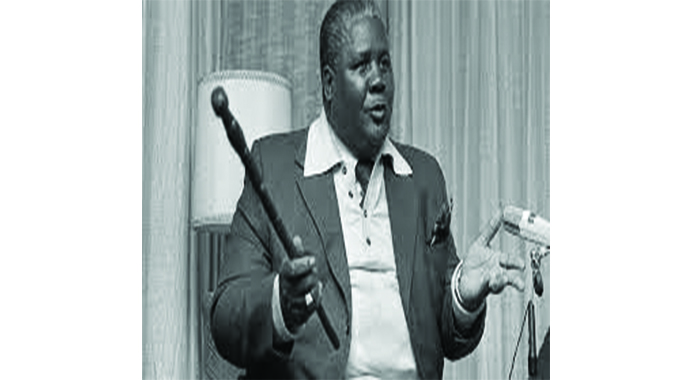
Then we were introduced into the rudimentary kind of introduction of receiving Dr Joshua Mqabuko Nkomo at the airport.
That was a ritual which was done to all newly arrivals at Nampundwe. That was the day when we were subjected to serious skirmishing, rolling and because of our background having worked in South Africa we were called injiva, imgoli.
Most of us who were coming from South Africa I remember oDestroyer Mabhidliza, oFreddy and the like were looked at differently.
By the way while being subjected to those drills at that hill we had been encouraged by the instructors to be smartly dressed as we were receiving the party President and Commander-In-Chief, Dr Nkomo.
Some of us were wearing nice shoes and clothes.
MS: Yourself in particular how were you dressed?
Col (Rtd) Dube: I had nice, very lovely jeans, Destroyer uMabhidliza had a florsheim shirt and Barker kind of shoes.
When we were subjected to number nine, that is frog jump we resisted. Our reasoning then was that our Barker shoes would be affected by that type of drill.
A Barker shoe had an Italian sole which could not stand that type of movement, so it would break. Then the guerilla who was armed started kicking and beating us.
One of the guys who also had been in South Africa had his ribs broken during that beating. We were then subdued and made to sing a song called Othebula bavuke isiponono.
Thebula meant guerillas. While at Nampundwe we saw the group that was taken in yellow trucks to Mwembeshi. Ourselves we were taken to Freedom Camp (FC) where we arrived around February.
That is where we met Cde Jirira who was a party official and it was at FC that we were introduced to the rudimentary military training.
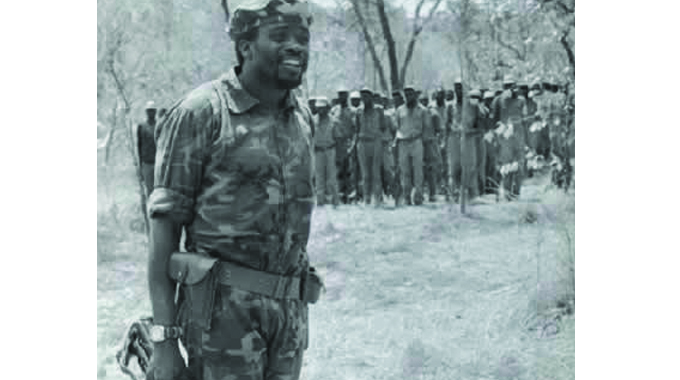
We were also subjected to rudimentary political awareness and later on visited by Cde Nikita Mangena and Tjile Nleya whom we called Dubhu.
We were then introduced to drills such as skirmishing and route march. After three months the advance party then left for Luso in Angola.
The 2 000 or so of us were destined for Angola, the first group to be trained by the Cubans.



 Bongani Ndlovu
 Online Reporter