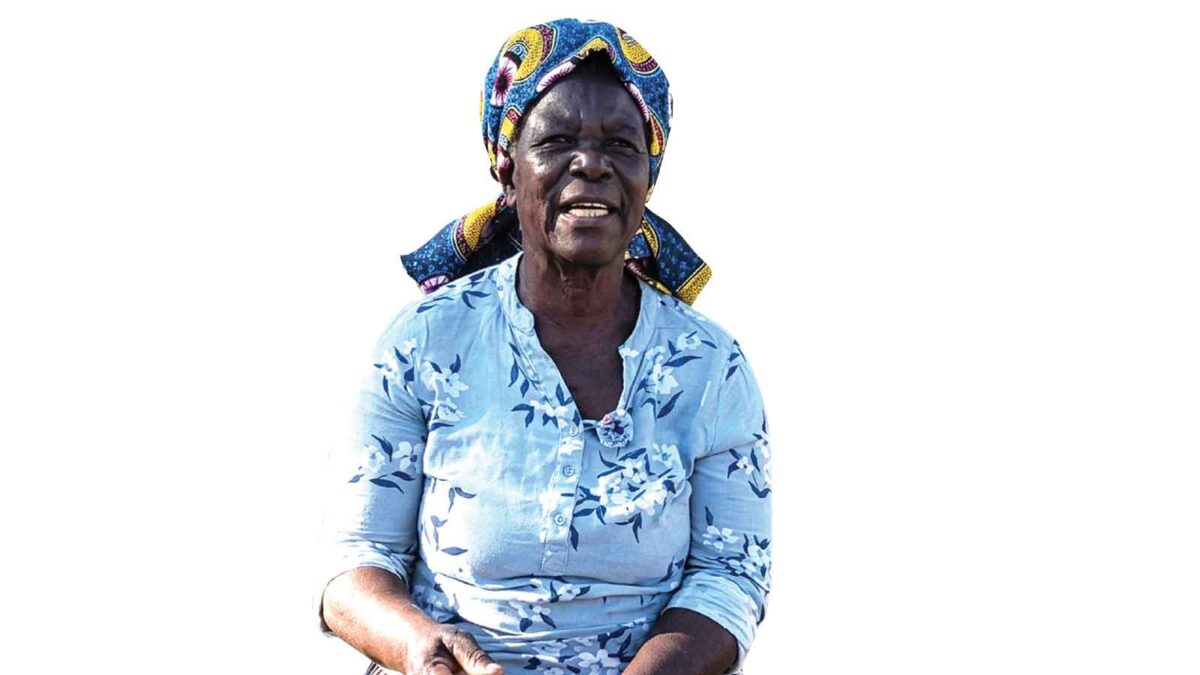
In this week’s instalment, CDE GRACIOUS MUTSATSA, whose Chimurenga name was Dorcas Mabhunu, chronicles her military training and subsequent deployment to the front. The revered freedom fighter also recounts to our Society Editor PRINCE MUSHAWEVATO how she nearly lost her life during a surprise aerial attack launched by the Rhodesians on their base at Tembwe.
***************
Q: Our previous discussion ended when you arrived at the training camp after successfully crossing into Mozambique with other recruits and trained freedom fighters. Can you continue from there?
A: After arriving in Tembwe from Tete, I moved to a section called Kamunda kaTito, named after Tito, an exceptional instructor who worked alongside Cde Tsuro.
Our base commander was Comrade Makasha.
Both Tito and Tsuro were remarkably skilled trainers, a fact every freedom fighter they trained recognised.
Their instruction was rigorous and comprehensive, designed to turn recruits into disciplined, efficient soldiers.
We sweated and endured immense physical pain during training.
However, I should take you back slightly to mention an incident right before training began.
Several Bedford trucks arrived to transport recruits to various refugee camps.
Q: How were people screened to decide who went for training and who went to the refugee camps?
A: Recruits were screened by age.
Younger individuals like myself and elderly individuals were ineligible for military training and were re-directed to refugee camps such as Mabvudzi, Doroi and Chibawawa — places we commonly referred to as kuMazee, meaning a residence for the elderly.
Unwilling to be sent to a refugee camp, my friend Noleen and I ran away to hide near Ruya River, skipping supper that evening.
That night, Cde Kamudyariwa was shocked to find us still at the base.
He was baffled why we had not left with the other watoto (young children) and ordered that we be detained and sent to the camps the following day.
However, the next morning, Noleen and I escaped once more into a dense thicket along the river bank, remaining completely hidden despite search efforts.
Q: What happened next?
A: After we evaded them multiple times, the commanders recognised our determination to undergo training.
They finally relented and allowed us to join the training programme, assuming the harsh conditions would force us to break and reconsider our decisions.
They underestimated my strength and resolve to fight for my country; nothing could stop me.
I successfully endured the demanding three-month training programme until pass-out.
Upon completion, I was selected for front-line deployment.
Around that time, Tembwe came under aerial bombardment from the Rhodesians, forcing us to relocate briefly to Base 4.
Shortly after, all graduates were ordered to the front-lines, and I crossed back into Zimbabwe through Chihoko in Mount Darwin.
Q: Before we talk about the situation at the front, can you describe what happened on the day your training camp was attacked?
A: Rhodesian Security Forces launched a heavy aerial assault on the camp that began between 9am and 10 am and lasted for several hours.
The attack occurred just after we had finished preparing food.
At the time, I managed the kitchen at the command element, where we cooked for our senior leaders.
Some of the women I worked with had gone to bathe, and I was preparing to shower as well.
We were supposed to serve the commanders right after bathing, but the assault broke out before anyone could eat.
The enemy attacked relentlessly, shouting through loudspeakers for us to come out into the open and claiming they wanted to take us back to Rhodesia.
Although we had an anti-aircraft gun mounted on the western side of the camp, the comrade operating it was overwhelmed by the intense, continuous barrage and never got the chance to fire a single shot.
I managed to survive by hiding in the reeds along Ruya River and, as the attack subsided, I began walking towards a nearby Mozambican village known as kwaZuzee.
Q: What was your plan in heading there?
A: I was already familiar with kwaZuzee because recruits would occasionally venture there in search of food — a practice we referred to as chirenje. Crossing into the village was strictly forbidden, and anyone caught doing so was brought back to the camp for disciplinary action.
We actually learnt about the compound’s exact location after a recruit joined zvigure (masked dancers) there and missed parade.
Another recruit exposed his whereabouts, resulting in his punishment and restriction to the camp when he returned.
Soon after, his fellow zvigure dancers came to the camp demanding his release, which made the existence of both the village and the dance troupe known to all of us.
After I reached kwaZuzee following the raid, our commanders, including Cde Ndoda, located us and relocated our group to Base 4.
We stayed there for about three days before being deployed to the front-lines.
Q: Can you walk us through your experience at the front?
A: Noleen and I crossed back into Zimbabwe through Mount Darwin.
I was appointed detachment logistics officer at the D Level, assisted by a deputy.
We operated as an all-female unit under the command of Cde Yeukai Chishaka, who later joined the police force after independence and now farms in Mashonaland Central province. Cde Muchaneta oversaw security, along with several other women whose names I no longer recall.
My initial operations were centred in a baobab-covered area of Mount Darwin that the freedom fighters nicknamed Kumagetsi because of the abundance of striking, light-skinned local women — a detail our male comrades were always quick to tease about.
Meanwhile, our unit’s heavy operational presence unsettled the Rhodesian Security Forces.
Disturbed by facing female combatants, they suffered considerable tactical setbacks, including the major mistake of trying to capture us with their bare hands.
Next week, Cde Mutsatsa will detail her experiences on the front-line and explain how her commanders responded to sustained enemy raids triggered by her unit’s deployment.