admin
admin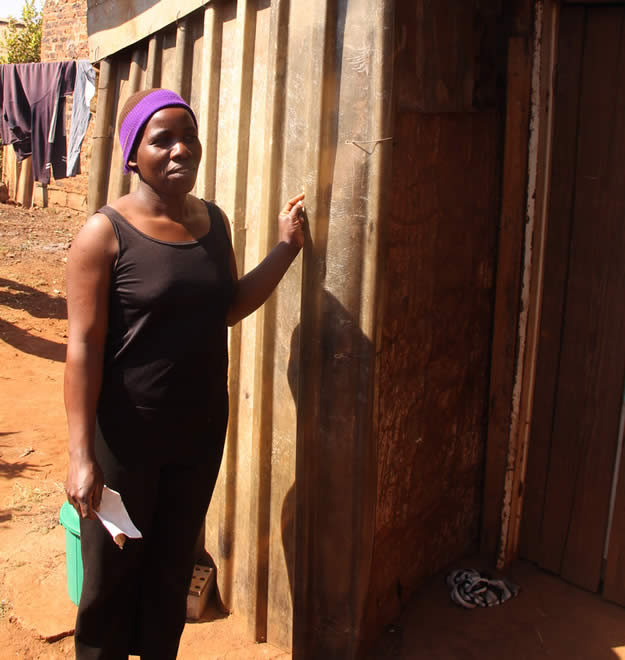

Sydney Kawadza Senior Features Writer
THREE Dzivarasekwa families have turned destitute after dishonest MDC-T councillors working in cahoots with equally corrupt council employees kicked them out from houses they inherited from their parents. Their names “disappeared” from council records and were allegedly replaced with other people. Theirs is a sad story, one that recites how the families have been divided not because of God’s will; but because of corruption that has chewed the societal fabric shredding it into small pieces too many to mend.
It is a story that has exposed corruption that has taken root in the communities since the year 2000 when MDC-T councillors teamed up with officials to make the most of their time at Town House.
One of the affected families – the Maliro’s – are now living out of other people’s mercy after former Ward 13 councillor Johnson Zaranyika took over their grandfather’s Helson Henrick’s house.
Their late grandfather was a council employee and owned house 288B in Dzivaresekwa 3.
Mr Henrick’s granddaughter, Farness Maliro, said her grandfather got the house in 1982 as part of his package at the Harare City Council.
She said: “When he retired, my grandfather decided to go back to Malawi and left my father, Everson Maliro, the house. We were surprised in 2005 when we received papers from the city council which said we should move out of the house as authorities had decided to repossess it.
“My father advised my grandfather of the development and he travelled from Malawi to sort out the issue but his efforts were fruitless.”
She described how the family was referred to council’s housing department over and over again and still nothing materialized.
“In 2009, council eventually threw us onto the streets. My father was the most affected as he had nowhere to go. Imagine a 72-year-old man is just wondering in the streets after he lost an inheritance he believed would be passed on to his children,” she complained.
According to Farness, her father was only rescued by a sympathetic family who partitioned a small corner next to their toilet to accommodate the old man.
“We hope Government will intervene before my father dies from the stress caused by our eviction,” Farness said.
Her father confirmed the allegations saying: “Our father Helson Henrick left a renovated house for my siblings and me before returning to Malawi, where he died. He was buried in Malawi and I think he is turning in his grave.”
He said losing the house has left him depressed that many people in Dzivaresekwa say he is insane.
He now lives in a small “corner” portioned for him by a sympathetic family to accommodate him.
“My family is scattered across the sprawling suburb where they have found accommodation from sympathisers,” he added.
Another family – the Nderumes – lost their parents in successive years but drew their comfort from the fact that their father had left them a roof over their heads.
But one morning a dark cloud hung over their heads when an official from the Messenger of Court’s office threw them out of the house after repeated efforts to have it officially transferred to their youngest sibling.
“Council officials frustrated us when we tried to change the ownership of the house at the Harare City’s housing department offices in Mbare.
“We were eventually kicked out of the house,” said David Nderume.
He explained events that unfolded when their father died in 1989.
“When my mother died in 1991, I was in Grade 5 and my brothers resolved that I takeover ownership of the house at 583A since I was the youngest. In 1997, we went to council but they refused to assist us because I was only 16 years old.
“We tried again when I was 18, but the council officials at the department of housing in Mbare said all the six brothers should be present when we wanted to change the ownership. Unfortunately, one of my brothers had moved to South Africa.
“Efforts to present an affidavit from my brother in South Africa were rebuffed by the officials at the housing department,” he added.
David said the family got an eviction letter from council in 2009 and ownership had changed to David Kofi’s name.
“A man who said worked for the Messenger of Court threw us out of the house. We were told that we could only get the house if one of us was an invalid or mentally ill. We tried the courts but the new owner did not even attend the hearings and we gave up.
“My brother lost his wife when we were staying in a tent next door and the others have moved to South Africa.
“I was staying like a vagabond and was forced to go back to the rural areas in Bindura,” David said.
A neighbour, Mr Daniel Mashayamombe, who pitched a tent for the family when they were evicted in 2009, said the family was living under difficult circumstances after the eviction.
“The children were left homeless and I decided to assist them by moving their furniture into my yard. One of the brothers had an ailing wife and she died in the open. The funeral was even held in the open and it was raining back then,” he said.
Life has not been easy. A woman married to one of the brothers died in a tent pitched at a neighbour’s yard a few years ago.
No one in the family knows what happened to the family’s household goods after years of neglect.
Yet another family – the Jimus – has been in and out of court trying to recover their house. They and won the case at the Harare Civil Courts.
However, the man who took over their house is adamant that he will not move out.
He also accumulated a US$3 000 bill in council rates and utility charges.
“We have all the court papers but up to today, we are still being accommodated by well-wishers. We hope that God will intervene and move back into our house,” said Rose Jimu, who inherited number 701B.
The 33-year-old woman is fighting hard to reclaim their house from Timothy Zebron.
Zebron was allegedly left in charge of the family home after her father retired and moved to the rural areas.
She said: “Zebron collected rentals from tenants and was instructed to pay council rates and utility charges. We were surprised when we suddenly discovered that Zebron had changed all the papers into his name.
“We went to council and discovered that he lied that he bought the house from my father whose whereabouts he did not know. We wrote a letter to my father and he came to Harare but denied that he sold the house.
“My father died in 1996 but when we tried to move into the house Zebron refused. We took the case to the courts in 2001 and Zebron refused to attend the hearing.”
She said the courts ruled in their favour in 2005 but the case files allegedly disappeared.
“We went to Remembrance Drive council offices and were advised that Zebron had accumulated a US$3 000 debt. The officials told us that we could take back our houses when the debt has been settled,” she said.
Jimu, however, said officials at the housing department are trying to frustrate the family from moving into their home.
“We are not responsible for the US$3 000 debt and want our house back. We are suffering while waiting for him to move out of the house. The debt owed to council is another issue,” she said.
These cases are just a drop in the ocean, many others go unreported and the families have lost hope of recovering their houses.
Such cases have also been reported in Highfield, Glen Norah, Glen View, Budiriro and other suburbs.
While all the drama is unfolding in Dzivaresekwa, President Mugabe recently ordered authorities to stop evicting families, especially the disadvantaged among them orphans, who are failing to pay rates and tariffs owed to local authorities.
Outgoing Local Government, Rural and Urban Development Minister Ignatius Chombo talks of how a noble idea to give the destitute councillors decent accommodation was hijacked by the corrupt people.
“When these councillors were elected in 2008, most of them had no accommodation, no vehicles, were living in squalor and I directed councils to give them decent accommodation.
“The directive was on the understanding that the councillors would buy the houses at 25 percent total value of the house but they targeted vulnerable families and grabbed their houses while trying to avoid paying for the houses.
“I did not fire these councillors on political grounds but it was purely for professional reasons. We discovered that the councillors had failed in their mandate to assist people in their communities but were at Town House for self enrichment.”
Meanwhile, addressing Zanu-PF supporters in Marondera and Chitungwiza recently, President Mugabe said no family should lose their houses because of debts owed to council.
“We have heard reports that families are losing their houses because they owe council some money in rates and tariffs but no one should be evicted because of the debts.”
Minister Chombo heeded President Mugabe’s call and ordered all councils to cancel all debts owed by residents.
He said the directive was in terms of Section 133 of the Rural District Councils Act Chapter 29:13 as read with Section 303 of the Urban Councils Act Chapter 29:15 writing off debts in respect of rentals, unit tax, development levy, refuse charges and water and sewer fees as at 30 June, 2013.
He added: “Amounts owed by residents in respect of rates since February 2009 stand prescribed in terms of Section 15 of the Prescription Act Chapter 8:11.”
While the declaration has been met with stiff resistance especially from MDC-T officials dismissing it as politicking, the affected families called on Government to intervene.
“We want our houses back and I am hoping that Government will come to our rescue as soon as possible,” Rose Jimu said.
These are only a few cases that have been identified but there are families that are suffering in silence after falling prey to unscrupulous council officials.
Where the families were living in unity, now they have pushed to destitute.



 Online Reporter