Online Reporter
AT the age of 19, Cde Vivian Viyo Siziba was already a thorn in the side of the Rhodesian government led by rebel Prime Minister Ian Smith. For his boldness and determination to contribute to the dismantling of colonial rule, Cde Siziba — known by the pseudonym Cde Mangezi Siziba was imprisoned by the regime, sharing cells with captured guerrillas and political activists.
He was detained in Gwanda, Grey Street (now Bulawayo), and Khami Maximum Prisons. But his spirit remained unbroken and in 1978, he finally crossed into Botswana en route to Zambia for military training.
On Friday, Cde Siziba told our Assistant Editor, Mkhululi Sibanda (MS), that his political awakening began at Gwanda HighSchool, where he was schoolmates with the late National Hero, Cde Zenzo “Maphekapheka” Ntuliki.
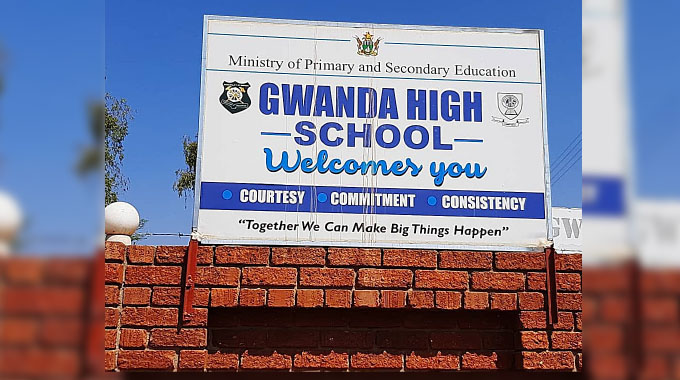
Inspired by the revolutionary fervour, Cde Ntuliki and others abandoned school in June 1975 to join the liberation struggle. When Cde Siziba and his fellow pupils tried to follow suit, they were blocked by the Rhodesian Special Branch — triggering a series of arrests and detentions. Below, Cde Siziba narrates his personal account of the liberation struggle. Read on…
MS: Who is Vivian Siziba? Take us through your background.
Cde Siziba: I was born on 24 October 1956 in Garanyemba communal lands, specifically in an area called Makobana, a SiJahunda name. SiJahunda is a dialect derived from Kalanga. I started school at Betsa Primary, where I did Sub-A up to Standard 3. At the time, some schools only offered lower primary up to Standard Three, and one would proceed to a school that offered upper primary, which ran up to Standard Six.
After that, one could train as a teacher, nurse, or agricultural demonstrator (abalimisi). After Betsa, I moved to Gobatema Primary School, run by the AFM Church, which hoped to develop it to the level of Manama Mission, though that didn’t happen.
The school was headed by a white reverend. In 1969, the Standard system was phased out and replaced with the Grade system. I did Grade Five at Betsa, then Grade Six and seven at Garanyemba Primary, which was 15km from home.
MS: Please continue.
Cde Siziba: After completing Grade seven, I joined the newly established Gwanda Secondary School in 1973 — we were the pioneer class. At the time, there were two types of secondary schools: F1 (purely academic, offering Cambridge School Certificate) and F2, which used Grades rather than Forms. For example, instead of Form One, it was Grade Eight. The headmaster at Gwanda was Mr Meyers.
Among my classmates were people like Ndabezinhle Moyo (now a police commissioner) and Judea Dube, who became an electrical engineer. In Matabeleland South, other F2 schools included Catholic-run Kusileni (Filabusi) and Minda (Maphisa, Kezi). The F2 system offered practical subjects like Domestic Science, Fashion and Fabrics, and
Needlework for girls, and Woodwork and Metalwork for boys, but we also studied academic subjects like English, Social Studies and SiNdebele. I completed Grade Nine in 1974.
MS: When did you become politically active?
Cde Siziba: Towards the end of 1974, there was a shift in national politics. Detained nationalists were released, prompting a lull in guerrilla activity that was during the détente period, initiated by Zambian President Kenneth Kaunda and South African Prime Minister, John Vorster. Most of us first heard of the releases in 1975, as the leaders returned from Zambia where they had attended talks. There was hope across the country that independence was near. As students, we were glued to our radios, especially Radio Lusaka, where presenters like John Mbedzi and Jane Ngwenya broadcast. Our optimism was also fuelled by events in Portugal — the Carnation Revolution of April 1974, when Prime Minister Marcelo Caetano was overthrown by General António de Spínola.
In Gwanda, there were also active organisers of the struggle.
MS: Can you name them?
Cde Siziba: Yes — Doubt Mabusa and Benson Maphosa were at the fore-front, very fearless men, who risked everything for the liberation struggle. Their activities inspired many of us. Despite the apparent lull during détente, Zapu and Zanu continued recruiting and mobilising the youth. They rightly suspected that the Smith regime was insincere, simply buying time under nationalist pressure, without conceding to demands.
MS: So, when did you actually join the armed struggle?
Cde Siziba: At Gwanda Secondary, we had small groups, planning how to join the war. The first group left in June 1975, including Zenzo Ntuliki, who later worked in the CIO after Independence as a very senior operative, Henry Ndlovu, Tsepo Nare, and Edward Ndlovu, wakoMaligwa. A few weeks later that was in July, we also decided to leave the country. But we were arrested before we could cross.
MS: Tell us about the arrest.
Cde Siziba: We boarded a Pelandaba bus from Bulawayo on a Friday evening, a popular travel time during the 70s and early 80s as people returned to their rural homes for the weekend. The buses would leave Bulawayo in the evening, with most passengers being people who had knocked off from work. When we decided to cross, it was shortly after the Rhodes and Founders Day holiday. But we weren’t vigilant — a big miscalculation.
MS: Why?
Cde Siziba: The Rhodesian security forces were on high alert. Just days earlier, a policeman in Gwanda, Lasi Sebata, later known by his pseudonym Digden, had opened the police cells and freed several detainees. He then took a police Jeep, loaded with the prisoners, and drove to the Shashe River, where they abandoned the vehicle and crossed into Botswana to join the struggle. That incident happened right at Gwanda Police Station. For that bold act, I regard Sebata as an undisputed hero.
MS: Do you remember who those prisoners were?
Cde Siziba: They were political detainees arrested for nationalist activities. One was Pagiwa, a businessman from Garanyemba. Another, whose name I forget, was the brother of Paul Themba Nyathi. There was also a bus conductor among them. Sebata even took firearms with them. The incident had a profound impact on us.
MS: Let’s go back to your own arrest. What happened?
Cde Siziba: I should mention that even before our attempt, other pupils had tried and failed including the late Thuso Maphala, who eventually did make it into the struggle. Thuso and others were pupils at Manama Mission. So, the authorities were watching closely. In my group, besides classmates from Gwanda Secondary, there were boys from Collen Bawn — including
Vincent Moyo, Tongesai Shiri and Obadiah Moyo wakoMaplanka. We were stopped at a roadblock near the Guyu turn-off.
Although we had not been sitting together, the Special Branch still identified us. They came to us one by one, asking questions.
When questioned, I claimed I was going home to collect school fees, but they didn’t believe me. The roadblock appeared hastily arranged, suggesting they had received intelligence about us. Only one of us, Cosmas Ncube, managed to escape and join the armed struggle. The rest of us were arrested and taken to Gwanda.
l To be continued next week, with Cde Siziba recounting how they were treated by the Rhodesian security forces after their arrest.